


 0
0 Created: Sep 10,2026 | Donut SMP
Donut SMP Base Buying Guide: How to Avoid Scams and Bad Deals

Buying a base or automated farm on Donut SMP can accelerate your progression, but private peer-to-peer trading carries extreme financial risk. In a controlled field test of seven separate transactions ranging from $10M to $50M, only two purchases resulted in secure, operational bases—a success rate of just 29%.
The primary reason transactions collapse is structural: sellers routinely control coordinate data, spawn points, and teleport access, while buyers absorb upfront capital risk. To avoid losing your in-game balance, you must shift your evaluation model away from speculative income claims toward verified infrastructure, tested access paths, and disciplined payment staging.
- What the $10M–$50M Purchase Test Revealed
- Empirical Purchase Data
- Why Donut SMP Base Purchases Fail
- Trap 1: A Walkthrough Does Not Guarantee Exclusive Access
- Trap 2: Inflated ROI Figures and Artificial Urgency
- The 4-Stage Protocol for Safer Base Purchases
- 1. Scope Asset Requirements
- 2. Mandatory Real-Time Output Testing
- 3. Staged Milestone Payments (Replacing the 50/50 Split)
- 4. Realistic Payback Calculation
- Evaluating Low-Risk vs. High-Risk Assets
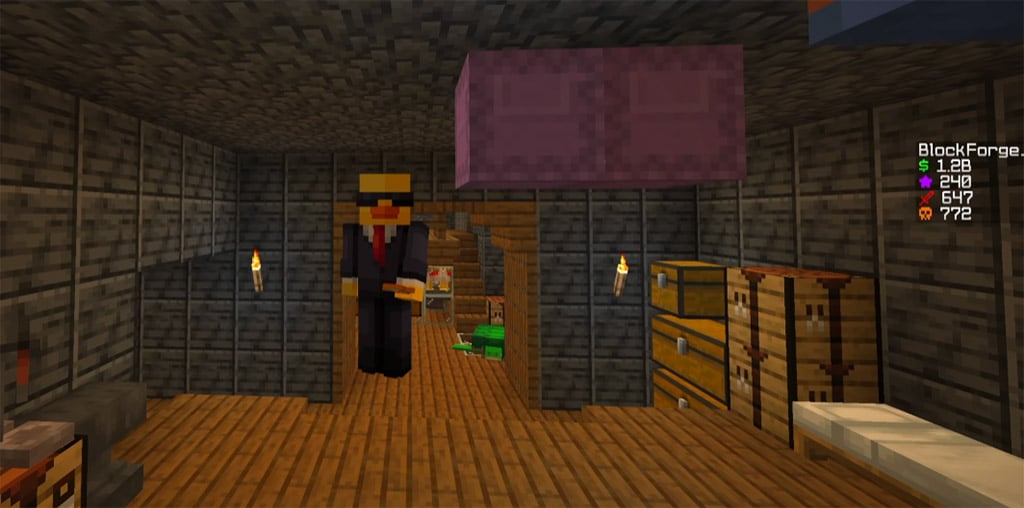
- The $10M Villager Base Model (Low Risk, High Adaptability)
- The $50M Automated Farm Model (High Risk, Capital Intensive)
- Pre-Trade Due Diligence Checklist
- FAQ (Frequently Asked Questions)
- Is buying a base or farm on Donut SMP worth the investment?
- How much money should I pay upfront for a Donut SMP base?
- How do I calculate the true hourly earnings of an AFK money farm?
- Does watching a seller run /delhome make a base safe?
- What should I do immediately after taking ownership of a new base?
- Conclusion
What the $10M–$50M Purchase Test Revealed
Most failed trades stem from conflating projected earnings with physical property. Every trade offer should be separated into three distinct tiers:
- Claimed Revenue: The seller's advertised hourly yield under theoretical, lag-free conditions.
- Physical Assets: The verifiable redstone, spawners, villagers, building blocks, and chest inventories physically present.
- Secure Access: The verified ability to enter, operate, and secure the location without interference from the seller or their team.
Empirical Purchase Data
The table below summarizes seven real-world transactions executed between $10M and $50M to document common transaction vulnerabilities:
| Price | Listing Description | Trade Outcome | Verified Operational Finding |
|---|---|---|---|
| $10M | Complete Villager Base | Successful | Working villagers, animal pens, auxiliary loot, and verified /delhome via stream. |
| $25M | Totem Farm ($20M/hr advertised) | Unusable | Broken spawning mechanics spawned hostile vexes, preventing safe AFK grinding. |
| $25M | Cobblestone Production Unit | Likely Scam | Seller stalled for days post-negotiation, demanding upfront balance transfers. |
| $50M | High-Tier Discount Base | Scam | Seller issued verbal reassurance, collected payment, and deleted Discord contacts. |
| $50M | Industrial Cobblestone Farm | Scam | Buyer transferred a $25M upfront deposit; seller failed to deliver teleport coordinates. |
| $50M | Automated Charcoal Facility | Scam | Seller accepted deposit funds and blocked the buyer immediately. |
| $50M | Multi-layer Slab Farm | Successful | Full pre-payment tour granted, staged milestone payments used, seller confirmed /delhome. |
Why Donut SMP Base Purchases Fail
In unregulated Minecraft server economies, scammers rely on social engineering, urgency, and informational asymmetry rather than technical exploits.
Trap 1: A Walkthrough Does Not Guarantee Exclusive Access
A seller teleporting you to a base confirms only that they have a set home or access point at that location. It does not ensure you can return independently, operate redstone mechanisms, or remain safe from ambushes.
Even when sellers demonstrate deleting their home via screen share, serious vulnerabilities remain:
- Alternate accounts may retain homes inside the perimeter.
- Coordinates may be logged, screenshotted, or shared with hostile factions.
- Unclaimed surrounding chunks leave the base exposed to immediate griefing or infiltration.
Field Action Rule:
1. Record arrival coordinates immediately upon entry.
2. Verify an unobstructed, safe exit and entry corridor to the location.
3. Test all storage containers, hopper lines, and redstone triggers before authorizing funds.
4. Assume coordinates are compromised if the seller delays or rushes the walkthrough.
Trap 2: Inflated ROI Figures and Artificial Urgency
Sellers often market farms based on unrealistic earnings formulas. Consider the tested $25M totem farm advertised at a $20M per hour run rate: 1.25 hours (75 minutes)
An asset that returns 100% of its capital cost in 75 minutes defies basic server economics. During on-site validation, the farm proved completely defective: vexes overwhelmed the killing chamber, rendering the site lethal for AFK players.
Theoretical maximum rates ignore server tick rates (TPS drops), mob spawning caps, active maintenance, and shop sell limits.
The 4-Stage Protocol for Safer Base Purchases
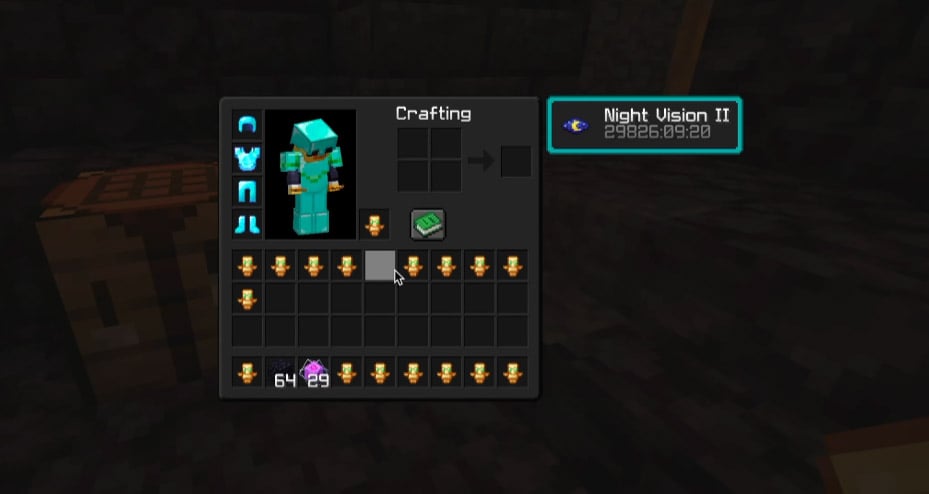
Eliminating risk in private trading is impossible without native escrow plugins. However, following a rigorous transaction framework minimizes financial exposure.
1. Scope Asset Requirements
Do not solicit generic base offers. Create clear requirement parameters before negotiating:
- Clear functional purpose (e.g., Mending/Unbreaking villager hall vs. automated material generator).
- Minimum verified output rate under typical server lag conditions.
- Strict price ceiling that prevents emotional overbidding.
2. Mandatory Real-Time Output Testing
Never purchase a facility without a timed, supervised operational run.
- Require the seller to clear collection hoppers and chests.
- Run the system for a minimum of 10 continuous minutes.
- Extrapolate gross production, factor in sell price drops, and check mob containment safety.
3. Staged Milestone Payments (Replacing the 50/50 Split)
Standard 50/50 upfront splits favor dishonest sellers. A 50% deposit on an unverified $50M asset still risks $25M. Structure the purchase through milestone gating:
| Transaction Phase | Capital Allocation | Seller Verification Requirement |
|---|---|---|
| Initial Agreement | $0 (No deposit) | Written terms, base coordinates range, agreed inspection window. |
| Live Walkthrough | $0 | Complete physical access, verified redstone functionality, zero hostiles. |
| Access Test | 10%–15% max | Buyer sets personal home, tests exit corridors, and validates independent access. |
| Transfer & Purge | 70% | Seller deletes all home points on video/screen share and vacates perimeter. |
| Settlement Holdback | 15%–20% | Buyer runs an unassisted 30-minute test cycle to confirm stability. |
4. Realistic Payback Calculation
Calculate asset viability by factoring in insurance margins and server interruptions:
True Payback Period = Base Purchase Price+Security Upgrades+Reserve Capital / Demonstrated Conservative Hourly Profit
If an industrial farm costs $50M and produces a validated $3.5M per hour (after adjusting for lag and selling delays), budget an extra $5M for perimeter defenses: 15.71 hours
A 15.7-hour break-even timeline under safe conditions represents a viable acquisition; an unsubstantiated instant profit claim indicates an active scam.
Evaluating Low-Risk vs. High-Risk Assets
Data from successful transactions demonstrates that asset versatility often outperforms specialized mega-farms.
The $10M Villager Base Model (Low Risk, High Adaptability)
The successful $10M villager transaction delivered immediate tangible value:
- High-tier enchanted book trades, XP bottle generation, and basic food automation.
- Liquid physical assets (approximately $1M in chest items plus collectible mobs).
- Resilient utility: Even if market prices for specific drops drop, villagers retain fundamental utility across server updates.
The $50M Automated Farm Model (High Risk, Capital Intensive)
The successful $50M slab farm trade succeeded only because the buyer strictly enforced staged milestone payments and screen-shared home revocations before releasing primary capital. Specialized farms face sudden obsolescence if server rules alter redstone clocks, mob caps, or item sell tables.
Pre-Trade Due Diligence Checklist
Before transferring any in-game balance:
1. Inventory Preparation: Empty your personal inventory and ender chest before visiting an unverified coordinate.
2. Discord Documentation: Keep all agreements, coordinate receipts, and chat logs documented in writing.
3. Redstone Inspection: Check for hidden piston traps, pressure-plate triggers, or trapdoor pit-falls around the teleport zone.
4. Perimeter Audit: Scan the surrounding chunks for active claims, nearby player bases, or hidden observer outposts.
5. No Blind Deposits: Never transfer currency for a future coordinate delivery or unfinished build.
FAQ (Frequently Asked Questions)
Is buying a base or farm on Donut SMP worth the investment?
It is only worthwhile if you value physical infrastructure over unverified profit claims. With a tested success rate of only 29% in unvetted peer-to-peer trades, buying uninspected properties is statistically unprofitable. Focus on utility assets like villager halls rather than high-claim AFK farms.
How much money should I pay upfront for a Donut SMP base?
Pay zero currency upfront until you have physically inspected the property. Once verified, never release more than 10% to 15% as an access deposit. Never accept a 50% down payment on an unvisited site, as this accounts for the majority of recorded trade losses.
How do I calculate the true hourly earnings of an AFK money farm?
Do not rely on seller claims or theoretical calculators. Empty the collection system, run the farm during peak server hours for 10 to 15 minutes, calculate the total sell value of the generated items, and multiply that to an hourly figure. Deduct 20% to 30% to account for server tick drops, maintenance, and container capacity limits.
Does watching a seller run /delhome make a base safe?
No. A screen-shared /delhome command confirms only that one specific home marker was removed on that specific account. It provides no proof regarding alternate accounts, allied team members, logged coordinates, or exterior secondary accounts positioned nearby.
What should I do immediately after taking ownership of a new base?
Immediately set your personal /sethome, change all access codes or container locks if server plugins allow, reinforce external blast protection, audit all neighboring underground tunnels, and transport high-value liquid items to an off-site personal vault or ender chest.
Conclusion
Private base acquisitions on Donut SMP offer a clear shortcut to mid- and late-game progression, but only when approached with strict risk management. Unsubstantiated profit promises, unverified teleport links, and aggressive upfront deposit requests remain classic indicators of trade fraud.
By demanding real-time operational inspections, basing valuations strictly on demonstrated output, and using gated milestone payments, you protect your hard-earned balance while securing assets that provide genuine, long-term utility.

I’m Chloe Whitaker, a British Fact Checker at GGWTB focused on Currency farming, pet collecting, and management games, alongside Minecraft sandbox content. I check the details that shape your next move: growth timers, unlock requirements, and whether a reward is still obtainable. An old event tip shouldn’t cost you an evening chasing a pet you can no longer get.
Most Popular Posts
- Donut SMP Best Money-Making Meta With Jobs, Farms, and Spawner Trading
- Donut SMP Spruce Slab Factory: Turn Logs Into Millions (Real Player Guide)
- Best Donut SMP Money-Making Methods: Complete Beginner to $100M Guides
- Donut SMP Making Money with Lodestone Compass: Profit Guide for Smart Hunters
- Donut SMP Base Buying Guide: How to Avoid Scams and Bad Deals
- Donut SMP Money Guide: Starter Methods, Trading Costs and Risks
Popular Category Lists
- ARC Raiders / (354)
- Grow a Garden / (294)
- CoD: Black Ops 7 / (167)
- Star Citizen / (163)
- MLB 26 / (159)
- Monopoly Go / (153)
- ARK Survival Ascended / (128)
- Steal a Brainrot / (99)
- Blox Fruits / (74)
- Adopt Me / (74)
- Forza Horizon 6 / (72)
- Sailor Piece / (68)
- Grow a Garden 2 / (68)
- Diablo IV / (62)
- CoD: BLACK OPS 6 / (55)
- Aion 2 / (52)
- Path of Exile 2 / (48)
- Monster Hunter Wilds / (46)
- Windrose / (44)
- Maplestory Classic / (42)