


 0
0 Created: Sep 7,2026 | Donut SMP
Best Donut SMP Money-Making Methods: Complete Beginner to $100M Guides

Making money on Donut SMP comes down to capital turnover, not just theoretical hourly yields. A strategy that reliably doubles a modest balance in an hour will build wealth faster than an expensive, slow-moving mega-project that locks up all your liquid cash.
To hit your first $100 million, you need an operational strategy that scales alongside your bank balance. The market prices below reflect standard recipe yields and typical server market spreads. Because player economies shift rapidly, always check current /ah (Auction House) listings and server /shop rates before committing large amounts of capital.
- The $100 Million Growth Roadmap
- 1. Early Game ($0 – $1M): Low-Risk Crafting
- Wooden Utility Items: Never Sell for Less than Raw Wood
- Spruce Slabs: The 1:8 Multiplier
- 2. Mid Game ($1M – $10M): Enchanted Gear & Flipping
- Assembling Pre-Enchanted Tools
- Disciplined Order Flipping
- 3. Late Game ($10M – $100M): Industrial Production & Farms
- High-Tier Mob Spawners: The True Late-Game Cashflow
- Commercial Concrete Production
- Turnkey Farm Construction on Commission
- FAQ (Frequently Asked Questions)
- What is the safest beginner money-making method on Donut SMP?
- Why is my spruce slab operation losing money?
- Can you reach $100 million in under five hours?
- Is AFK farming permitted and profitable on Donut SMP?
The $100 Million Growth Roadmap
Reaching nine figures on Donut SMP requires transitioning through distinct phases as your balance grows:
- Phase 1 ($0 to $1M) — Low-Risk Utility Crafting: Convert gathered or cheap raw logs and basic items into high-demand construction materials. Keep inventory rotating quickly.
- Phase 2 ($1M to $10M) — Tool Assembly & Order Flipping: Exploit convenience spreads on enchanted equipment, timed items, and rapid-turnover Auction House undercuts.
- Phase 3 ($10M to $50M) — Bulk Concrete & Material Wholesale: Fulfill commercial building orders for major factions by processing concrete powder and hardened blocks in bulk.
- Phase 4 ($50M to $100M+) — High-Tier Spawners & Farm Contracting: Scale automated mob drop yields, trade high-tier spawners, or build and sell turnkey farms on commission.
1. Early Game ($0 – $1M): Low-Risk Crafting
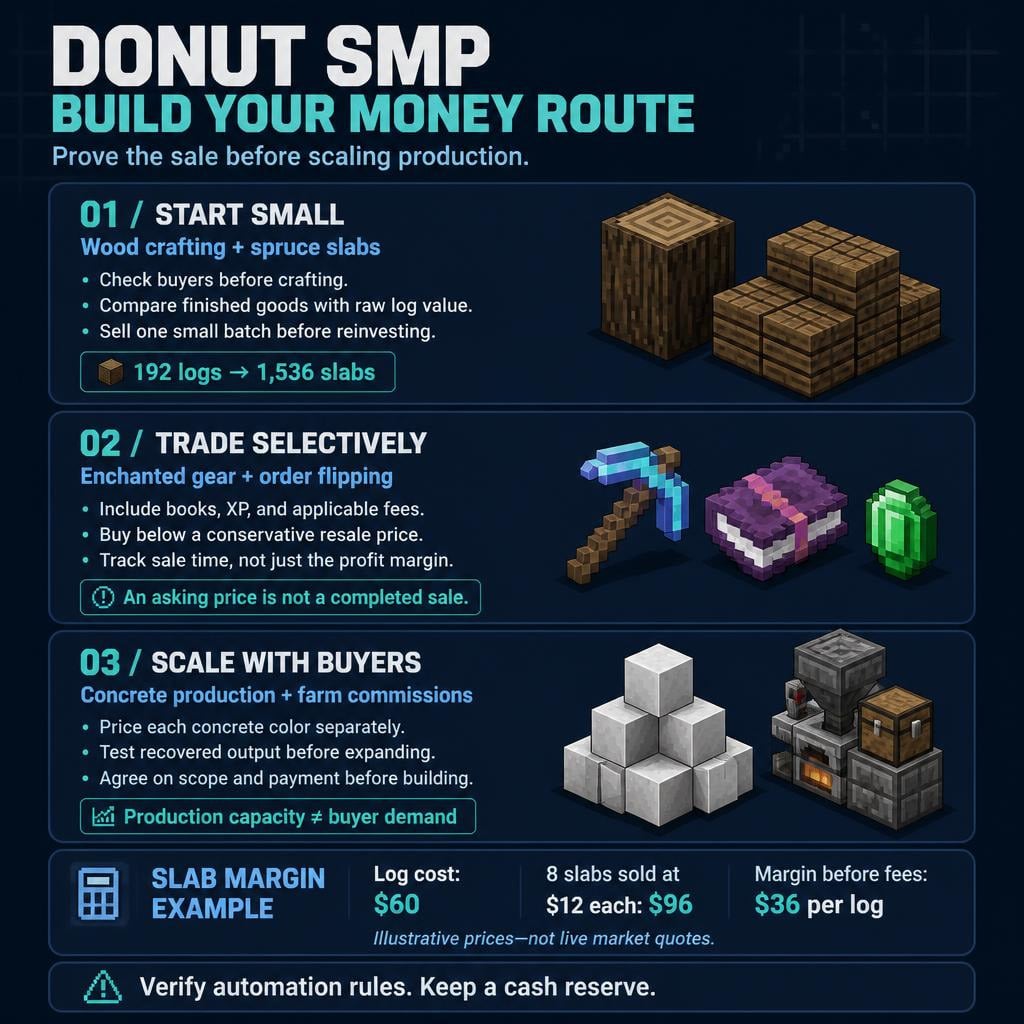
Unsold stock traps your balance. Start with small-batch production, confirm that buyers exist on the server, and only reinvest profits once your inventory has fully cleared.
| Method | Requirements | Profit Engine | When to Skip |
|---|---|---|---|
| Wooden utility items | Gathered logs, crafting table | Convenience markup | Raw log prices equal or beat finished items |
| Spruce slabs | Logs, chest storage, bulk buyer | 8 slabs per log yield | Market saturated with cheap slab listings |
| Enchanted gear | Base tools, books, XP, anvil | Assembly convenience | Anvil and XP costs consume the resale spread |
| AH order flipping | Liquid capital, patience | Purchase-to-resale spread | High AH taxes or slow listing turnover |
| Specialty/Timed tools | Large balance, item knowledge | Discounted utility value | Timer mechanics or wear cannot be verified |
| Concrete powder | Sand, gravel, dye, storage | Crafting ratio margin | Weak demand for the chosen color |
| Hardened concrete | Powder, water converter setup | Processing premium | Raw powder sells for equal or higher profit |
| Turnkey farm builds | Building skill, escrow/contract | Labor and infrastructure fee | Buyer refuses clear payment milestones |
Wooden Utility Items: Never Sell for Less than Raw Wood
Crafting tables, trapdoors, and fence gates are common candidates, but they are not automatic winners.
1. Check current market prices for raw logs versus the finished product.
2. Calculate the cost of all required ingredients (including sticks).
3. Factor in handling and listing fees.
4. Craft one test batch (e.g., 2–3 stacks) to verify how quickly it sells.
Remember: gathered wood is not economically free. If processing logs into utility blocks lowers your net return per block, sell the raw logs directly.
Spruce Slabs: The 1:8 Multiplier
Under standard recipes, 1 log converts into 4 planks, and 3 planks convert into 6 slabs. This yields an exact ratio of 8 slabs per single log.
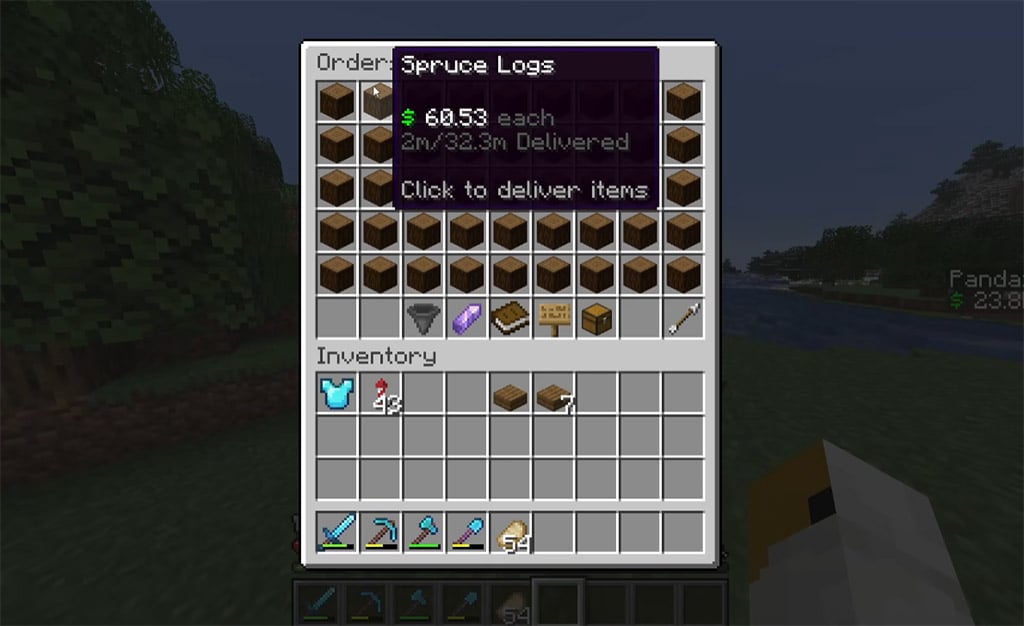
A small test batch of 3 stacks (192 logs) yields 1,536 slabs (24 stacks) with zero leftover planks.
| Log Price | Slab Price | Revenue per Log Equivalent | Net Margin (Before Fees) |
|---|---|---|---|
| $60 | $12 | $96 | +$36 |
| $61 | $12 | $96 | +$35 |
| $60 | $10 | $80 | +$20 |
| $72 | $9 | $72 | $0 (Guaranteed net loss after listing fee) |
Key operational rule: One shulker box of raw logs expands into eight shulker boxes of slabs. If you do not have sufficient storage or an active bulk buyer, you will choke your own inventory. Sell all 24 stacks before scaling your purchase volume.
2. Mid Game ($1M – $10M): Enchanted Gear & Flipping
As your capital pool expands, stop selling raw volume and start charging a premium for convenience and market timing.
Assembling Pre-Enchanted Tools
Many players on Donut SMP prefer paying a hefty premium over spending 20 minutes gathering XP, combining books, and clicking anvils. High-demand items include Efficiency V / Unbreaking III / Fortune III Pickaxes and Efficiency V Shovels.
Before building:
1. Price the unenchanted diamond/netherite base tool.
2. Price every required enchantment book separately on /ah.
3. Calculate the level/XP cost and any anvil combination fees.
4. Compare total production cost against completed listings.
If a finished pickaxe sells for $150,000 but costs $125,000 in books, materials, and XP to assemble, your gross return is $25,000. If selling the individual books yields $30,000 profit with zero anvil effort, sell the books instead.
Disciplined Order Flipping
Do not gamble on speculative items. Apply a strict calculation to every flip:
{Max Purchase Price} = {Target Resale Price} - {Server AH Fees} - {Target Profit Margin}
- Avoid the capital lockup trap: A $100,000 profit made on a $1,000,000 flip in 10 minutes (10% return) is far superior to tying up $10,000,000 for 6 hours to make $1,000,000 (also 10%). Fast turnover keeps your liquidity intact for underpriced snipes.
- Timed specialty items: High-tier picks, weapons, or boosters with limited runtimes often look cheap on
/ah. Check whether the countdown decreases when idle, offline, or listed. Never purchase a decaying item unless you have a confirmed buyer ready.
3. Late Game ($10M – $100M): Industrial Production & Farms
Scaling to nine figures requires industrial-scale output or providing infrastructure to other players.
High-Tier Mob Spawners: The True Late-Game Cashflow
Once your capital crosses the $20M mark, manual crafting cannot keep up with inflation. High-tier mob spawners (such as Blaze, Iron Golem, or custom mob spawners depending on the current season) represent the transition into passive yield.
1. Calculate the Spawner Payback Horizon: Never buy a spawner based purely on its hype. Divide its purchase price by the estimated net hourly drop sales to determine how many runtime hours it takes to break even:
Break-Even Hours = Total Purchase & Setup Cost / Net Hourly Drop Revenue
2. Account for Grinder Clear Clears & Lag: Donut SMP uses automated entity-clearing plugins to control lag. Ensure your kill-chamber design processes mobs immediately upon spawning rather than letting them accumulate in large entity stacks, which risk getting wiped by the server before dropping loot.
3. Protect the Coordinates: High-value spawner bases are primary targets for raiders. Always secure the perimeter and keep trusted access restricted to verified faction members.
Commercial Concrete Production
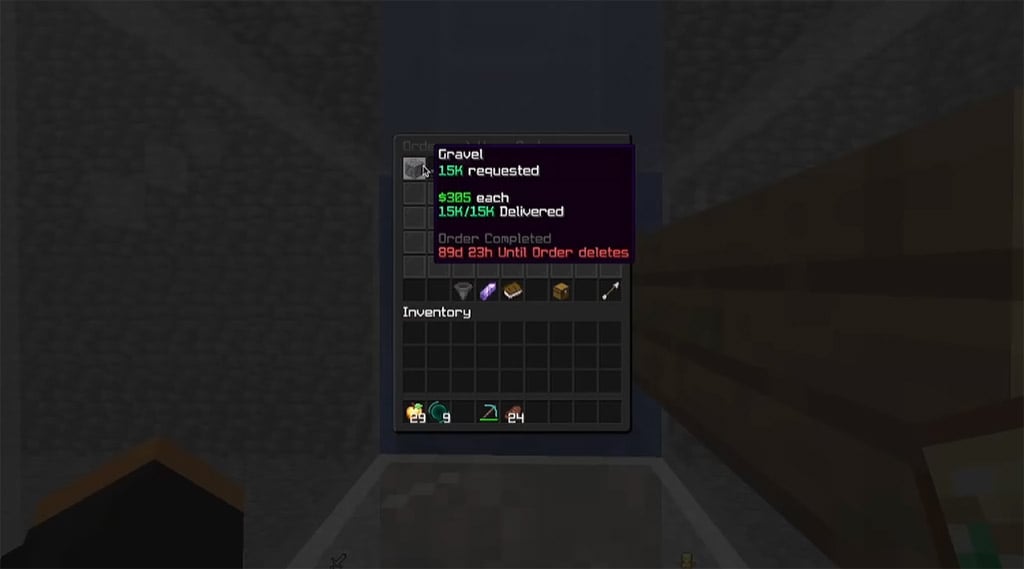
Large builds and faction bases consume tens of thousands of concrete blocks weekly. The recipe (4 sand, 4 gravel, 1 dye) yields 8 concrete powder blocks.
1. Specialize by color: White, black, and gray typically command steady volume. Rare decorative colors can hold higher margins but sell significantly slower.
2. Powder vs. Hardened Concrete: Test both options. If hardening powder via a water chute only adds a marginal premium per stack, sell the raw powder to save conversion time.
3. Verify server automation rules: Always review the server's approved modification guidelines via the Official Donut SMP Portal or type /rules in-game before setting up rapid-input or macro-assisted builds.
Turnkey Farm Construction on Commission
Building massive mob or crop farms speculatively can leave millions of dollars trapped in unclaimed territory. Instead, work as a contracted builder:
- Standardize milestones: Secure a 30% upfront deposit for raw materials, 40% upon verified mechanical completion, and the remaining 30% upon territory/access transfer.
- Safety protocols: Never share build coordinates before a milestone payment clears, and always execute transfers in accordance with server safety guidelines to prevent claim griefing.
FAQ (Frequently Asked Questions)
What is the safest beginner money-making method on Donut SMP?
Small-batch wood and slab crafting. Converting raw logs into utility items or spruce slabs requires minimal initial capital and lets you test buyer demand with zero downside. Reinvest your revenue only after each batch clears.
Why is my spruce slab operation losing money?
Spruce slabs are only profitable when 8 slabs sell for substantially more than the cost of 1 raw log, factoring in Auction House taxes and storage overhead. If log prices surge or slab prices plummet, pause crafting and sell raw logs instead.
Can you reach $100 million in under five hours?
Not from a fresh start without outside help. Generating $100 million in a single session typically requires massive seed capital to execute high-ticket Auction House flips, access to high-tier mob spawners, or the sale of an established base/farm. Beginners should focus on steady compound growth through each stage of the progression ladder.
Is AFK farming permitted and profitable on Donut SMP?
AFK mechanics and anti-cheat policies vary by season and server updates. Always review the latest rules regarding macros, client modifications, and AFK pools on the official server website or Discord. Supervise your setups until you have verified that your specific method complies with current server policies.

I’m Chloe Whitaker, a British Fact Checker at GGWTB focused on Currency farming, pet collecting, and management games, alongside Minecraft sandbox content. I check the details that shape your next move: growth timers, unlock requirements, and whether a reward is still obtainable. An old event tip shouldn’t cost you an evening chasing a pet you can no longer get.

Most Popular Posts
- Donut SMP Best Money-Making Meta With Jobs, Farms, and Spawner Trading
- Donut SMP Spruce Slab Factory: Turn Logs Into Millions (Real Player Guide)
- Best Donut SMP Money-Making Methods: Complete Beginner to $100M Guides
- Donut SMP Making Money with Lodestone Compass: Profit Guide for Smart Hunters
- Donut SMP Base Buying Guide: How to Avoid Scams and Bad Deals
- Donut SMP Money Guide: Starter Methods, Trading Costs and Risks
Popular Category Lists
- ARC Raiders / (351)
- Grow a Garden / (294)
- CoD: Black Ops 7 / (167)
- Star Citizen / (162)
- MLB 26 / (159)
- Monopoly Go / (152)
- ARK Survival Ascended / (128)
- Steal a Brainrot / (99)
- Blox Fruits / (74)
- Adopt Me / (74)
- Forza Horizon 6 / (72)
- Sailor Piece / (68)
- Grow a Garden 2 / (68)
- Diablo IV / (62)
- CoD: BLACK OPS 6 / (55)
- Aion 2 / (50)
- Path of Exile 2 / (48)
- Monster Hunter Wilds / (46)
- Windrose / (44)
- Donut SMP / (41)