


 0
0 Created: Dec 29,2025 | Bee Swarm Simulator
Bee Swarm Simulator Honeyday Max Honey Plan for Blue, Red & White Hives

Bee Swarm Simulator Honeyday isn't just 2x looks cool. It's a multiplier on everything you're already doing—field time, conversions, boosts, and your mistakes. If you jump in unprepared, you'll just fill faster, walk home more, and wonder why your honey didn't explode.

We use every Honeyday: prep → controlled boosts → repeatable loops, with clear if this happens, do that forks for every hive color and for SSA vs pre-SSA players.
- 1) What Honeyday Actually Amplifies (and Why That Matters)
- Key terms in plain English
- 2) The First 30 Minutes: Non-Negotiable Prep Checklist
- Honeyday prep table (priority order)
- 3) A Practical 48-Hour Schedule (So You Don't Burn Out)
- 48-hour plan template
- 4) Progress Fork: Pre-SSA vs Post-SSA
- Stage-based strategy
- 5) Universal Rules for All Hive Colors
- 6) Blue Hive: Balloon Blessing Is the Entry Ticket
- Blue boost logic
- Blue boost loop (simple and repeatable)
- 7) Red Hive: Win by Aligning Windows, Not by Running Around
- Red boost rules I follow
- 8) White Hive: High Ceiling, Highest Requirements
- White's practical approach
- 9) My Real-World Honeyday Lesson: Prep Beats More Items
- 10) Troubleshooting: Why Your Honey Isn't Exploding
- FAQ
- 1) What should I do first when Honeyday starts?
- 2) I'm early game with few resources—can I still benefit?
- 3) How high should Balloon Blessing be for Blue?
- 4) I don't have Fuzzy support—what now?
- 5) What's the #1 Red Hive mistake?
- Summary
1) What Honeyday Actually Amplifies (and Why That Matters)
Honeyday typically boosts pollen gain and conversion rate for a long duration (commonly up to 48 hours depending on the event). The core idea is simple:
Because your time becomes more valuable, you must reduce wasted time and wasted conversions.
Key terms in plain English
- Nectar: long-duration buffs that raise your baseline efficiency.
- Pollinated field: a higher-quality field that produces more (and feels less dry over time).
- Blessings (e.g., Balloon Blessing for Blue): scaling multipliers that decide whether your boosts feel weak or insane.
This means: the best Honeyday strategy is not spam items, it's make your multipliers stick.
2) The First 30 Minutes: Non-Negotiable Prep Checklist
I treat Honeyday like a launch window: you do setup first, then you press the button.
Honeyday prep table (priority order)
| Priority | Do this | Why | If you skip it |
|---|---|---|---|
| 1 | Claim/activate all event freebies & relevant NPC gift buffs | These are often global multipliers | You lose value for the entire 48 hours |
| 2 | Stack as much Nectar as you can (matching your hive needs) | Nectar is your floor; it compounds | You'll grind but feel underpowered |
| 3 | Prepare basic boost materials (Field Dice / Glitter / Smoothies, etc.) | Honeyday increases boost ROI | You'll waste the best hours on average gains |
| 4 | Secure pollination support (your own Fuzzy or teammates/alts) | Pollination raises field quality | The field decays and your run weakens |
| 5 | Check your capacity + conversion rhythm | Overfilling causes waste | You'll do more walking than earning |
If you notice you fill in 2–3 minutes, then you need a tighter convert loop or more conversion/capacity before you go big.
3) A Practical 48-Hour Schedule (So You Don't Burn Out)
I don't play 48 hours straight. I run cycles where my best buffs line up with my best focus.
48-hour plan template
| Time window | Goal | What I do | What I measure |
|---|---|---|---|
| Hour 0–1 | Build the foundation | Gifts, Nectar, small test boost | Can I hold a field 10–15 min efficiently? |
| Hour 1–6 | First real boost | Main field + item stack + blessing setup | Does each hive conversion jump noticeably? |
| Hour 6–24 | Stabilize + restock | Macro/semimacro/tasks + maintain Nectar/pollination | Is my resource burn sustainable? |
| Hour 24–48 | Spend the premium items | Use strongest items when fully stacked | Do premium items actually multiply output? |
If you feel premium items aren't moving the needle, then one of your multipliers is missing (Nectar, pollination, blessings, or timing).
4) Progress Fork: Pre-SSA vs Post-SSA
Your goals change dramatically once SSA enters the picture.
Stage-based strategy
| Stage | Primary goal | Best Honeyday use | Don't do this |
|---|---|---|---|
| Early (≤25 bees) | Build power & unlocks | quests + steady field grind + low-cost boosts | burn rare items trying to max boost |
| Mid (30–40 bees) | Prepare gifted variety + SSA path | maintain Nectar/pollination + controlled boosting | empty your long-term mats for short-term honey |
| Post-SSA | Multiply via passives | timed boosts that align with your SSA | random item spam without a plan |
This means: pre-SSA players win by accelerating progress; post-SSA players win by optimizing windows.
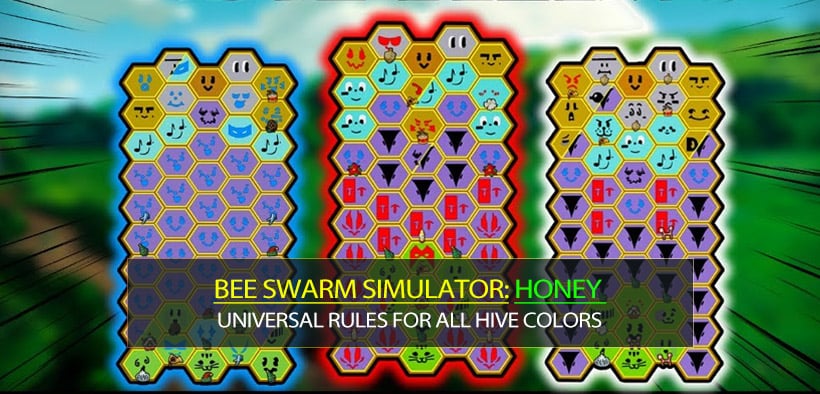
5) Universal Rules for All Hive Colors
No matter what color you are, these three levers decide whether Honeyday feels OP or meh.
1. Keep Nectar high
Because it's long-duration, it's the best always-on multiplier.
2. Keep fields pollinated (as much as possible)
Because field quality affects everything you collect.
3. Control conversion rhythm
Because overflowing is silent waste.
If you notice constant overflow or nonstop trips home, then your run is conversion-limited, not pollen-limited.
6) Blue Hive: Balloon Blessing Is the Entry Ticket
Blue can look weak if your Balloon Blessing is low, and absurdly strong once it's rolling.
Blue boost logic
You're not competing on instant pollen. You're competing on balloon capacity + payout cycles.
Blue boost loop (simple and repeatable)
| Step | What I do | Why | I did it right signal |
|---|---|---|---|
| 1 | Stack Nectar + pollination before boosting | foundation first | early minutes feel noticeably stronger |
| 2 | Trigger your key passives consistently (Pop-related) | that's the engine | passives chain without long gaps |
| 3 | Convert in a controlled payout at hive | payouts are the payoff | hive conversion spikes honey hard |
| 4 | Repeat while preserving blessing strength | blessings are your multiplier | blessing stays in a healthy range |
If you find your Balloon Blessing refuses to climb (or collapses instantly), then check:
- whether your hive comp supports consistent passive uptime
- whether your field quality (pollination/Nectar) is too low to sustain the loop
7) Red Hive: Win by Aligning Windows, Not by Running Around
Red's best Honeyday gains come from timing: aligning your core passives and playing tighter around the high-value moments.
Red boost rules I follow
| Rule | What I do | Why | Common failure |
|---|---|---|---|
| Align core passives | wait/prepare marks before the burst window | red scales with stacking | passive procs while you're repositioning |
| Stay more centered | less chaotic movement during burst | keeps value concentrated | dragging effects everywhere and diluting |
| Maintain mark density | keep the field ready | marks are your uptime | marks drop off → burst wastes itself |
If you notice your run looks flashy but pays small, then you're missing alignment or spending too much burst time moving.
8) White Hive: High Ceiling, Highest Requirements
White can be amazing, but it punishes sloppy boosting more than Blue or Red.
White's practical approach
- Fewer, cleaner real boosts beats constant half-boosting.
- Your goal is to amplify aligned windows, not to be at max intensity 100% of the time.
If you find you're burning resources for mediocre gains, then either drop boost frequency or build a stronger resource/buff base before pushing white hard.
9) My Real-World Honeyday Lesson: Prep Beats More Items
Here's the consistent pattern I see every event:
| Scenario | Account state | Behavior | Result (hourly feel) | What caused the gap |
|---|---|---|---|---|
| A: Underprepared | Nectar low, pollination inconsistent | jumps straight into grinding | unstable gains, frequent resets | field quality + overflow waste |
| B: Prepared | Nectar stacked, pollination maintained | builds base → controlled boosts | smoother, higher payouts | more effective minutes |
Honeyday rewards effective field time, not just time logged in.
10) Troubleshooting: Why Your Honey Isn't Exploding
| Symptom | Likely cause | Fix |
|---|---|---|
| Fill in 2–3 minutes | conversion/capacity mismatch | shorten loops or raise conversion tools |
| Field gets worse over time | pollination missing | add Fuzzy support or rotate smarter |
| Items don't help much | missing multipliers | re-stack Nectar/pollination/blessing first |
| Blue feels weak | low Balloon Blessing | build blessing before real boosts |
| Red doesn't burst | poor alignment | prep marks/windows, reduce movement |
FAQ
1) What should I do first when Honeyday starts?
Activate long-duration buffs first (NPC gifts/event rewards) and stack Nectar—because they compound for the entire 48 hours.
2) I'm early game with few resources—can I still benefit?
Yes. Use Honeyday to push milestones (quests, gear, bee count). Don't burn rare materials chasing perfect boosts.
3) How high should Balloon Blessing be for Blue?
Higher is better. If you notice your payouts are small and blessing drops fast, then focus on building blessing and stabilizing uptime before spending premium items.
4) I don't have Fuzzy support—what now?
Run shorter boosts, rotate fields more intelligently, and prioritize getting any reliable pollination source long-term.
5) What's the #1 Red Hive mistake?
Treating red like a constant sprint. Red is about aligned burst windows—miss the window and the run underperforms.
Summary
Honeyday pays the most to players who keep their multipliers online: Nectar as the baseline, pollination as field quality, and a conversion rhythm that avoids overflow. Then you lean into your hive color's core: Blue scales with blessing + payout cycles, Red scales with aligned burst windows, and White scales with precise, resource-heavy amplification. Run the loop, measure the signals, and Honeyday stops being 2x but chaotic and starts being 2x and controlled.
Most Popular Posts
- Bee Swarm Simulator Blue Hive Guide (2026): From Early Meta to Trillions Honey AFK
- Bee Swarm Simulator Most OP Beesmas Items Offline Voucher Guides
- Bee Swarm Simulator Beesmas 2026: How to Complete the Questline Fast?
- Bee Swarm Simulator (2026) Full Progression Guide: From Zero To Supreme Star Amulet
- Bee Swarm Simulator Blue Hive Guide: Best For All Levels, Amulets Stats, Mutations, More
- Bee Swarm Simulator Best Amulet Stats: All 7 Amulets + Best SSA by Color
Popular Category Lists
- ARC Raiders / (356)
- Grow a Garden / (295)
- CoD: Black Ops 7 / (167)
- Star Citizen / (163)
- MLB 26 / (159)
- Monopoly Go / (153)
- ARK Survival Ascended / (128)
- Steal a Brainrot / (99)
- Blox Fruits / (74)
- Adopt Me / (74)
- Forza Horizon 6 / (72)
- Sailor Piece / (68)
- Grow a Garden 2 / (68)
- Diablo IV / (62)
- CoD: BLACK OPS 6 / (55)
- Aion 2 / (54)
- Path of Exile 2 / (48)
- Monster Hunter Wilds / (46)
- Windrose / (44)
- COD: Modern Warfare 4 / (44)