


 0
0 Created: Mar 25,2026 | MLB 26
Best Roster Update Investments in MLB The Show 26 to Make More Stubs Early

Early roster update investing in MLB The Show 26 is less about finding the biggest star and more about finding the best price-to-upgrade opportunity. That difference matters. A strong player can already be overpriced, while a lower-profile card near quicksell can quietly become one of the safest ways to build mlb 26 stubs.
From experience, the best early investments usually come from three places: Opening Day starters, 83–85 overall cards with realistic upgrade paths, and golds sitting close to floor price. If we stay focused on timing, risk, and short-term catalysts, we give ourselves a much better chance to stack stubs without chasing hype too late.
- What Makes a Good Early Investment?
- Best MLB The Show 26 Roster Update Investments
- Best Types of Cards to Buy First
- Players We Like Most Right Now
- Joe Ryan
- Jarren Duran
- Drew Rasmussen
- Jackson Merrill
- When to Avoid a Buy
- Simple Buy-and-Sell Strategy
- Quick Budget Guide
- FAQ
- What are the best roster update investments in MLB The Show 26?
- Are low diamonds worth buying?
- Should we buy after a price spike?
- Are hitters or pitchers better early?
- When should we sell?
- Final Takeaway
What Makes a Good Early Investment?
A card is worth buying early if it checks at least two of these boxes:
- Real upgrade path: strong stats, strikeout upside, or home run potential
- Good entry price: ideally near quicksell or before a hype spike
- Short-term catalyst: Opening Day start, favorable matchup, or market buzz
This is the key idea: a good player is not always a good investment. Price still decides everything.
Best MLB The Show 26 Roster Update Investments
These are the names that stand out most right now based on current value, upgrade path, and early-season market behavior.
| Tier | Players | Why They Stand Out |
|---|---|---|
| S Tier | Nathan Eovaldi, Drew Rasmussen, Kevin Gausman, Joe Ryan, Jarren Duran | Strong early catalysts, market attention, realistic profit path |
| A Tier | Jackson Merrill, Jesús Luzardo, Adley Rutschman, George Kirby, Elly De La Cruz | Good upside, but more price-sensitive |
| B Tier | Will Smith, Alex Bregman, Manny Machado, William Contreras, Brent Rooker | Solid targets, though not ideal at every price |
| Watchlist | Nico Hoerner, Josh Naylor, Yandy Díaz, injured or overpriced names | Fine players, weaker investment timing |
The main takeaway here is simple: buy the card when the market still gives you room, not after everyone agrees it is a good idea.
Best Types of Cards to Buy First
Not every investment tier works the same way. Here is where we usually get the cleanest value.
| Card Type | Why It Works | Best Time to Buy |
|---|---|---|
| Opening Day starters | Fast hype cycle, strong short-term movement | Before first start |
| 84–85 overall cards | Meaningful per-card profit on upgrades | Before market fully prices them in |
| 81–83 golds near quicksell | Lower risk, strong early flip potential | At or near floor price |
In practice, this means we should not only chase diamonds. Some of the safest early stub growth still starts with golds.
Players We Like Most Right Now
A few names deserve extra attention because they fit both the market and gameplay logic.
Joe Ryan
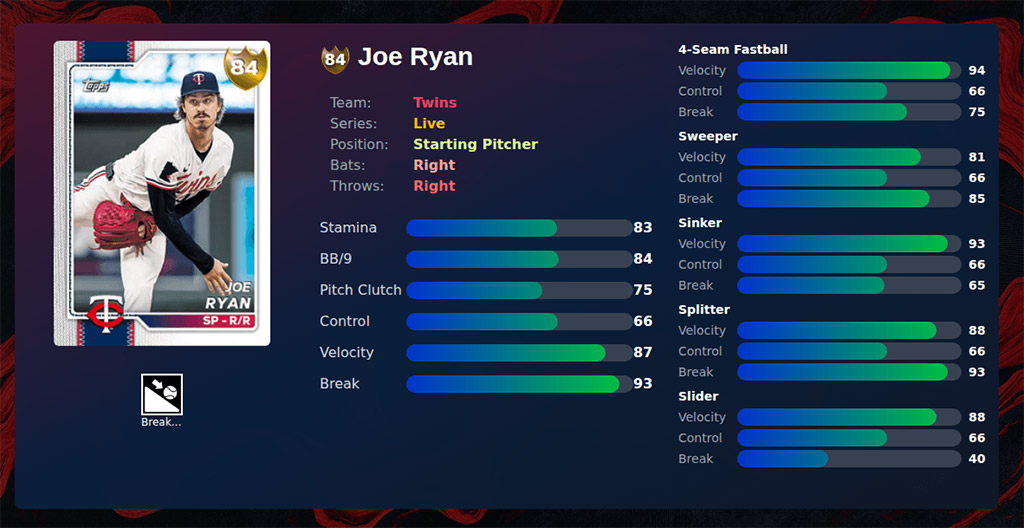
Joe Ryan is one of the cleaner pitching investments because he has a believable strikeout path and the kind of profile the market reacts to quickly. If you bought early, great. If the price already jumped too far, patience becomes the better move.
Jarren Duran
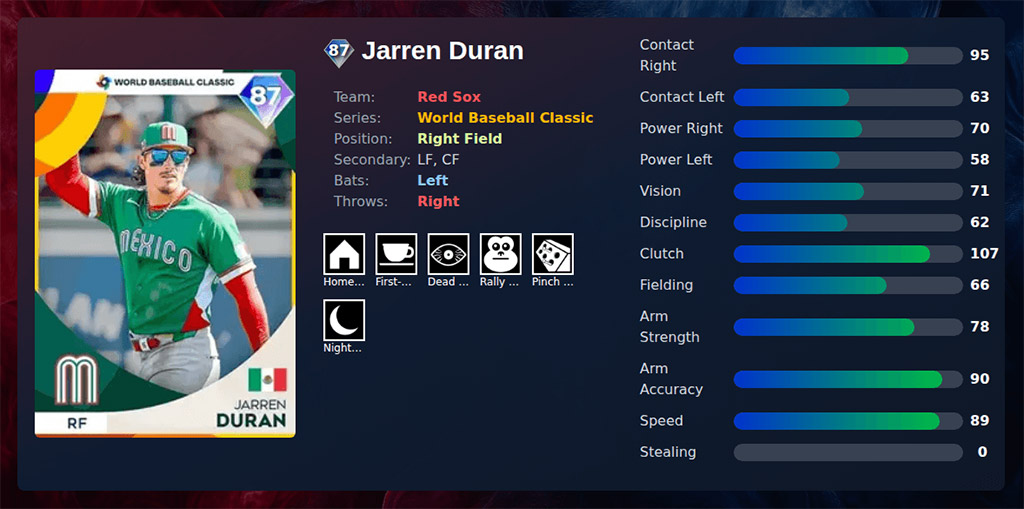
Duran is one of the most interesting hitter investments because he can create a price spike fast. If he starts hot, the market will move before the update even arrives. That makes him valuable both as an investment and as a flip candidate.
Drew Rasmussen
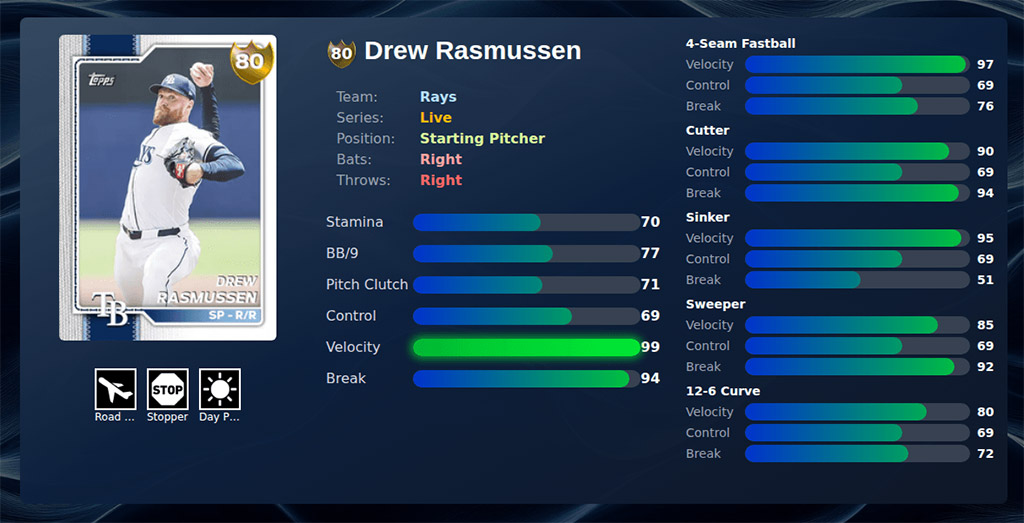
Rasmussen is the kind of early card experienced investors like to target: not always the loudest name, but often priced more fairly than the market's obvious favorites. That usually gives us a better entry point.
Jackson Merrill
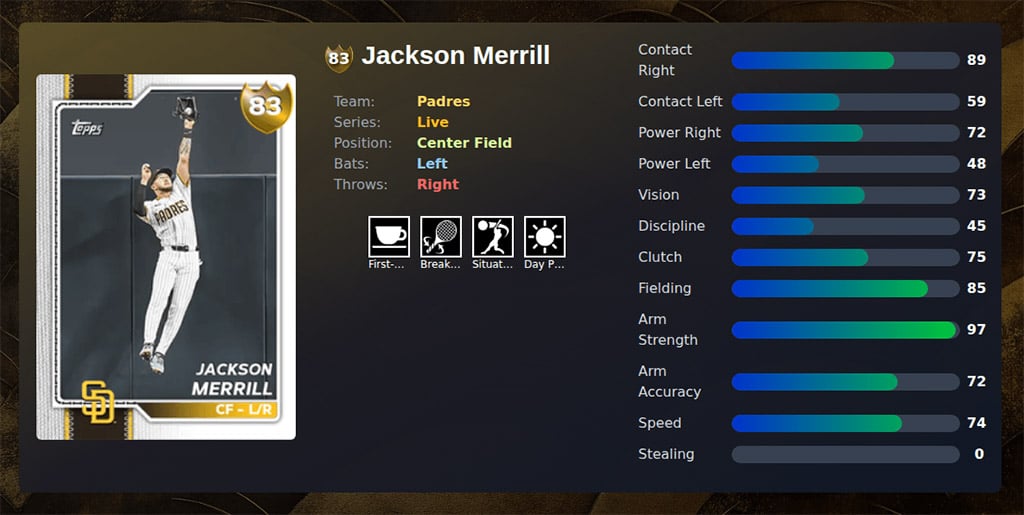
Merrill has both talent and name appeal. That is a powerful mix early in the game cycle. The only concern is price. If you are buying after a run-up, the risk goes up quickly.
When to Avoid a Buy
This is where a lot of players lose stubs.
We should slow down if:
- the card already had a major price spike
- the player is injured or uncertain for opening stretch
- the card needs too many real-life changes to move
- the market is buying pure hype with no margin left
If you discover that a player is great but already expensive, then the better decision is often to skip the chase and rotate into the next opportunity.
Simple Buy-and-Sell Strategy
A strong early process usually looks like this:
1. Buy before the first big catalyst
2. Target quicksell or near-quicksell when possible
3. Sell into hype if price outruns real upgrade value
4. Do not overload one name
5. Spread stubs across pitchers, hitters, and low-risk golds
That last point matters a lot. Diversification protects us when one sure thing turns into a brick.
Quick Budget Guide
| Stub Budget | Best Focus |
|---|---|
| Low budget | 81–83 golds near quicksell |
| Mid budget | 83–84 overall hitters and pitchers |
| High budget | Low diamonds, premium starters, diversified holds |
The goal is not to own the most exciting cards. The goal is to own the best entries.
FAQ
What are the best roster update investments in MLB The Show 26?
The best early targets are usually Opening Day starters, 84–85 overall cards with upgrade potential, and golds near quicksell. Right now, names like Joe Ryan, Drew Rasmussen, Kevin Gausman, and Jarren Duran stand out.
Are low diamonds worth buying?
Yes. In MLB The Show 26, low diamonds can still be very profitable because even a small upgrade creates solid stub value per card.
Should we buy after a price spike?
Usually no. If the market already moved hard, the risk gets worse. Waiting for a dip or moving to another target is often smarter.
Are hitters or pitchers better early?
Pitchers are usually cleaner early because they have obvious catalyst windows. Hitters can spike harder, but they are often more volatile.
When should we sell?
Sell when hype pushes the price beyond realistic roster update value, especially after a strong first outing or a hot hitting stretch.
Final Takeaway
The best early investments in MLB The Show 26 are not just about talent. They are about timing, price, and believable momentum. That is why Opening Day starters, low diamonds, and quicksell golds remain the best place to start.
If we stay disciplined, avoid chasing overheated prices, and spread risk across a few strong targets, we put ourselves in a much better position to build stubs early without needing every card to hit perfectly.
Most Popular Posts
- MLB The Show 26 God Squad Guide: Best Lineup, 98 Tarik Skubal, Bullpen Picks, and Legend Tips
- MLB The Show 26 Tier List: Best Diamond Dynasty Cards by Position
- MLB The Show 26 Hall of Fame Guide: 99 Hoffman, Best Spotlights & Chase Pack Value
- MLB The Show 26 Top 20 Endgame Cards Ranked for New Seasons
- MLB The Show 26 New Threads 2.0 Tier List Guide: Best Cards, Budget Picks, and Meta Fits
- MLB The Show 26 New 99 OVR Tier List: Best Cards Ranked
Popular Category Lists
- ARC Raiders / (354)
- Grow a Garden / (294)
- CoD: Black Ops 7 / (167)
- Star Citizen / (163)
- MLB 26 / (159)
- Monopoly Go / (153)
- ARK Survival Ascended / (128)
- Steal a Brainrot / (99)
- Blox Fruits / (74)
- Adopt Me / (74)
- Forza Horizon 6 / (72)
- Sailor Piece / (68)
- Grow a Garden 2 / (68)
- Diablo IV / (62)
- CoD: BLACK OPS 6 / (55)
- Aion 2 / (52)
- Path of Exile 2 / (48)
- Monster Hunter Wilds / (46)
- Windrose / (44)
- Maplestory Classic / (42)