



 0
0 Created: Dec 30,2025 | Steal a Brainrot
Steal a Brainrot Bat-Only PvP Trading Method: Positioning, Routes and Hit Registration Details

This Steal a Brainrot PVP trading method sounds like chaos at first: both players stake an item, you fight with limited gear, and whoever steals the opponent's item into their base wins and exits immediately. But once you strip away the hype, it's a real system with a clear edge: you're converting skill and decision-making into item value, instead of relying on luck or pure negotiation.
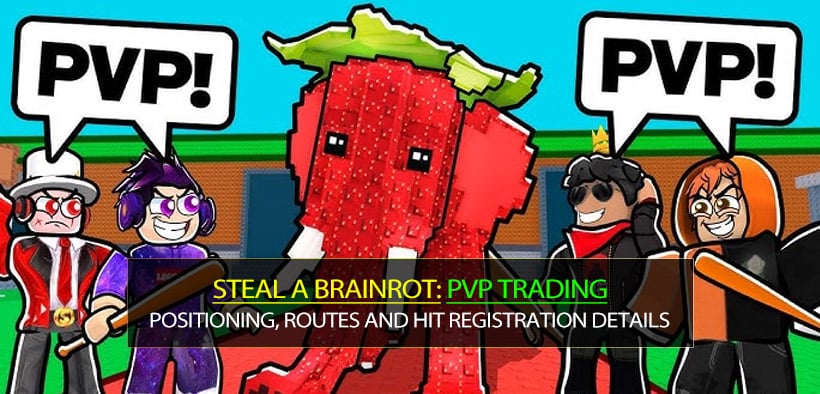
The rules that prevent disputes, the three win-rate levers that matter, the data I track to decide if it's worth it, and the anti-scam/anti-cheat checklist that keeps you from donating your inventory to strangers.
- 1) What this method actually is (and what you're really risking)
- 1.1 The core idea: skill-based settlement instead of normal trading
- 1.2 Why bat-only makes the method more profitable
- 2) A replicable ruleset that prevents 80% of disasters
- 2.1 My standard fair rules (the one I'd recommend you copy)
- 2.2 Base setup: where most people lose without realizing it
- 3) Win rate comes from three levers: positioning, first hit, and routes
- 3.1 Positioning: don't stand in the middle and honor duel
- 3.2 First hit decision: hit the player or hit the item?
- 3.3 Routes: choose short + blocked, not straight + open
- 4) what profit and risk look like in reality
- 4.1 My Match Data
- 4.2 My tier-up approach (reduces volatility)
- 5) Anti-scam and anti-cheat: the real endgame
- 5.1 Common traps I've seen (and what to do instantly)
- 5.2 My 30-second pre-match checklist
- 6) When this method is not worth it
- 6.1 Don't use this if…
- 6.2 This is for you if…
- FAQ
- 1) Where should I start if I don't want to get wiped?
- 2) Someone says speed is allowed just this once. Is it ever okay?
- 3) What if the match drags on for 10 minutes?
- 4) Why can't I pick the item up sometimes?
- 5) How do I know if the opponent is safe to play?
- Summary
1) What this method actually is (and what you're really risking)
Let's make the mechanism explicit so you don't accidentally gamble without realizing it.
1.1 The core idea: skill-based settlement instead of normal trading
A normal trade is negotiation. This method is closer to a wager with a mechanical settlement:
- You both stake an item (values may be uneven)
- You start on a countdown
- You fight to steal the opponent's item and bring it to your base's drop zone
- Winner exits immediately to lock the result
Why this matters: you're not trying to win every time—you're trying to maintain a win rate high enough that your average outcome is positive.
1.2 Why bat-only makes the method more profitable
Most people assume more tools = more advantage. In practice, more tools often equals more arguments, which equals more unresolved outcomes.
Bat-only works because:
- It's consistent: knockback + control + fewer weird edge cases
- It's enforceable: easier to confirm someone didn't bend rules
- It reduces I lost because you used X disputes
If you want profit, you want clean settlement, not dramatic fights.
2) A replicable ruleset that prevents 80% of disasters
If rules are vague, the match becomes a debate. If it becomes a debate, it becomes a scam playground.
2.1 My standard fair rules (the one I'd recommend you copy)
- Allowed gear: Bat only
- Start: 3–2–1 (both move on 1)
- Win condition: Bring opponent's staked item into your base's defined drop zone
- Settlement: Winner exits immediately (rejoin if needed)
2.2 Base setup: where most people lose without realizing it
If you notice any of these, don't start:
- Your base is accidentally locked (you can't enter / they can't enter)
- The floor is cluttered (items bounce, clip, or become unpickable)
- There's no clear drop zone (you'll argue what counts)
My setup every time:
1. Reserve one empty floor as the match zone
2. Define a single visible drop zone (center tile, doorway square, etc.)
3. Confirm access both ways before countdown
This is boring—but boring is profitable.
3) Win rate comes from three levers: positioning, first hit, and routes
You might think it's all reflexes. Reflexes help—but routing wins matches.
3.1 Positioning: don't stand in the middle and honor duel
Standing center and trading hits feels fair and cinematic. It's also how you lose.
My default: offset angle positioning
- Stand at ~45° to their line, not directly in front
- Maintain a half-step buffer so their first swing can whiff
- Keep your camera aligned with the item's likely bounce direction
3.2 First hit decision: hit the player or hit the item?
This decision is the real skill check.
- If they're closer to the item: hit the player to deny pickup timing
- If you're closer: hit the item to bounce it into your preferred lane
If you see the item land on stairs, corners, slopes, or a clutter edge, then:
Don't panic-pick. Clear the opponent first, then re-position the item.
Because pickup animations + knockback = free punishment for them.
3.3 Routes: choose short + blocked, not straight + open
Straight lines invite interruptions, especially with lag or long-range interference.
I prefer:
- Zigzag around obstacles
- Use visual blockers (walls, trucks, pillars)
- Force them into longer chase arcs
You're not racing. You're shrinking the opponent's chance to interfere.
4) what profit and risk look like in reality
Here's where I anchor this in experience instead of vibes.
4.1 My Match Data
Values vary by server economy, but the tier-jump logic is consistent.
| Metric | Result | What it means for you |
|---|---|---|
| Wins | 14 | Win rate ≈ 77.8%—high enough to snowball |
| Losses | 4 | Half of losses came from rule-breaking/latency chaos |
| Avg match time | 3m 40s | If it goes beyond ~6 minutes, risk spikes |
| Longest streak | 7 | Streaks trigger greed—set stop rules |
| Top loss causes | lag/pickup bugs, rule violations, base setup mistakes | Most losses are preventable pre-match |
4.2 My tier-up approach (reduces volatility)
I don't try to mega-overpay flip every match. I climb in stages.
| Stage | Goal | Risk I accept | What I focus on |
|---|---|---|---|
| Low (Common→Rare) | Build a bankroll | tiny edge, low stress | rule clarity + fast settlement |
| Mid (Rare→Epic/Mythic) | Create a gap | tolerate 1 loss | positioning + deny pickups |
| High (Mythic→Secret/OG) | One decisive push | only high confidence | opponent filtering + zero exceptions |
If you catch yourself saying one more win and I'll be set, you're not strategizing—you're tilting.
5) Anti-scam and anti-cheat: the real endgame
Even with good mechanics, you can lose to matches that can't be fairly settled.
5.1 Common traps I've seen (and what to do instantly)
| What you see | What it really is | What you do |
|---|---|---|
| Just one speed item, it's fine | rule erosion | refuse and cancel |
| You hit them but it feels like air | desync or exploit | change server / stop |
| You stake first | psychological setup | never do it—always simultaneous |
| They lose but demand rematch before settlement | stalling + pressure | exit immediately after win |
5.2 My 30-second pre-match checklist
I run this every time, no exceptions:
1. Confirm bat-only
2. Confirm base access both ways (no locks)
3. Confirm empty match floor + clear drop zone
4. Confirm hit registration (one test swing)
5. Confirm stake is simultaneous
If any of these fail, I don't try anyway. I leave.
6) When this method is not worth it
This method isn't magic. It has clear boundaries.
6.1 Don't use this if…
- Your connection is unstable (pickup + knockback becomes roulette)
- You hate refusing people (you'll get negotiated into bad rules)
- You have a one-life inventory (no buffer = catastrophic downside)
6.2 This is for you if…
- You're willing to enforce rules
- You enjoy solving matches like a strategy puzzle
- You can accept occasional losses without doubling stakes emotionally
FAQ
1) Where should I start if I don't want to get wiped?
Start at a tier where losing doesn't hurt. I personally require 3 clean wins in a row at a lower tier before I move up. If you tense up and run straight lines or panic-pick, you're not ready for high stakes.
2) Someone says speed is allowed just this once. Is it ever okay?
No. The moment you allow exceptions, the match becomes non-comparable and non-settleable. Profit comes from enforceable rules.
3) What if the match drags on for 10 minutes?
If it turns into an endless chase, I reset the situation: new match or new server. Long matches amplify: bugs, third-party interference, fatigue, and tilt.
4) Why can't I pick the item up sometimes?
Usually one of three causes:
- It's stuck on geometry (stairs, corners, slopes)
- You're being interrupted during pickup timing
- Desync: client thinks you grabbed it, server disagrees
Fix order: clear the opponent → move item to flat space → pick up.
5) How do I know if the opponent is safe to play?
My filter is simple:
- They agree to bat-only without bargaining
- They accept simultaneous stake
- They tolerate a quick hit-registration test
If they rush you or keep changing terms, that's a no.
Summary
This PVP steal-and-exit method works when you treat it like a system: rules reduce variables, routes reduce mistakes, data reduces self-deception. The real skill isn't just swinging the bat—it's building matches that can be cleanly settled and refusing anything that can't.
Most Popular Posts
- Steal a Brainrot Fusion Guide: How to Fuse Dragon Aquanini and Max Its Traits
- Steal a Brainrot Best Los Tangcitos Crafting Guide: Recipes, Traits, Mutations, and Odds
- Steal a Brainrot Los Dragons Unit Recipe and Craft Guides
- Steal a Brainrot Tier List for Brainrots: Best Units Ranked by Aura
- Steal a Brainrot Crafting Rare Los Cornis: Fusion Odds & Best Combos That Actually Work
- Steal a Brainrot Guide: Rebirth Requirements, Lucky Blocks & Steals
Popular Category Lists
- ARC Raiders / (343)
- Grow a Garden / (292)
- CoD: Black Ops 7 / (167)
- Star Citizen / (160)
- MLB 26 / (159)
- Monopoly Go / (152)
- ARK Survival Ascended / (126)
- Steal a Brainrot / (98)
- Blox Fruits / (74)
- Adopt Me / (73)
- Forza Horizon 6 / (72)
- Sailor Piece / (68)
- Grow a Garden 2 / (68)
- Diablo IV / (62)
- CoD: BLACK OPS 6 / (55)
- Path of Exile 2 / (48)
- Monster Hunter Wilds / (46)
- Aion 2 / (45)
- Windrose / (44)
- Donut SMP / (41)