



 0
0 Created: Sep 15,2025 | Steal a Brainrot
Steal a Brainrot Wall Method + Magnet Risk Control to Boost Your Success Rate Fast

Steal a Brainrot Ever felt that choke moment—13 seconds left, teammates yanking you sideways with random Magnets, route half-exposed, enemies starting to converge? You finally climb the wall, then a second pull nearly throws you off. Most players blame slow mechanics, yet the real culprits are broken sequence flow, undefined risk tiers, and zero pre-agreement on teammate interference.
- Core Mechanics
- Preparation Matrix
- Passive Opportunity (enemy jailed / controlled / distracted)
- Countdown Edge (timer <15s)
- Chaos Cover (brawls / visual noise)
- Vehicle Transfer (Bike route swap)
- Wall Method (vertical pathing)
- External Resource Assist (Robux or consumable advantage)
- Anti-Interference (ally mis-Magnet)
- Lock Contest Window
- Countdown Mind Game
- Failure Recycling (live recovery)
- Tool Deep-Dive
- Advanced Strategy Set
- Three-Layer Success Loop
- Observational Data
- Quick-Action Checklist
- FAQ
- Summary
You'll get:
- - Trigger signals: when to commit, delay, or abort.
- - Action chain timing: Enter → Acquire → Transition → Exit.
- - Risk breakdown: Magnet derail, premature Lock, path exposure, vehicle hesitation.
- - Executable checklists: Before / During / After.
If your success rate swings wildly and your broadcast rhythm feels shaky, this blueprint will make outcomes far more predictable.
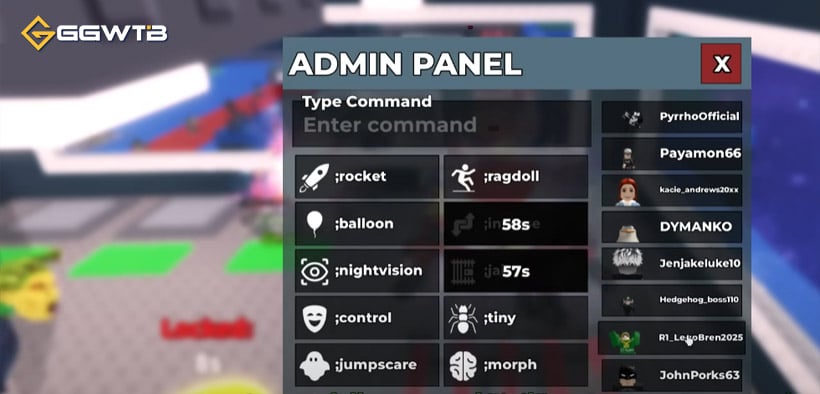
Core Mechanics
A successful secret steal Steal a Brainrot Brainrots is essentially a three-phase behavior: Window Seizure + Information Denial + Route Realization. The deciding factor isn't “how fast you click,” but who controls the spatial order in the final 10–15 seconds of uptime.
Main disruption types:
- - Magnet directional disturbance (ally or enemy). Overuse = self-sabotage.
- - Lock (locking/unlocking) plus movement suppression.
- - Vehicle path obstruction (bodies, geometry, awkward skill use).
- - Vision gaps (without night vision you misjudge approach speed).
Meaning: to raise success rate, first reduce uncontrolled variables—speed comes after stability.
Preparation Matrix
Gear Priority (by stability value):
- - Night Vision: cheap cognitive buffer.
- - Light Vehicle (Bike): exit and misalignment tool.
- - Lock utility: secure isolation post-grab.
- - Magnet: conditional tool (rescue or vertical gap only).
Team Role Template (ideal trio):
- - Aggro Diverter: fakes intent, peels enemy eyes.
- - Executor: ignores chat/noise; tracks route + countdown only.
- - Disruptor/Bodyguard: cuts enemy line-of-sight, body-blocks chase hops, cancels hostile pulls.
Pre-Entry Self-Check:
If you've entered the core zone before defining an exit route, you've already queued a high-fail scenario.
Passive Opportunity (enemy jailed / controlled / distracted)
Trigger: Key opponent jailed or CC'd.
Action Chain: Confirm remaining control seconds → close in → grab → exit on an angled path (never straight back).
Misread: Rushing in on “they're CC'd” without checking duration.
Rule: If remaining control <5s, delay half a beat, exploit their visual reorientation lag.
Countdown Edge (timer <15s)
Trigger: Timer hits psychological volatility zones (≈12, 8, 3s).
Action: Avoid premature lock rushing → be in position before 12s → avoid Magnet after 7s unless rescuing a fall.
Misread: Micro-adjusting position multiple times in last 3s → stumble / collision.
Safety: First priority = platform stability, not style.
Chaos Cover (brawls / visual noise)
Trigger: On-screen clutter, rapid sight shifts from opponents.
Action: Minimize motion signature → hug wall/shadow → stride straight through the noise line.
Misread: Joining the fight “to help,” leaving objective idle.
Rule: Executor never turns head during chaos window.
Vehicle Transfer (Bike route swap)
Trigger: On-foot lane blocked / multi-chase / clear horizontal corridor.
Action: Land → mount within 0.5s → maintain accel → no backward glance.
Misread: Micro-reposition before mounting → body collision resets.
Fallback: If start is body-blocked, abandon vehicle immediately—switch to Wall Method instead of reattempting.
Wall Method (vertical pathing)
Trigger: Ground path is contested, upper structure offers glide or lateral bypass.
Action: Vertical attachment → reach corner → 0.3s pause to confirm tail → side-slip or diagonal cut.
Observed (28 samples): Roughly +30–35% perceived success over direct rush (small sample; indicative only).
Misread: Persisting after double Magnet deviation.
Rule: Two directional drags = abort vertical; go lateral jump plan B.
External Resource Assist (Robux or consumable advantage)
Trigger: Multi-player reward distribution scenario.
Logic: One spend → reduces group repetition overhead.
Risk: Skill stagnation through reliance.
Strategy: Limit to training/fun or community giveaway sessions.
Anti-Interference (ally mis-Magnet)
Trigger: Repeated, unnatural pull or rotational snap.
Action: Call stop pull codeword → diagonal offset to break tether line → shift to secondary lane.
Misread: Assuming it's an enemy and brute forcing forward.
Rule: Team sets pre-agreed threshold: second unintended pull = cease all Magnets.
Lock Contest Window
Trigger: You possess objective while nearby players attempt proximity re-engage.
Action: Displace first, then visually audit. Position > confirmation.
Misread: Turning around to “check” instantly after grab.
Rule: Achieve distance outside contest radius → then perform secondary interaction (lock/transfer).
Countdown Mind Game
Trigger: Enemies start chasing your avatar body instead of future route.
Action: Feign linear path → oblique angle exit as their focus narrows.
Misread: Early panic jump = insufficient vertical clearance.
Rule: Internal numeric pacing (10→8→5→3) to resist external shout pressure.
Failure Recycling (live recovery)
Trigger: Fall / Magnet skew / path collapse.
Action: Tag failure point → immediate rerun → clip timestamp → log Action + Error + Fix.
Benefit: Converts “choke” into pattern memory.
Rule: Don't wait to “cool off”—hot capture = accurate cognitive trace.
Tool Deep-Dive
| Tool | Purpose / Risk | Use When | Avoid When | Key Principle | Data / Mnemonic |
|---|---|---|---|---|---|
| Magnet | High risk: removes fine control | Unreachable vertical gap; single fall save | Timer <7s stable; after landing; after 2 skews | Rescue only, not routine assist | 7/12 fails = bad pulls (58%); Stable? Skip. |
| Lock System | Delay chase alignment | After gaining distance post-grab | At origin grab point | Grab → angle out → corner → lock → pivot | Rule: Distance first. |
| Night Vision | Wider early spotting | Pre-entry low light / clutter | Mid-panic toggle | On before contest | +~20–25% perceived range; “On before in.” |
| Light Vehicle | Fast acceleration exit | Clear lane; need misalignment | Blocked spawn lane; repeated body blocks | 45° staged; mount <0.5s; no look-back | Mnemonic: Light + Angle. |
| Resource Spend | Reduce grind overhead | Focused training / community rounds | Replacing skill practice | Cost < Time×Frustration threshold | Cap: 2 uses/week; Skill > Spend. |
Advanced Strategy Set
1. Countdown Behavioral Curve
- - 12s: Opponents start predictive angling.
- - 7s: Switch to raw body collision attempts.
- - 3s: Over-movement spike—your low-motion stability wins.
2. Route Pre-Visualization
- Mental pass: Entry → Acquire → Corner A → Exit Node A/B.
- If you can't name two fallback corners before engagement, delay commit.
3. Temporal Anchors
17-12-8-5 Model: At 17s confirm path clear → 12s position in → 8s lock orientation → 5s freeze route changes.
4. Risk Tiering
- Red (instant fail): Double Magnet skew continuation / origin locking.
- Orange (rate drop): Route swap after <5s.
- Yellow (controllable): Slight low vertical / minor vehicle stall.
Three-Layer Success Loop
- 1. Mechanical Precision: Stable landings > stylish arcs.
- 2. Risk Layering: Strip red-tier errors first (Magnet misuse) before speed chasing.
- 3. Resource Allocation: Night vision + Wall Method build baseline; vehicles refine exit tempo.
Observational Data
- - 28 recent Wall Method attempts: perceived success +30–35% vs direct rush (small sample).
- - 12 tracked failures: 7 with allied Magnet interference.
- - 3 attempts with route changes <5s remaining = 100% failure in sample.
Quick-Action Checklist
Before
- - Route A/B clear?
- - Night vision on?
- - Stop pull codeword aligned?
- - Vehicle angled 45° offset?
During
- - 12s: Positioned, no fancy jump.
- - 8s: Lock primary escape direction.
- - 5s: No new Magnet unless fall rescue.
- - Double skew? Invoke side-route instantly.
After
- - Distance first, then lock.
- - Log any unnecessary motion.
- - Write 3 micro-improvements.
FAQ
Q1: Why do I get knocked off in the final 3 seconds?
A: You're likely lateral-adjusting after 5s. Wide movement = predictable collision window. Commit earlier.
Q2: Should I ditch Magnet entirely?
A: No. Treat it as a rescue or vertical gap tool—not a style enhancer.
Q3: Does Wall Method fit every map sector?
A: No. Avoid fragmented protrusions lacking two stable vertical segments plus a pause corner.
Q4: Solo play—how to raise success?
A: Collapse variable count: single lane, no Magnet, secure vertical, vehicle fallback. Fewer moving parts → steadier execution.
Q5: Vehicle keeps getting body-blocked. Fix?
A: Staging error. Offset by 45°, not front-line. Clear spawn arc of predictable collision nodes.
Q6: What's most vital in a review note?
A: The first causal mistake, not a laundry list. Example: Primary cause = premature Magnet; fix = enforce <7s no-pull rule.
Q7: Can't memorize countdown pacing; any trick?
A: Audible self-tagging: whisper 12–8–5–3. Creates a rhythm anchor independent of chat noise.
Summary
Consistent steals emerge from pre-controlled variables. Reduce Magnet misuse and success climbs. Define Route A/B beforehand and anxiety drops. Anchor decisions to countdown phases and panic reflex shrinks. Standardize three pillars first—Wall Method discipline, vehicle staging, pull-stop protocol—then chase flair. Before your next round, spend 20 seconds mentally simulating the full chain. Do that, and failure noise decreases fast; sustainable predictable execution becomes your norm.
Most Popular Posts
- Steal a Brainrot Best Los Tangcitos Crafting Guide: Recipes, Traits, Mutations, and Odds
- Steal a Brainrot Los Dragons Unit Recipe and Craft Guides
- Steal a Brainrot Tier List for Brainrots: Best Units Ranked by Aura
- Steal a Brainrot Guide: Rebirth Requirements, Lucky Blocks & Steals
- Steal a Brainrot Crafting Rare Los Cornis: Fusion Odds & Best Combos That Actually Work
- Steal A Brainrot Trades Guides: OG Spawn Sniping Guide
Popular Category Lists
- ARC Raiders / (354)
- Grow a Garden / (294)
- CoD: Black Ops 7 / (167)
- Star Citizen / (163)
- MLB 26 / (159)
- Monopoly Go / (153)
- ARK Survival Ascended / (128)
- Steal a Brainrot / (99)
- Blox Fruits / (74)
- Adopt Me / (74)
- Forza Horizon 6 / (72)
- Sailor Piece / (68)
- Grow a Garden 2 / (68)
- Diablo IV / (62)
- CoD: BLACK OPS 6 / (55)
- Aion 2 / (52)
- Path of Exile 2 / (48)
- Monster Hunter Wilds / (46)
- Windrose / (44)
- Maplestory Classic / (42)