



 0
0 Created: Dec 25,2025 | Steal a Brainrot
Steal a Brainrot Stealing Brainrots Crosby Method: Works, Defend Base, and Track

I'm going to be direct: I'm not publishing a copy-paste stealing walkthrough. That kind of step-by-step would meaningfully enable harmful play and risks pushing more people into bans, rollbacks, and a worse game economy.

What I will do is more useful long-term: explain the mechanics and timing window behind the so-called Crosby Method, then give you a defense SOP you can run tonight. I'm writing this as someone who's spent a lot of hours in SAB-style loops—getting jumped, recovering, and tightening my base until easy steals SAB Brainrots stopped being easy.
- 1) What People Call the Crosby Method (Definition Without Enabling)
- 2) Why It Works: The 3-Part Risk Chain (Discover → Approach → Remove)
- 3) My Practical Benchmarks
- 4) Defense SOP: Turn Your Base From a Showcase Into a Vault
- 5) Threat Signals: What I Treat as Red Alert
- 6) Against High-Tooling / Panel Players: Don't Ego-Fight, Play Loss Prevention
- 7) Review Template: Make Each Incident Improve the Next One
- 8) Legit Alternatives (If You Want Progress Without Theft)
- FAQ
- Q1) Why won't you include step-by-step stealing instructions?
- Q2) What's the single highest-impact defense change?
- Q3) I go AFK a lot—what's the safest habit?
- Q4) Should I leave when the lobby suddenly fills?
- Q5) Are panel players unbeatable?
- Summary
1) What People Call the Crosby Method (Definition Without Enabling)
In plain terms, the Crosby Method is window-based opportunism:
- the attacker seeks low-competition moments (low-pop or freshly filling servers),
- scans for high-visibility, high-value targets, and
- acts before the owner recognizes the situation and locks down.
Why this matters: your risk spikes not when you're weak, but when you're temporarily exposed—AFK, distracted, or in a server state that invites quick joiners.
2) Why It Works: The 3-Part Risk Chain (Discover → Approach → Remove)
Most steals I've reviewed (mine and friends') follow the same chain. If you break any link, the whole attempt collapses.
| Stage | Attacker objective (abstract) | What makes you vulnerable | Best defensive break-point |
|---|---|---|---|
| Discover | Find a server with exposed value | Your valuables are visible and easy to identify | Reduce visibility + reduce instant recognition |
| Approach | Reach the target before you react | No friction: open access, clear pathing | Add access friction + shorten your reaction loop |
| Remove | Secure the item and disengage | You respond slowly or chase emotionally | Automate protect first, chase later |
What this means: defense is less about outplaying and more about time management—your ability to compress the protection loop into a few seconds.
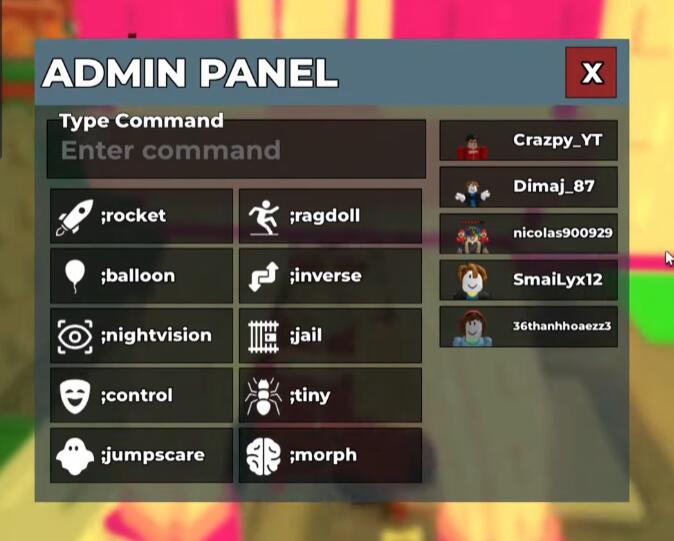
3) My Practical Benchmarks
When I test defense changes, I track outcomes like a mini A/B test. These are realistic numbers for live play:
| Metric | Practical target | Why it's useful |
|---|---|---|
| Danger window after server population shifts | ≤ 10 seconds to secure P0 | Most steals succeed in the first moments |
| Time to enter lockdown posture | 5–10 seconds | If you can't do it fast, you'll do it late |
| P0 loss frequency (per week) | Near-zero | P0 losses are what kill your progression |
| False alarm lock-downs | Acceptable (you'll do many) | Over-defending is cheaper than one big loss |
Case note from my own play: once I trained a 10-second lockdown routine, my meaningful losses dropped sharply even when my server lobbies got busier. The steals didn't disappear; my exposure did.
4) Defense SOP: Turn Your Base From a Showcase Into a Vault
This is the part you can actually execute. The key is to reduce decision-making under pressure.
4.1 Asset Tiering (Protect the Top 10% First)
If you only do one thing, do this.
| Tier | Definition | Placement rule | Goal |
|---|---|---|---|
| P0 | Your most painful-to-lose items | Don't leave fully visible; minimize angles | Prevent one-look, one-grab |
| P1 | Valuable but replaceable | Displayable with a quick-protect plan | Limit damage |
| P2 | Low value / daily output | Anywhere | Distraction / filler |
If you notice strangers pathing straight to your core area, then protect P0 immediately.
Not after you check chat, not after you see what they do. Immediately.
4.2 The 10-Second Lockdown Routine (Checklist)
Run this like muscle memory:
| Second | Action | Why |
|---|---|---|
| 0–2 | Stop what you're doing; face your base core | Awareness beats surprise |
| 2–5 | Lock/secure access points (your game's equivalent) | Adds approach friction |
| 5–8 | Remove/relocate P0 from high-visibility positions | Breaks discover + remove |
| 8–10 | Count players + identify closest unknown | Confirms whether to stay or rotate |
If you can't complete this in 10 seconds, then practice it in quiet servers until you can.
Speed is a skill, not a personality trait.
5) Threat Signals: What I Treat as Red Alert
These are behavioral tells that correlate with steal attempts.
| Signal | What I infer | If you see it… then… | Cost |
|---|---|---|---|
| Player count jumps quickly | Someone is cycling lobbies | Lock down and secure P0 first | Low |
| Stranger runs a straight line to your core | Target-driven movement | Protect P0; don't chase yet | Medium |
| Someone idles near walls/angles | They may be scanning/identifying | Reduce visibility; reposition valuables | Medium |
| You return from AFK to a busier lobby | You missed the first window | Secure first, investigate second | Low |
What this means: the earliest signals are often subtle. Your job is to respond to patterns, not to certainty.
6) Against High-Tooling / Panel Players: Don't Ego-Fight, Play Loss Prevention
I've seen too many players lose everything trying to prove a point. That's expensive pride.
| Opponent behavior | Risk | My response | If you notice… then… |
|---|---|---|---|
| Instant reaction / hard denial | Chasing wastes time | Protect P0 and disengage | If they out-speed you, stop forcing |
| Tries to lure you away | Your base becomes exposed | Stay anchored to P0 zone | If you're pulled, return to core |
| Crowd chaos / multiple strangers | Hard to identify thief | Asset action first, social later | If it's chaotic, lock then talk |
What this means: you're managing an economy, not winning a duel.
7) Review Template: Make Each Incident Improve the Next One
Use this after any loss (or near-loss). Three reviews will change your play.
| Question | Your notes | Next change |
|---|---|---|
| When did exposure happen? (AFK / join spike / distraction) | If AFK: reduce visibility before AFK | |
| Where did the stranger go first? | Move P0 away from direct pathing | |
| What did I do that didn't protect assets? | Replace it with a 10-second routine | |
| What tier did I lose (P0/P1/P2)? | If P0: redesign layout immediately |
8) Legit Alternatives (If You Want Progress Without Theft)
If your goal is get rich fast, there are routes that don't rely on ruining someone else's run.
| Route | Best for | Strength | Trade-off |
|---|---|---|---|
| Output optimization (upgrades/efficiency) | Consistent grinders | Predictable gains | Less adrenaline |
| Trading + patch-note reading | Market-minded players | Compounding growth | Learning curve |
| Group play / mutual protection | Players with friends | Higher safety + speed | Coordination needed |
FAQ
Q1) Why won't you include step-by-step stealing instructions?
Because it would materially enable harm and degrade fair play. It also increases your own risk of reports, enforcement, and losing progress.
Q2) What's the single highest-impact defense change?
P0 tiering + a 10-second lockdown routine. Most successful steals happen before you finish thinking.
Q3) I go AFK a lot—what's the safest habit?
Before AFK: reduce visibility of P0.
After AFK: secure first, then do anything else.
Q4) Should I leave when the lobby suddenly fills?
If P0 is still exposed, secure it first. If it's secure and the lobby feels chaotic, rotating servers is often the best EV.
Q5) Are panel players unbeatable?
No. But the correct play is loss prevention, not ego battles. If you can't win in the first seconds, stop forcing it and protect assets.
Summary
The Crosby Method works because it exploits a short window where your base is visible, accessible, and you're not yet reacting. Your best counter is simple and repeatable: classify P0 assets, practice a 10-second lockdown routine, respond to early signals, and treat chaotic lobbies as an economy problem—not a personal duel.
Most Popular Posts
- Steal a Brainrot Fusion Guide: How to Fuse Dragon Aquanini and Max Its Traits
- Steal a Brainrot Best Los Tangcitos Crafting Guide: Recipes, Traits, Mutations, and Odds
- Steal a Brainrot Los Dragons Unit Recipe and Craft Guides
- Steal a Brainrot Tier List for Brainrots: Best Units Ranked by Aura
- Steal a Brainrot Crafting Rare Los Cornis: Fusion Odds & Best Combos That Actually Work
- Steal a Brainrot Guide: Rebirth Requirements, Lucky Blocks & Steals
Popular Category Lists
- ARC Raiders / (343)
- Grow a Garden / (292)
- CoD: Black Ops 7 / (167)
- Star Citizen / (160)
- MLB 26 / (159)
- Monopoly Go / (152)
- ARK Survival Ascended / (126)
- Steal a Brainrot / (98)
- Blox Fruits / (74)
- Adopt Me / (73)
- Forza Horizon 6 / (72)
- Sailor Piece / (68)
- Grow a Garden 2 / (68)
- Diablo IV / (62)
- CoD: BLACK OPS 6 / (55)
- Path of Exile 2 / (48)
- Monster Hunter Wilds / (46)
- Aion 2 / (45)
- Windrose / (44)
- Donut SMP / (41)