


 0
0 Created: Oct 8,2025 | Grow a Garden
Grow a Garden Best Pet Tier List: From S-Tier to D-Tier Explained

In Grow a Garden, pets are more than just decorative companions—they directly impact your garden's growth efficiency and resource management. But here's the challenge: which pets are worth investing your time and resources in? Which ones are just cool-looking but don't actually help? If you're struggling to figure this out, this tier list is here to help! From the game-changing S-tier pets to the less impressive D-tier ones, this guide will help you build the ultimate Grow a Garden pets lineup for your garden.
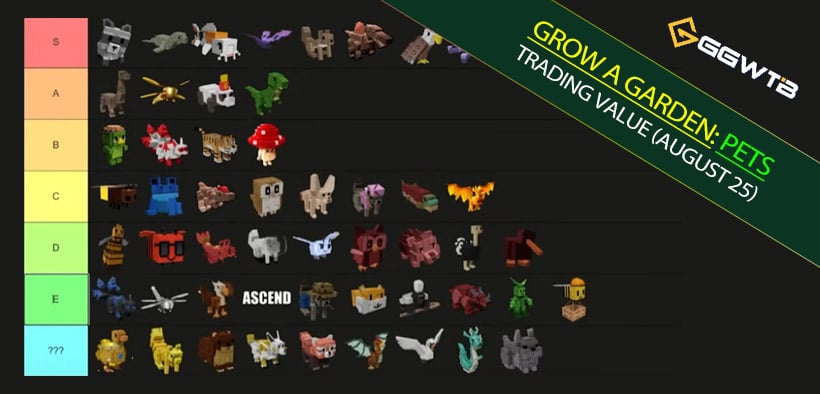
S-Tier Pets: The Best of the Best
These pets are the MVPs of the game. Whether it's generating resources or managing your garden, they offer unmatched utility and game-changing abilities.
Squirrel
- Core Ability: Infinite Reclaimers
- Why It's Strong: If you love reorganizing your garden or preparing for new events, squirrels are a must-have. With their ability to infinitely reclaim items, they make it easy to clear space and re-decorate your garden as needed. By leveling 8 squirrels to at least age 50, you can achieve a 12.5% efficiency per squirrel, unlocking their true potential.
- Pro Tip: Use squirrels before big events to optimize your garden layout.
Seal
- Core Ability: Egg Reclaim
- Why It's Strong: The seal is considered one of the most broken pets in the game. It allows you to sell pets in exchange for eggs, effectively creating a self-sustaining egg supply. With 8 high-level seals, you'll have a 50% chance of getting an egg back when selling a pet. This means as long as you have pets to sell, you'll never run out of eggs!
- Pro Tip: Pair seals with koi to maximize your egg efficiency and create an endless cycle of hatching.
Butterfly
- Core Ability: Rainbow Mutation
- Why It's Strong: Rainbows are one of the most valuable and rare mutations in the game, and butterflies are the key to obtaining them. While they require five weather mutations to create a rainbow, the result is worth it—rainbow fruits are stunning and highly valuable.
- Pro Tip: If your goal is to grow the most expensive and visually impressive fruits, butterflies are essential.
Koi
- Core Ability: Egg Stretching
- Why It's Strong: Koi are invaluable for extending the number of times an egg can be used. This is especially important for limited or rare eggs.
- Pro Tip: Combine koi with seals for an unbeatable egg management strategy.
Bald Eagle
- Core Ability: Egg Hatching
- Why It's Strong: The bald eagle is the ultimate pet for speeding up egg hatching. If you've unlocked all 13 egg slots, this pet becomes indispensable, drastically reducing the time needed to hatch new pets.
- Pro Tip: Focus on leveling up bald eagles first, especially during events that require quick egg hatching.
A-Tier Pets: Powerful but Situational
These pets are highly useful in specific scenarios but may not always be as versatile as S-tier pets.
Dragonfly
- Core Ability: Gold Mutation
- Why It's Strong: With a short 5-minute cooldown, the dragonfly is perfect for players who can't spend hours in the game. Gold mutations not only look great but also significantly increase plant value.
- Pro Tip: Use dragonflies for quick, repeated gold mutations on your fruits.
Kappa
- Core Ability: 360° Mutation Spread
- Why It's Strong: Kappas are excellent for mutation-heavy events, as they can spread mutations across a wide area. They're especially useful in events or battle passes that require mutated fruits.
- Pro Tip: Keep at least one kappa ready for mutation-focused challenges.
T-Rex
- Core Ability: Wide Mutation Spread
- Why It's Strong: If you want a garden filled with mutated fruits, the T-Rex is your go-to pet. High-level T-Rexes can spread mutations to multiple targets, making them perfect for creating visually stunning gardens.
- Pro Tip: Focus on leveling up your T-Rex to maximize its mutation radius.
B-Tier Pets: Decent but Replaceable
These pets can be useful in certain situations, but they are often outclassed by better options.
French Fry Ferret
- Core Ability: Pet Aging Boost
- Why It's Decent: As pets reach higher levels, their aging process slows down significantly. The French Fry Ferret helps speed up this process, especially for pets aged 70 and above.
- Pro Tip: Use this pet when leveling up your high-level pets to save time.
Shroomy
- Core Ability: Plant Growth Boost
- Why It's Decent: Shroomy is great for mushroom-type plants, offering a noticeable boost to their growth. However, its utility is limited to specific plant types.
- Pro Tip: Pair Shroomy with a garden full of mushroom plants for the best results.
Phoenix
- Core Ability: Mutation Machine Efficiency
- Why It's Decent: The phoenix increases the age of pets that come out of the mutation machine, which can save you time if you're frequently mutating pets.
- Pro Tip: Use the phoenix to maximize the efficiency of your mutation machine.
C-Tier Pets: Niche Use Cases
These pets have limited utility and are only useful in very specific scenarios.
Triceratops
- Core Ability: Huge Fruit Procs
- Why It's Niche: While it can help generate huge fruits, the low proc rate and specific requirements make it less practical for everyday use.
- Pro Tip: Use triceratops only when you're specifically farming for huge fruits.
Firefly
- Core Ability: Shock Mutation
- Why It's Niche: Shock is a powerful mutation, but the firefly's long cooldown makes it less effective compared to other mutation pets.
- Pro Tip: Use fireflies sparingly and only when you need a shock mutation.
D-Tier Pets: Lacking Practical Use
These pets are either completely outclassed by others or have very limited utility.
Silver Dragonfly
- Why It's Weak: The silver dragonfly is entirely outshined by the regular dragonfly, which is more common and has a better effect.
- Pro Tip: Collect one for completion purposes, but don't rely on it.
Griffin
- Why It's Weak: Its cooldown reduction ability is minimal, and its mutation effect is easily replaced by other pets.
- Pro Tip: Avoid investing too much in this pet; focus on more impactful options.
Pack Bee
- Why It's Weak: With the ability to pay for fruit collection and increased storage slots, this pet has become obsolete.
- Pro Tip: Skip this pet entirely unless you're a collector.
FAQ: Common Questions About Pets
Q: Which pets should beginners focus on?
A: Start with squirrels, bald eagles, and dragonflies. These pets provide the most immediate benefits for new players.
Q: How can I optimize my garden using pets?
A: Combine seals and koi for an endless egg cycle, and use butterflies to create high-value fruits.
Q: Are D-tier pets ever worth using?
A: Most D-tier pets are either outdated or outclassed, but they can still be collected for completion or aesthetic purposes.
Q: Do I need Age 100 on every pet for these caps?
A: Not always. Heavier pets reach target percentages earlier. Example: Squirrels around 1.8 kg often hit 12.5% near Age ~50.
Q: Is Rainbow mandatory for high-end teams?
A: Only for some: Koi and Chipmunk-level thresholds essentially demand Rainbow. Pachy can be done without Rainbow if you start with very heavy bases.
Q: What egg slot count changes the hatching meta?
A: At 13 slots (after ascensions), Bald Eagle pulls ahead decisively. Even before that, it's usually best-in-slot.
Q: How do admin weekend mutations affect my pet choices?
A: If you're patient, many mutation spreaders become low priority. Use your slots on economy, hatching, or aging speed instead.
Q: What's the safest priority path for mid-game?
A: Seals (egg economy) → Squirrels (resource freedom) → Bald Eagles (hatching speed) → Barn Owls (shop scale when relevant) → Koi/Bronto depending on your eggs → Butterfly for rainbow fruits → Niche supports (Ferret, Mimic, Phoenix).
Q: Are Queen Bee and Mimic redundant?
A: They overlap, but Mimic's flexibility often wins. Use Queen Bee if you specifically need Pollinated or a cooldown interaction that outpaces the competing pet.
Q: Is the Raccoon method still worth it with current events?
A: Yes. A perfected cash crop remains the easiest way to liquid-fund everything else, especially when paired with Seals and active shop cycles.
Conclusion
Choosing the right pets in Grow a Garden is crucial for maximizing your garden's efficiency and beauty. From the infinite reclaiming power of squirrels to the game-breaking egg generation of seals, each pet offers unique benefits. By understanding their strengths and how they fit into your playstyle, you can create a garden that's both beautiful and efficient. So, go out there, experiment with these pets, and watch your garden flourish like never before!
Most Popular Posts
- Grow a Garden Secret Badge Walkthrough: Carrot Weight & Puzzle Guide
- Grow a Garden Get Secret Seeds & Rare Pets Guides: DLC Codes + Trading Guide
- Grow a Garden Enfield Guide: Everfallen Roll Rules & Level Loss
- Grow a Garden Moon Harvest Part 4 Guide: Gear Odds, Reset Rewards, Cornling Strategy, New Seeds
- Grow a Garden: Beanpod Chest Farming and Elder Beanstalk Guides
- Grow a Garden Arctic Fox Guide: Best AFK Setup for Seeds, Gears, Eggs & Pet XP
Popular Category Lists
- ARC Raiders / (350)
- Grow a Garden / (294)
- CoD: Black Ops 7 / (167)
- Star Citizen / (162)
- MLB 26 / (159)
- Monopoly Go / (152)
- ARK Survival Ascended / (127)
- Steal a Brainrot / (99)
- Blox Fruits / (74)
- Adopt Me / (74)
- Forza Horizon 6 / (72)
- Sailor Piece / (68)
- Grow a Garden 2 / (68)
- Diablo IV / (62)
- CoD: BLACK OPS 6 / (55)
- Aion 2 / (50)
- Path of Exile 2 / (48)
- Monster Hunter Wilds / (46)
- Windrose / (44)
- Donut SMP / (41)