


 0
0 Created: Apr 2,2026 | MLB 26
How to Make MLB The Show 26 Stubs With Performance Flipping?

If you want a stub-making method in MLB The Show 26 that feels active, low-stress, and honestly more fun than staring at roster updates, this is the one we should be using.
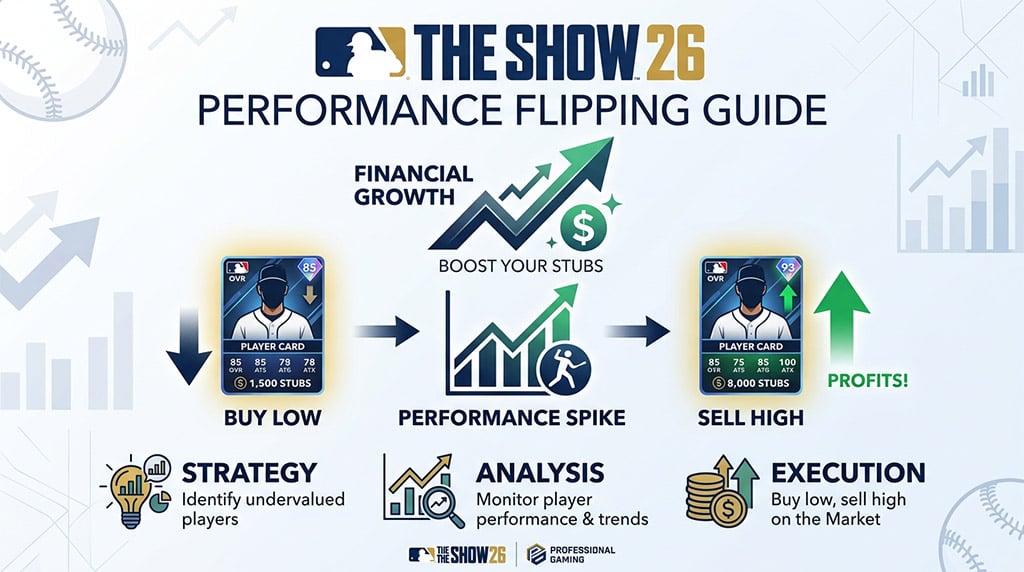
The method is called performance flipping. We buy cards before the market gets excited, then sell when real-life performance, matchup hype, or game-day attention pushes prices up. I like this approach because it fits the way a lot of us already play the game: we follow baseball, we know who is starting, we know which hitters are hot, and we let that information work for us.
The biggest mistake players make is thinking they need to hold until a player fully pops. Usually, the MLB 26 Stubs is made earlier than that. That is where this guide matters.
- What Performance Flipping Means
- The Best Cards to Target
- Quick player type guide
- How We Flip Pitchers
- Why this works
- How We Flip Hitters
- Good hitter flip examples
- Practical Rules for Making This Work
- 1. Buy before hype, not during hype
- 2. Stay close to quicksell when possible
- 3. Sell into strength
- 4. Respect tax
- 5. Spread your risk
- Simple Execution Plan
- FAQ
- Is performance flipping better than roster update investing?
- What is the safest way to start?
- When should we sell?
- Do we need a lot of stubs to use this method?
- Final Thoughts
What Performance Flipping Means
This is not traditional roster update investing.
Instead, we are targeting short-term price spikes driven by:
- upcoming pitcher starts
- hot hitters
- home runs or strong outings
- supercharge buzz
- community hype around recognizable names
That means we are not always betting on a player becoming gold or diamond. Sometimes we are just buying low and selling when everyone else starts rushing in.
| Method | What We're Playing For | Best For |
|---|---|---|
| Roster Update Investing | Rating upgrades | Long holds |
| Performance Flipping | Hype and game-day movement | Quick, repeatable profit |
The reason this works so well is simple: the market reacts faster than it thinks.
The Best Cards to Target
From experience, the easiest cards to flip with this method are usually:
- silver and low-gold starting pitchers
- hitters with a hot start
- big-name players with hype value
- cards sitting close to quicksell
Why these? Because the downside is usually manageable, while the upside can move fast.
Quick player type guide
| Player Type | Why We Like It | Risk |
|---|---|---|
| Low-silver starters | Cheap entry, easy hype before starts | Low |
| Gold pitchers | Bigger spikes if they pitch well | Medium |
| Hot hitters | Home runs and streaks move price quickly | Medium |
| Hype names | Market overreacts fast | Medium to high |
A lot of newer players chase expensive diamonds because they feel safer. In practice, I've had better consistency flipping cheaper pitchers near floor price. Less stress, cleaner margins.
How We Flip Pitchers
Pitchers are the easiest place to start because the setup is clear.
We usually know when they are pitching next, so the market often builds in anticipation. That gives us a simple plan:
1. Buy 2 to 3 days before the start
2. Hold as hype builds
3. Sell before first pitch or during a strong early outing
That last point matters. We do not always need to wait for the final stat line.
Why this works
If a pitcher is near quicksell and has a start coming up, there is often very little downside. But if he starts trending or people expect a strong outing, that price can climb fast.
A few examples of the kind of cards this works on:
| Player Example | Why the Flip Worked |
|---|---|
| Andrew Painter | Prospect hype + scheduled start |
| Shane McClanahan | Return-game excitement |
| Tyler Glasnow | Big-name pitcher with pre-start demand |
| Max Fried | Strong outing created a major spike |
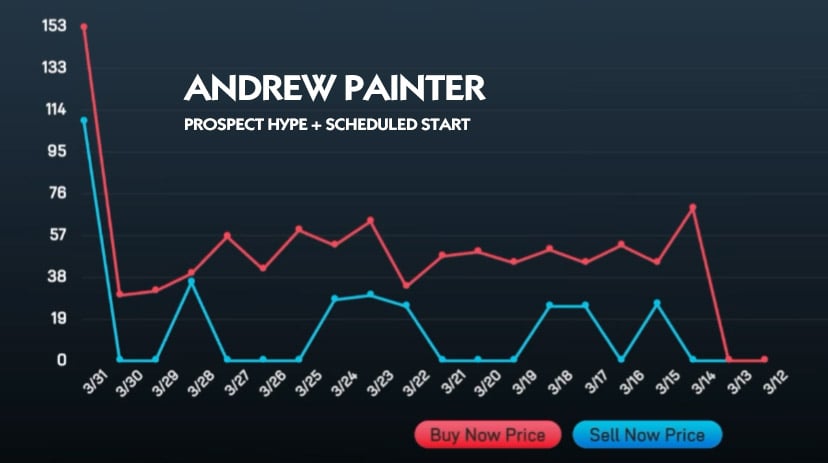
In real stub terms, even a gain of 50 to 150 stubs per card adds up quickly when you stack multiple buys. And if you hit a bigger run-up on a popular pitcher, the jump can be much better than that.
How We Flip Hitters
Hitters are a little less predictable, but the upside can be excellent when the right name gets hot.
We are looking for hitters who can trigger fast market reactions:
- power hitters on a home run streak
- speed players who create highlight moments
- recognizable names that players love buying after one good game
Good hitter flip examples
| Player Example | Why He's Flippable |
|---|---|
| Elly De La Cruz | Huge hype factor, explosive game potential |
| Shea Langeliers | Hot start can create repeat spikes |
| Christian Yelich | Trusted name + supercharge attention |
| Drake Baldwin | Cheap card that reacts to home run buzz |
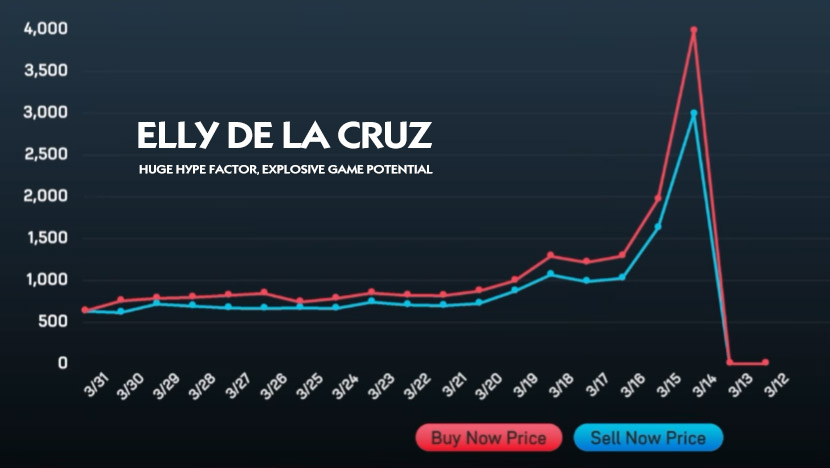
With hitters, timing matters more than patience. If the card already jumped after a big game, we usually missed the clean entry. The better move is to wait for the market to cool, then re-enter if the real-life form still looks strong.
Practical Rules for Making This Work
This is the part that keeps the method profitable instead of random.
1. Buy before hype, not during hype
If you are buying after everyone notices, you are helping someone else cash out.
2. Stay close to quicksell when possible
That gives us a cleaner safety net, especially on pitchers.
3. Sell into strength
If you already have profit and the market is moving, take it. We do not need to hit the exact top.
4. Respect tax
A card might look profitable, but after the 10% tax, the gain can be much smaller than expected.
5. Spread your risk
Do not dump everything into one player just because you love the matchup.
Simple Execution Plan
If you want a cleaner routine, this is the version I would follow each day:
| Step | Action |
|---|---|
| 1 | Check upcoming starters 2–3 days out |
| 2 | Look for cards near quicksell or recent price dips |
| 3 | Track hot hitters who just cooled off in price |
| 4 | Sell when game-day hype kicks in |
| 5 | Move stubs into the next setup instead of forcing holds |
That is the full loop. That is also why the method scales so well. We are not waiting weeks for one payoff. We are rotating stubs through short windows.
FAQ
Is performance flipping better than roster update investing?
For a lot of players, yes. It is faster, more active, and easier to repeat. You are playing market timing instead of waiting on one ratings decision.
What is the safest way to start?
Start with silver pitchers near quicksell. They usually offer the cleanest balance between upside and risk.
When should we sell?
Usually before first pitch, during early hype, or right after the market reacts strongly. The goal is to sell into demand, not after demand disappears.
Do we need a lot of stubs to use this method?
No. That is one reason this method is so good. You can start small, flip lower-cost cards, and build up naturally.
Final Thoughts
The best part of performance flipping is that it does not feel like a chore. We are watching baseball, following matchups, and using market behavior to make smart, repeatable stub gains.
If you keep the process simple—buy early, avoid chasing, sell into hype, and stay tax-aware—this becomes one of the most practical ways to grow your stub balance in MLB The Show 26.
And that is really why the method works: not because every flip is huge, but because the logic is repeatable.

Most Popular Posts
- MLB The Show 26 God Squad Guide: Best Lineup, 98 Tarik Skubal, Bullpen Picks, and Legend Tips
- MLB The Show 26 Hall of Fame Guide: 99 Hoffman, Best Spotlights & Chase Pack Value
- MLB The Show 26 Tier List: Best Diamond Dynasty Cards by Position
- MLB The Show 26 Roster Update 4 Investments: Best Golds, Silvers & Stub Flips
- MLB The Show 26 Top 20 Endgame Cards Ranked for New Seasons
- MLB The Show 26 New Threads 2.0 Tier List Guide: Best Cards, Budget Picks, and Meta Fits
Popular Category Lists
- ARC Raiders / (350)
- Grow a Garden / (294)
- CoD: Black Ops 7 / (167)
- Star Citizen / (162)
- MLB 26 / (159)
- Monopoly Go / (152)
- ARK Survival Ascended / (127)
- Steal a Brainrot / (99)
- Blox Fruits / (74)
- Adopt Me / (74)
- Forza Horizon 6 / (72)
- Sailor Piece / (68)
- Grow a Garden 2 / (68)
- Diablo IV / (62)
- CoD: BLACK OPS 6 / (55)
- Aion 2 / (50)
- Path of Exile 2 / (48)
- Monster Hunter Wilds / (46)
- Windrose / (44)
- Donut SMP / (41)