


 0
0 Created: Feb 28,2026 | Marathon
Marathon Getting Started: Loadouts, Loot Reading, and Early Survival Tips

Marathon is the kind of extraction shooter that can feel off in the first hour—and then suddenly click once we understand what the game is actually asking us to do. We've spent our first day treating it like both a shooter and a systems game: how it aims, how it moves, how information is communicated, and where the onboarding gets in its own way. Here's the good, the bad, and the practical what to do next so you don't bounce off before the fun parts show up.
- The Good: Why It Already Feels Like a Real Bungie Shooter
- Gunplay & Responsiveness (the we keep taking one more run factor)
- Movement: Addictive, Even When It's Slower
- Runners & Abilities: Fights Have Layers, Not Just Angles
- The Good (Cont.): Art, Audio, and Story Delivery That Actually Helps
- Art Direction: Distinct on Purpose
- Sound Design: Information You Can Play Around
- The Bad: Onboarding and UI Trip You Before the Game Can Impress You
- The Tutorial: Technically Present, Practically Not Enough
- UI/UX: Too Many Layers, Too Much Backtracking
- Loot Readability: Bodies Are Easy, The Floor Is Not
- Performance & Optimization: The Wild Card (Especially Outside High-End PCs)
- Practical Get Past Day-One Playbook (So the Good Parts Show Up)
- A simple, realistic first-day objective
- Build your own clarity in a confusing UI
- Who Marathon Fits (and Who It Might Bounce Off)
- FAQ
- 1) Is Marathon good on the first day?
- 2) Why does the early game feel slower than expected?
- 3) What's the single biggest problem right now?
- 4) How do we stop getting overwhelmed by loot and menus?
- 5) Is the art style a gameplay issue or just preference?
- Summary
The Good: Why It Already Feels Like a Real Bungie Shooter
The fastest way to describe the best parts is simple: the moment-to-moment play is strong, and the runner + abilities layer changes fights in meaningful ways.
Gunplay & Responsiveness (the we keep taking one more run factor)
We can feel the familiar Bungie DNA in the input response and weapon feedback—shots register cleanly, recoil patterns feel intentional, and most engagements reward composure over chaos.
Why this matters: in an extraction shooter, we're not just winning duels; we're risking time and inventory. When guns feel trustworthy, we're willing to push fights instead of playing scared every match.
What it means for you:
- If you value aim feel and readable recoil more than pure realism, you'll likely gel with Marathon faster.
- If you prefer heavier mil-sim gun handling, you may need time to recalibrate.
Movement: Addictive, Even When It's Slower
Base movement speed leans closer to Tarkov pacing than Apex sprint-fests, but the movement still feels good in the hands—running, sliding, jumping, and cornering have a satisfying rhythm (especially on mouse and keyboard).
Why it works: slower traversal raises tension, while the responsiveness prevents it from feeling sluggish. That's a hard balance to hit.
If you notice you're dying while rotating, then slow down your pathing first, then speed up with knowledge—Marathon punishes Apex brain rotations early.
Runners & Abilities: Fights Have Layers, Not Just Angles
This isn't shooter vs shooter in the purest sense. Abilities create uncertainty: invis threats, recon pings, and kit interactions force us to think in counters.
This means: positioning alone won't save you. Information denial, team spacing, and timing matter more than many players expect on day one.
Below is a quick what to expect table that captures the feel without pretending we've solved the meta in 24 hours.
| Category | What We're Feeling | Why It's Good | What Can Go Wrong Early |
|---|---|---|---|
| Gunplay | Crisp, responsive | Duels feel earned | New players blame themselves before they learn systems |
| Abilities | High impact | Adds mind-games | Deaths feel unfair until you learn tells/counters |
| Movement | Slow base, smooth control | Tension + agency | Rotations feel punishing if you sprint everywhere |
| Extraction loop | Build growth matters | Progress changes power | First hour can feel underpowered and flat |
The Good (Cont.): Art, Audio, and Story Delivery That Actually Helps
Some extraction games treat lore like wallpaper. Marathon tries to make it part of the experience without forcing a full single-player campaign on us.
Art Direction: Distinct on Purpose
Whether you love the style or hate it, it's not generic photorealism. In-match atmospherics—fog, weather, and scene composition—do real work making spaces feel tense.
Why this matters: in extraction shooters, mood is a mechanic. When the world feels dangerous, we play differently: we listen, we clear corners, we hesitate (in a good way).
If you find the visuals too clean or too stylized, then focus on in-match readability: silhouettes, contrast in interiors, and how easily you track motion through fog. That's the real test.
Sound Design: Information You Can Play Around
Footsteps and nearby movement cues have been a net positive for us so far—enough to plan, bait, hold, or rotate.
This means: you can win fights before shots are fired by controlling sound and timing.
A practical use-case we've leaned on:
- Hear footsteps one room over → we stop sprinting → we hold an off-angle → we force them to enter us.
- Hear multiple sets of steps → we assume a squad → we disengage unless we have an advantage.
The Bad: Onboarding and UI Trip You Before the Game Can Impress You
Marathon's biggest early problem isn't the gunplay. It's the first two hours of comprehension debt.
The Tutorial: Technically Present, Practically Not Enough
It covers basics, but it doesn't stick the landing on what new players need most: how the loop fits together.
Why that hurts: the early game already feels slower and lower-powered. If the tutorial doesn't clearly connect actions to outcomes (loot → perks → builds → win conditions), people quit before the progression has a chance to do its job.
If you finish the intro and think wait, what do I do now? then that's not you failing—it's the onboarding failing.
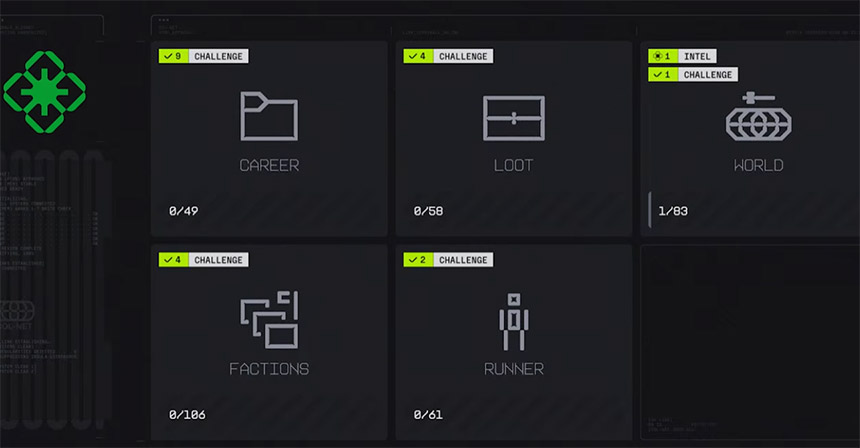
UI/UX: Too Many Layers, Too Much Backtracking
We adapted after a few hours, but the first impression is rough:
- Menus feel stacked on menus.
- Checking factions/perks can require backing out too far.
- Tooltips exist, but don't resolve the where am I in the system confusion.
Here's a confusion-to-clarity table we wish the game gave us on day one:
| What You See | What You Think It Means (Day 1) | What It Usually Means (After Learning) | Quick Fix Mindset |
|---|---|---|---|
| Faction/perk grids | What currency? What path? | Progression perks with costs + gating | Pick 1–2 utility perks; ignore the rest for now |
| Inventory squares | Random junk everywhere | Standard stash/loadout economy | Sort by function: weapons, ammo, consumables, valuables |
| World loot items | Is that important? | Some items are key progression/value | Learn 5 core item silhouettes first, expand later |
Loot Readability: Bodies Are Easy, The Floor Is Not
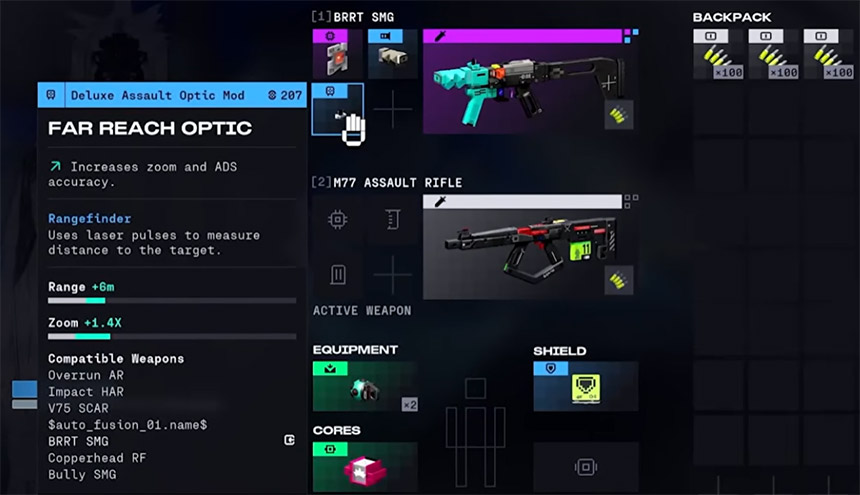
Looting other players is straightforward. The problem is identifying objects in the world quickly—some key items don't pop like classic health packs or obvious interactables.
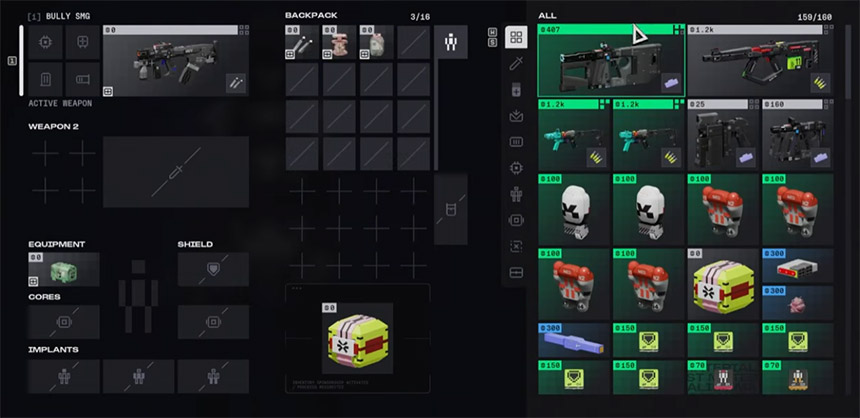
What this means for you: early runs are slower because you're not just looting—you're learning what loot looks like. That's normal, but it's also friction.
If you feel you're missing everything, then do shorter, safer routes and prioritize pattern recognition over full bags. Your speed will spike once silhouettes become familiar.
Performance & Optimization: The Wild Card (Especially Outside High-End PCs)
Our experience has been stable, but performance reports vary widely across player setups.
Why this matters: extraction shooters amplify frustration. Losing a fight is one thing; losing a fight to stutter is a different kind of salt.
Use this simple self-check to decide whether your issues are settings-tunable or build-dependent:
| Symptom | Likely Cause | What To Test First |
|---|---|---|
| Stutters entering combat | Shader compilation / streaming | Run a few warm-up matches; reduce texture/streaming settings |
| FPS drops in fog/weather | GPU load | Lower volumetrics/ambient effects; cap FPS to stabilize frametime |
| Input feels delayed | CPU bottleneck / latency | Reduce background apps; check reflex/low-latency modes; verify ping |
| Random hitching | Storage/RAM pressure | Ensure SSD install; close browsers; monitor RAM usage |
Practical Get Past Day-One Playbook (So the Good Parts Show Up)
The key is to treat the first sessions like onboarding we control, not onboarding the game controls.
A simple, realistic first-day objective
We aim for consistency over hero plays:
1. Survive more often than not.
2. Learn a small loot set (5–10 items).
3. Learn one safe rotation and one risky rotation.
4. Spend perks/currency intentionally instead of impulsively.
Build your own clarity in a confusing UI
If you open a screen and it makes you tired, then you're in learn mode, not optimize mode. Do this instead:
- Choose one progression lane (one faction/perk theme) and commit for a session.
- Only evaluate loot by two questions:
- Does it help us survive next run?
- Does it unlock power later?
- Everything else becomes sell/ignore until your brain stops overheating.
Who Marathon Fits (and Who It Might Bounce Off)
This decision table is the fastest way to know whether you should push through the awkward start.
| If You Love… | Marathon Will Feel… | Because… | If You Hate… |
|---|---|---|---|
| Apex-style ability mind-games | Familiar but heavier | Abilities + extraction tension | Getting outplayed by kits |
| Tarkov-like caution | Rewarding | Slower base speed + audio info | Slow starts and methodical looting |
| Bungie gun feel | Excellent | Responsiveness and feedback | Floaty arcade shooting |
| Learning systems over time | Worth it | Progression changes power | Confusing menus and early friction |
FAQ
1) Is Marathon good on the first day?
It can be, but it depends on what you measure. Gunplay and movement feel strong immediately; the broader loop (perks, currencies, loot meaning) takes a few hours before it becomes coherent.
2) Why does the early game feel slower than expected?
Because base movement is deliberately cautious and early kits are less expressive. If you sprint everywhere like a pure arena shooter, then you'll arrive loud, late, and under-informed.
3) What's the single biggest problem right now?
Onboarding clarity: tutorial depth and UI layering. If you're already familiar with extraction inventories and perk trees, then you'll adapt faster; if not, the first impression can be unnecessarily rough.
4) How do we stop getting overwhelmed by loot and menus?
We limit scope. If you only learn a small set of high-value items and commit to one progression path per session, then the game stops feeling like a spreadsheet and starts feeling like a hunt.
5) Is the art style a gameplay issue or just preference?
Mostly preference—until readability suffers. If you struggle to parse silhouettes or loot on the ground, then it becomes practical, not aesthetic, and you'll need time (or settings/UI tweaks) to compensate.
Summary
Marathon already nails the part that's hardest to fake: shooting, movement feel, and tense information-driven fights. The catch is that it makes a rough first impression through confusing UI, shallow onboarding, and loot/readability friction—exactly the stuff that decides whether new players stick around long enough to reach the builds get wild stage. If you give it a few focused sessions—learning a small loot set, playing slower rotations, and committing to one progression lane—we think the game's strengths show up faster and more reliably.
Most Popular Posts
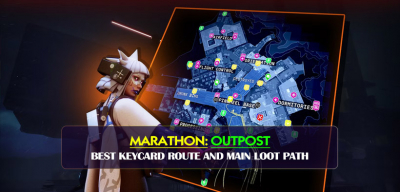
- Marathon Outpost Loot Guide: Best Keycard Route and Main Loot Path
- Marathon Outpost Solo Strategy Guide: Keycards, Pinwheel, and Extraction
- Marathon Faction Upgrades Guide: What to Rush for Every Faction (Fast, Practical, No Fluff)
- Marathon vs. Arc Raiders: Key Differences That Define the Genre
- Marathon Beginner Guides for Loadouts, Factions & Survival Strategies
- Marathon Triage Guide: Abilities, Best Team Comps & Combat Medic Tactics
Popular Category Lists
- ARC Raiders / (354)
- Grow a Garden / (294)
- CoD: Black Ops 7 / (167)
- Star Citizen / (163)
- MLB 26 / (159)
- Monopoly Go / (153)
- ARK Survival Ascended / (128)
- Steal a Brainrot / (99)
- Blox Fruits / (74)
- Adopt Me / (74)
- Forza Horizon 6 / (72)
- Sailor Piece / (68)
- Grow a Garden 2 / (68)
- Diablo IV / (62)
- CoD: BLACK OPS 6 / (55)
- Aion 2 / (53)
- Path of Exile 2 / (48)
- Monster Hunter Wilds / (46)
- Windrose / (44)
- COD: Modern Warfare 4 / (43)