0
Created: Oct 29,2026 | Planet Zoo 2
Planet Zoo 2 Conservation Credits: Fast Breeding and Trade Guide

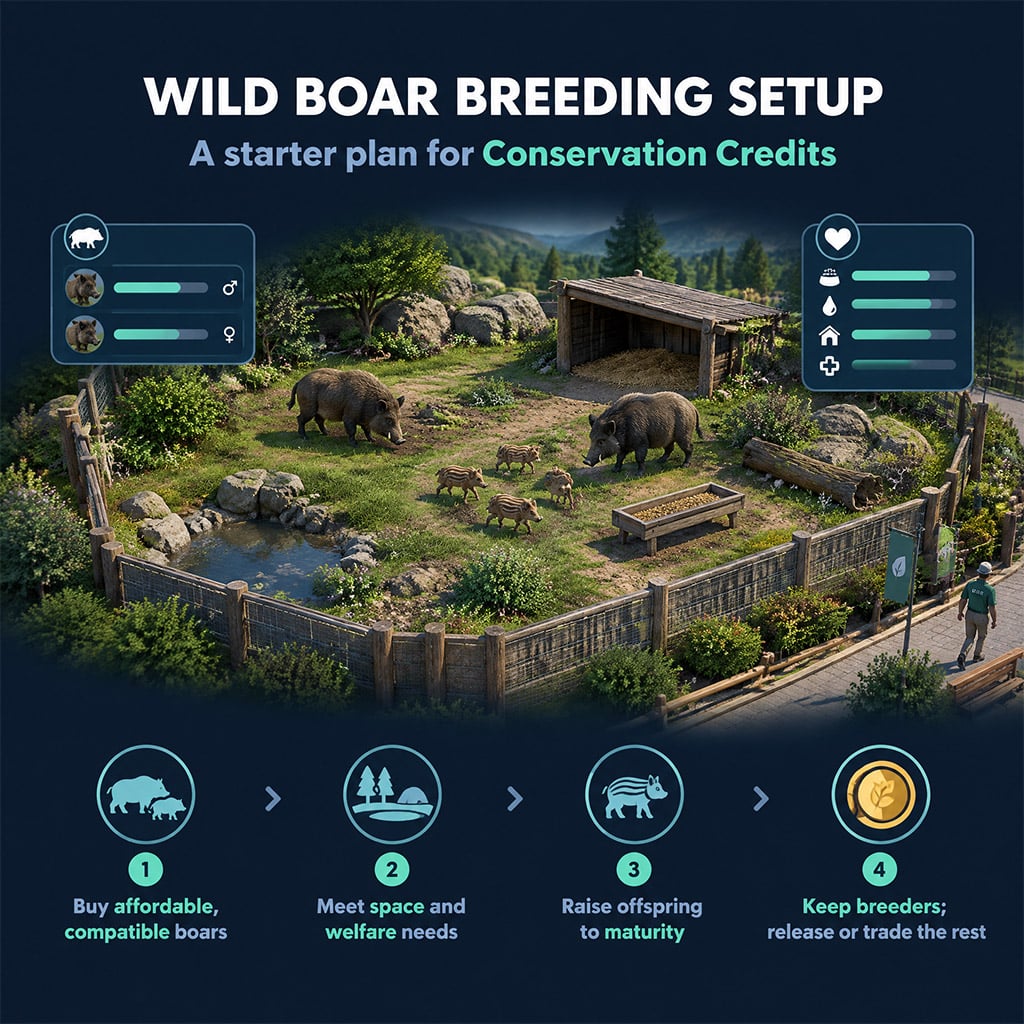
To earn Conservation Credits in Franchise Mode, we can breed animals and release or trade eligible offspring once they mature. Start with an affordable breeding group such as wild boar, then add Indo-Pacific leopard sharks when your zoo can support a second habitat.

- Start With an Affordable Breeding Group
- Set up the first habitat
- Build a Leopard Shark Habitat
- Build in the right order
- Protect nearby freshwater
- Budget for maturity time
- Keep, Release, or Trade Offspring
- Avoid breeding relatives
- FAQ (Frequently Asked Questions)
- What is the fastest way to earn Conservation Credits early?
- Are leopard sharks worth breeding for Conservation Credits?
- Should we release animals or sell them?
- Why aren't staff feeding our sharks?
- Can a shark habitat affect nearby freshwater?
The key is keeping cash and credits separate: animals cost cash to care for even when we plan to release them for credits.
Start With an Affordable Breeding Group
A slow breeding project won't fix an immediate shortage. We can start with boar while building toward sharks, but we should check current market prices and release rewards before committing.
Compare these options before spending your reserves.
| Animal | Role | Main cost | When to use it |
|---|---|---|---|
| Wild boar | Starter breeding group | Habitat and ongoing care | You need an affordable first project |
| Indo-Pacific leopard shark | Longer-term breeding group | Aquatic habitat, treatment, and care | Your zoo can fund another habitat while offspring mature |
Takeaway: Start with whichever group you can afford to maintain; add sharks only when their habitat won't drain your cash.
Set up the first habitat
1. Check the Animal Market for affordable animals and compare cash prices with credit prices.
2. Build a habitat that meets the species' displayed space, group, and welfare needs.
3. Add compatible animals and monitor their food and welfare.
4. Once offspring mature, check their genetics, relationships, and available release or trade options.
5. Keep enough cash for food, staff, and maintenance before expanding.
If your zoo is already losing cash, fix the deficit before adding more animals. A larger breeding group means more mouths to feed before any offspring generate credits.
Build a Leopard Shark Habitat
Sharks offer another breeding route, but the habitat needs suitable water and reliable staff access. Check the in-game species information first rather than copying a tank size from another zoo.
Build in the right order
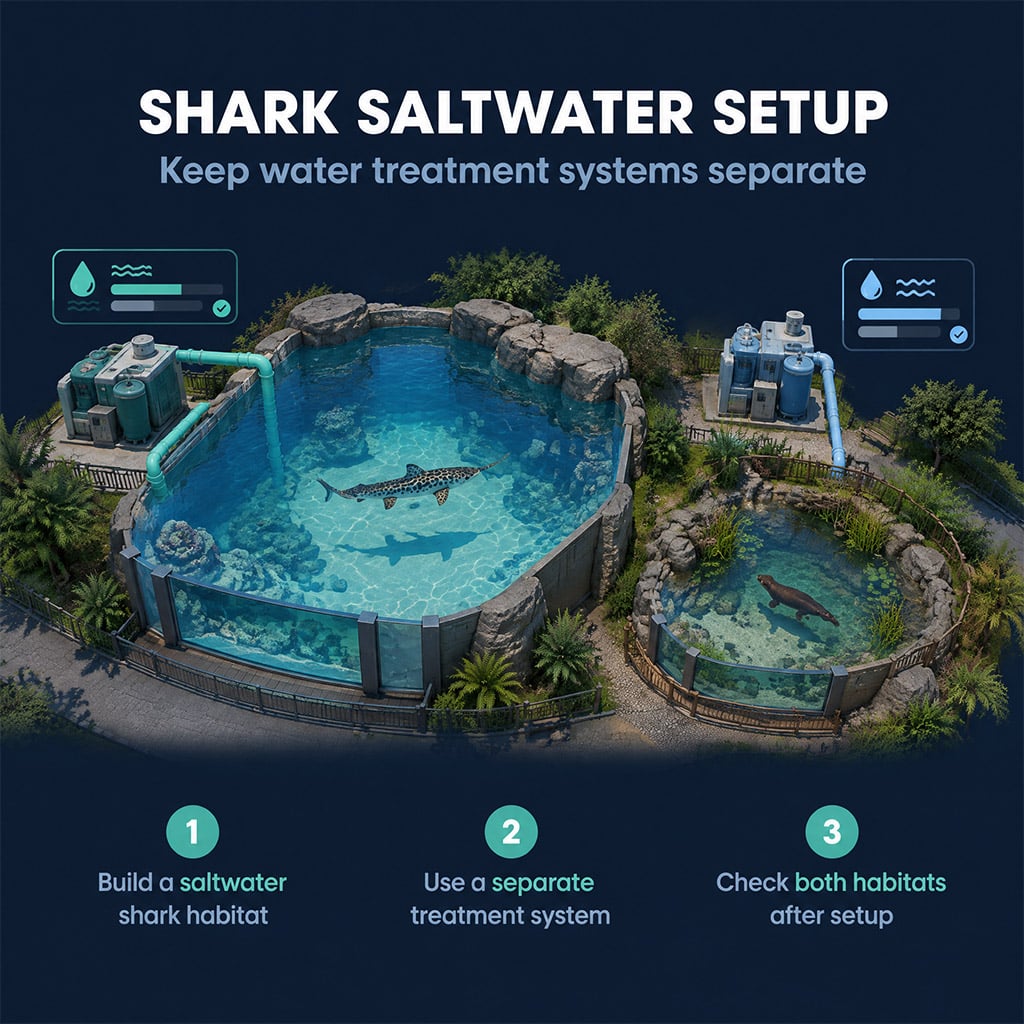
1. Check the shark's water, space, temperature, and social requirements.
2. Build an aquatic habitat and install the necessary water treatment.
3. Connect staff paths and place support facilities within practical reach.
4. Add feeding equipment and any other items required for welfare.
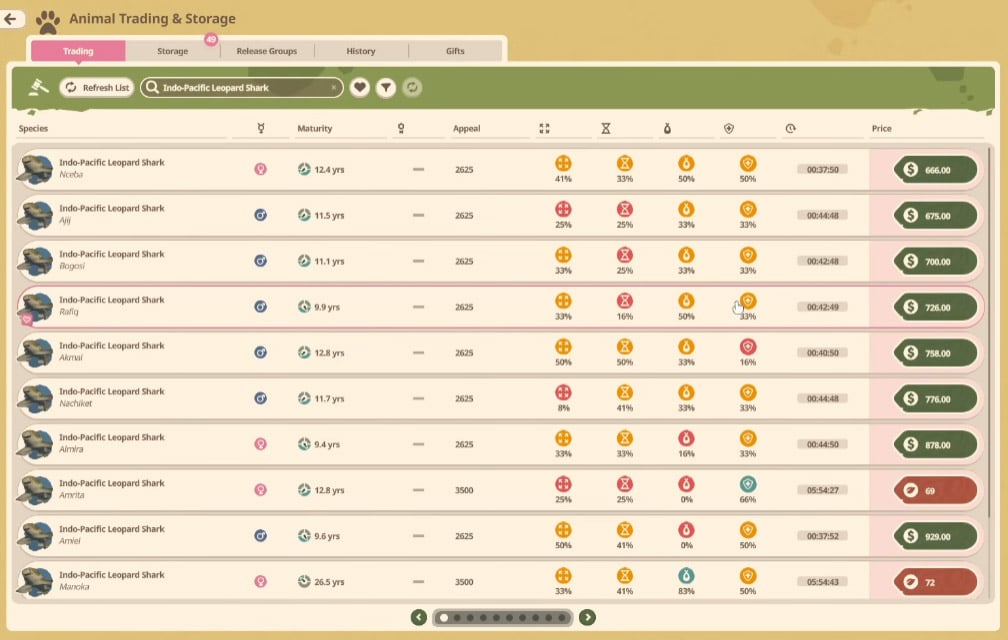
5. Buy a compatible group, prioritizing affordable cash listings when credits are scarce.
6. Check feeding and welfare alerts before expanding the group.
Frontier's animal spotlight identifies the Indo-Pacific leopard shark as a Planet Zoo 2 species. For habitat requirements and current prices, use the information displayed in your save.
Protect nearby freshwater
A connected treatment system may affect more than the shark habitat. As a precaution, use a separate treatment setup for saltwater and inspect both water bodies after changing its settings.
Why does this matter? A neighboring freshwater habitat can become the expensive part of the project if its animals' welfare drops unnoticed.
Budget for maturity time
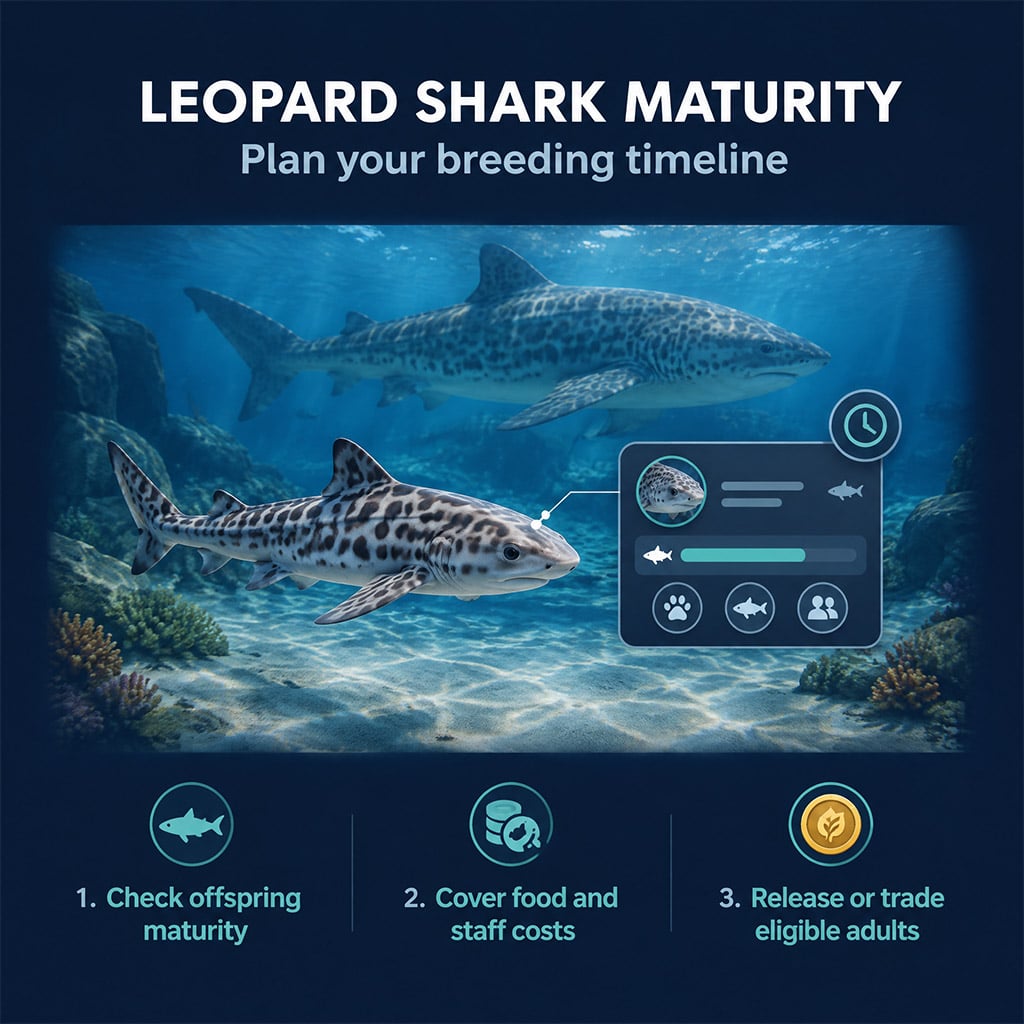
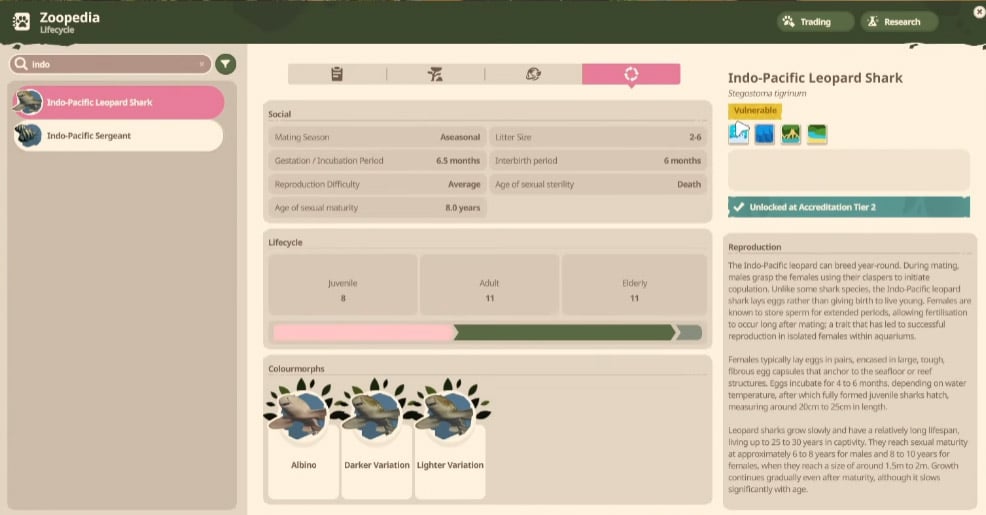
One creator estimated roughly two real-time hours at triple speed for shark offspring to mature. Treat that as an estimate, not a guaranteed timer.
If your cash balance falls while you wait, reduce expansion and check staff and feeding costs. Faster game speed also advances those expenses faster.
Keep, Release, or Trade Offspring
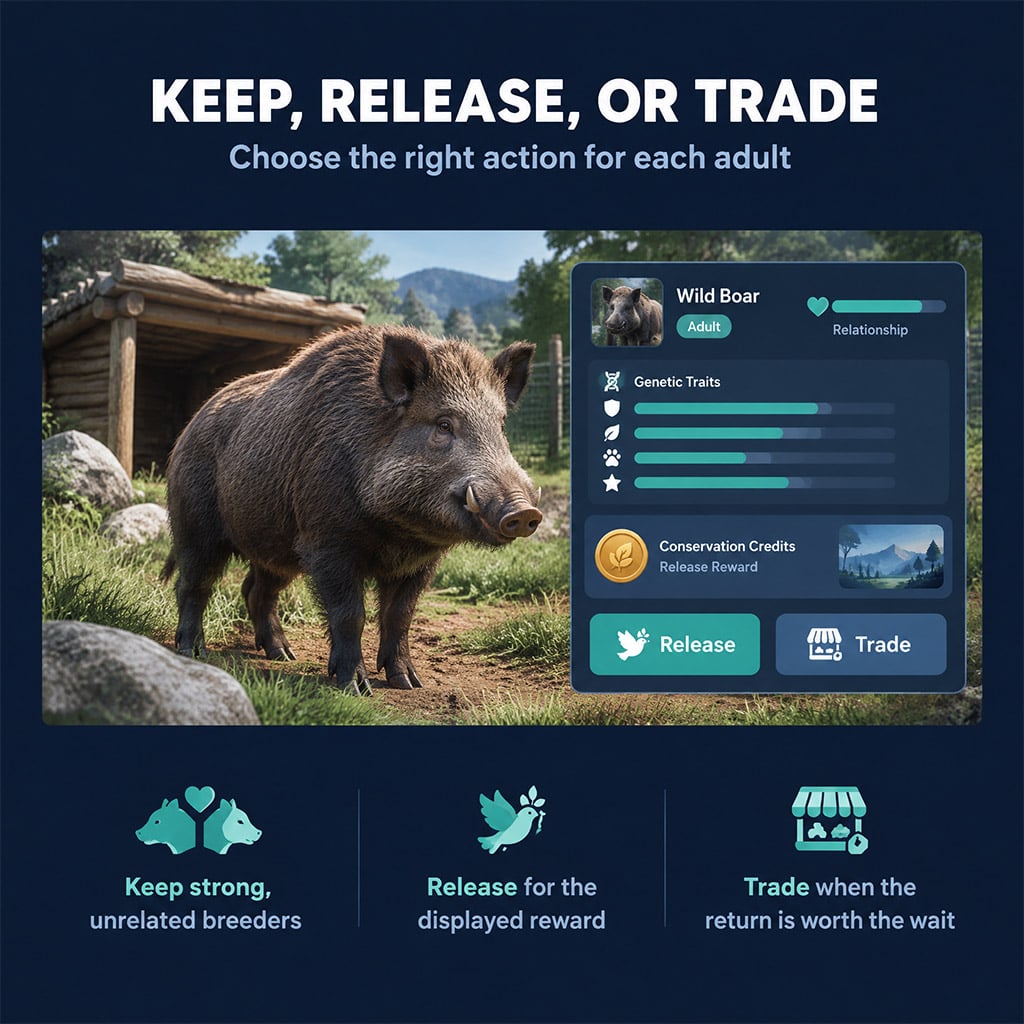
Once an animal matures, we should compare its breeding value with the displayed release reward and current market listings. A high medal rating alone does not guarantee a buyer.
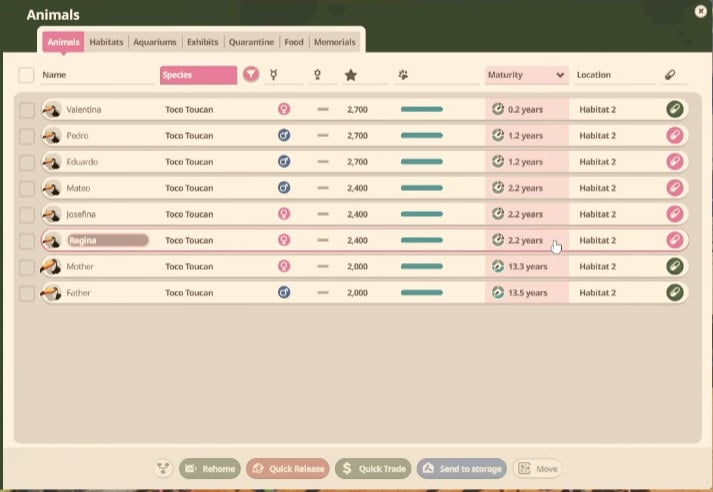
Use this decision table for each eligible adult.
| Offspring | Check first | Action |
|---|---|---|
| Strong genetics | Relatedness to available mates | Keep if it improves the breeding group |
| Not needed for breeding | Displayed release reward | Release if the reward meets your needs |
| Strong genetics with competitive listings | Asking prices and release reward | Trade if the possible return justifies waiting |
| Excess animal | Available release and trade options | Choose the best available route |
Takeaway: Release when you need a known reward now; list only when a better return is worth waiting for.
Avoid breeding relatives
Keeping a strong female and bringing in an unrelated male can reduce the number of replacement animals we need to buy. Check relationships before pairing them, including when retained offspring replace an older breeder.
Here is the catch: a valuable animal can still be a poor breeding choice if its available mates are close relatives.
FAQ (Frequently Asked Questions)
What is the fastest way to earn Conservation Credits early?
Start an affordable breeding group and release eligible offspring when they mature. Compare the displayed release reward with market listings before deciding whether to wait for a buyer.
Are leopard sharks worth breeding for Conservation Credits?
Leopard sharks are a longer-term option if your zoo can afford their habitat and care while offspring mature. Check the release reward and market prices in your save before expanding the group.
Should we release animals or sell them?
Release an eligible animal when you need the displayed reward immediately. List it for trade when comparable prices suggest a better return and you can afford to wait.
Why aren't staff feeding our sharks?
Staff access, assignments, support facilities, or missing feeding equipment may be the problem. Check each one before adding more animals to the habitat.
Can a shark habitat affect nearby freshwater?
A connected treatment setup may affect another water body, so keep the shark's saltwater treatment separate as a precaution. Check both habitats' water settings and welfare alerts after making changes.

I’m Lucas Moreau, a French Features Editor at GGWTB covering urban open-world games, life simulations, and role-playing experiences. My features explore city activities, everyday routines, and the freedom to take a different path. I look at what a new job, home, or neighborhood lets you do—not just what it costs to unlock.
Most Popular Posts
- Planet Zoo 2 Beginner Guide: Everything Need To Know
- Planet Zoo 2 Cash & Conservation Credits Guide: Smarter Franchise Mode Starts
- Planet Zoo 2 Franchise Build Guide: Entrance, Meerkat Habitat & Budget Checks
- Planet Zoo 2 Franchise Maps: Rolling Hills, Blueprint Codes & Highlands Saves
- Planet Zoo 2 Conservation Credits: Fast Breeding and Trade Guide
Popular Category Lists
- ARC Raiders / (359)
- Grow a Garden / (295)
- CoD: Black Ops 7 / (167)
- Star Citizen / (164)
- MLB 26 / (159)
- Monopoly Go / (153)
- ARK Survival Ascended / (128)
- Steal a Brainrot / (99)
- Blox Fruits / (74)
- Adopt Me / (74)
- Forza Horizon 6 / (72)
- Sailor Piece / (68)
- Grow a Garden 2 / (68)
- Diablo IV / (62)
- CoD: BLACK OPS 6 / (55)
- Aion 2 / (55)
- Path of Exile 2 / (48)
- Monster Hunter Wilds / (46)
- Windrose / (44)
- Maplestory Classic / (44)