


 0
0 Created: Jan 15,2026 | Escape Tsunami For Brainrots
Escape Tsunami for Brainrots Ultimate Guide: Fast Progress, Safe Routes, and Late‑Game Scaling

Escape Tsunami for Brainrots looks deceptively simple—run down a track, grab items, dodge waves, and stack money. However, the players who scale into absurd money-per-second figures aren't just grinding harder than you. We are grinding smarter: controlling risk, picking the right targets, and upgrading in a specific order that keeps payback times short.
- Core Mechanics: Why You Actually Fail
- The Progression Roadmap
- Stage 1: The Beginner Loop (Safety First)
- Stage 2: The Midgame (The Speed Trap)
- Stage 3: The Endgame (Snipe and Scale)
- Risk Management: The Smart Carry Protocol
- Upgrade Priority: Where to Spend Your Money
- 1. Brainrot Upgrades (Highest Priority)
- 2. Speed Upgrades (Medium Priority)
- 3. Base Slots and Floors (Strategic Priority)
- 4. Rebirths (Utility Priority)
- Advanced Tactics: Reading the Waves
- The Safe-Cycle Method
- Camera Discipline
- Budgeting: The Compounding Split
- FAQ
- Summary
In this guide, we will walk through the exact logic we use to go from a fresh spawn to a top-tier earner. We will cover how to decide what to pick up, when to run, what to upgrade first, and how to avoid the Speed Trap that keeps most players rich but stuck.
Core Mechanics: Why You Actually Fail
Before talking about profits, we need to address why runs fail. Two invisible mechanics control your success rate:
1. Wave Timing: Tsunamis sweep forward in different speed tiers. If you get hit, you lose the run and often the items.
2. Despawn Timers: Every brainrot on the track has a timer. If you fumble or hesitate too long, the loot vanishes even if you survive.
If you find yourself dying frequently or arriving back to an empty inventory because timers expired, your strategy isn't unlucky—it is misaligned with these two mechanics. The goal isn't just to run fast; it's to synchronize your movement with the wave cycles.
The Progression Roadmap
We don't farm randomly. We use a structured loop that evolves as our stats improve.
Stage 1: The Beginner Loop (Safety First)
Goal: Secure a baseline income to fund early upgrades.
In the early zones, we prioritize consistency over greed. One good brainrot delivered safely beats three risky ones lost to a wave.
Action: Take 1 brainrot per run.
Focus: Learn to duck into safe dips and watch how waves move.
Trigger: If you notice you are arriving back with only 1–2 seconds left on despawn timers, shorten your route immediately.
Stage 2: The Midgame (The Speed Trap)
Goal: Reach better zones consistently without increasing death count.
This is where most players mess up. You unlock speed upgrades, which reduces travel time, but speed also increases risk because you can accidentally run into a slow wave you would have otherwise waited out.
Our Rule for Speed:
We buy speed in chunks, then test. If our death rate spikes after a speed purchase, we pause upgrades and fix our routing. If survival stays stable, only then do we buy the next chunk.
Stage 3: The Endgame (Snipe and Scale)
Goal: Target elite spawns and compound wealth.
At the final or secret zones, the mental model changes. We aren't trying to fill our inventory; we are trying to land elite brainrots before they despawn.
Action: Scan nearby spawns for high $/sec items.
Commit: Sprint for the best option and return immediately.
Discipline: No one more pickup greed. We reduce variance to keep our money/hour high.
Risk Management: The Smart Carry Protocol
Carry capacity allows you to hold more items, but it is a double-edged sword. Carrying more increases profit only if survival stays high. If you die, you lose time, and you likely lose the brainrots to despawn timers.
We use the following decision matrix to decide how many items to carry. We recommend you follow this until your survival rate is near 100%.
| Your Current Situation | Recommended Carry | Why This Works | The Risk Factor |
|---|---|---|---|
| Learning / Dying often | 1 Item | Minimizes losses; ensures you beat the despawn timer. | Slower base fill rate. |
| Stable Survival | 2 Items | The best balance of profit and safety for most players. | Greed picks can cause full wipes. |
| Expert Wave Reading | 3 Items | massive income/hour jump, but requires perfect timing. | One mistake costs a full backpack. |
| Safe Cycle / VIP Path | Max Capacity | Only used when waves are slow and the path is clear. | Overconfidence leads to timer expiration. |

The Takeaway: If you discover you are dying while holding multiple high-value brainrots, carry capacity is not helping you—it is amplifying your mistakes. Drop back to 1 or 2 items until you stabilize.
Upgrade Priority: Where to Spend Your Money
We choose upgrades based on payback time: how fast an upgrade pays for itself in additional income.
1. Brainrot Upgrades (Highest Priority)
Upgrading a brainrot directly increases money per second. Because you keep your base income while you are learning routes, this is the most forgiving way to scale.
Strategy: Concentrate upgrades on your best earners. If you spread upgrades evenly across weak items, you pay scaling costs for mediocre returns.
2. Speed Upgrades (Medium Priority)
Speed is leverage. It lets you exploit good wave gaps. However, refer to the Speed Trap mentioned above. Only buy speed if your survival rate is high.
3. Base Slots and Floors (Strategic Priority)
A common stall happens when players earn money but have nowhere to place new items. However, buying slots too early drains your budget.
Rule: We expand the base only when we can buy slots without draining our upgrade budget. If buying a floor prevents you from upgrading your best brainrot, wait.
.jpg)
4. Rebirths (Utility Priority)
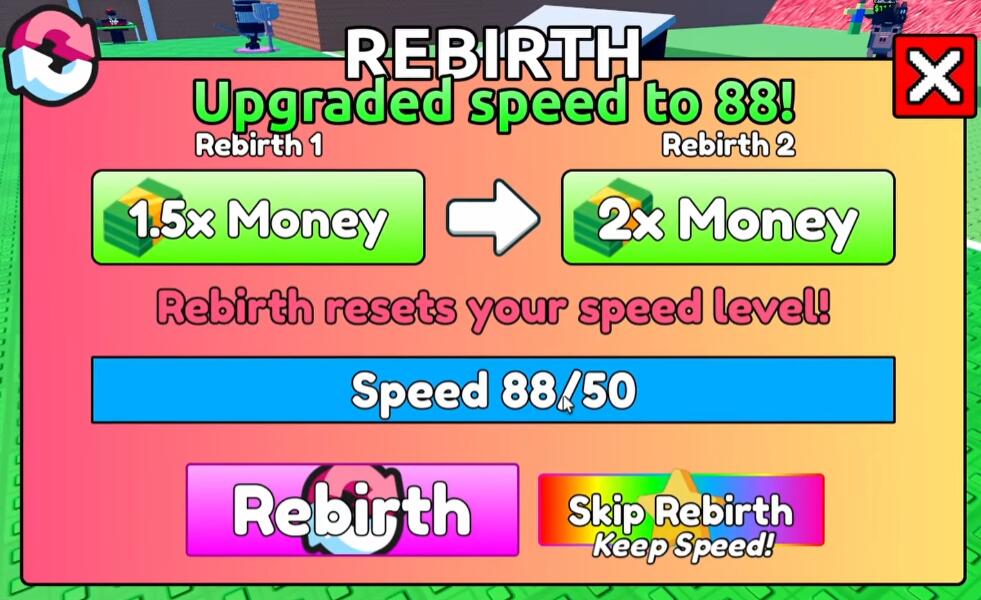
Rebirths reset your speed but keep your money and base. They provide a multiplier, but they are expensive.
Trigger: Rebirth when you are speed-gated from accessing better areas efficiently. If rebirthing prevents you from upgrading your income sources, pause it.
Advanced Tactics: Reading the Waves
Most deaths aren't from not reacting; they are from committing at the wrong time.
The Safe-Cycle Method
We don't run blindly. We wait for a favorable cycle:
1. Slow waves have passed.
2. Medium waves are at a distance.
3. The runway ahead is clear.
Then, we sprint for a single high-value pickup and return.
If you find yourself saying I almost made it,then you are leaving too late or carrying too much. Almost is the game's way of charging you tuition.
Camera Discipline
As your speed increases, your reaction window shrinks. We alternate our camera focus:
Forward: To avoid obstacles and aim for dips/cover.
Backward: To check wave spacing.
If you only look forward, a fast wave will catch you from behind. If you only look back, you will hit a wall.
Budgeting: The Compounding Split
To ensure we never stall, we stick to a rough spending budget based on our game stage. This ensures we are always increasing our income (compounding) rather than just collecting items.
| Game Stage | Spend on Upgrading Best Brainrots | Spend on New Slots/Floors | Spend on Speed/Carry/Rebirth |
|---|---|---|---|
| Early Game | 65–80% | 10–20% | 10–20% |
| Midgame | 55–70% | 15–30% | 10–25% |
| Endgame | 65–85% | 10–25% | 5–15% |
FAQ
Q: Should I upgrade one brainrot a lot, or spread upgrades across many?
We concentrate upgrades on the top earners first. If you spread upgrades evenly, you pay scaling costs on lots of mediocre brainrots. It is better to have one Hyper-Brainrot carrying your economy than ten weak ones.
Q: Is VIP actually worth it?
VIP is high value if you play consistently. Its biggest benefit is route control—side paths and safer positioning reduce the need to gamble inside dips. This raises your survival rate, which directly increases your effective income per hour.
Q: Why do I keep dying even though I have high speed?
High speed often makes you run into* waves rather than away from them. When you are fast, you catch up to slow waves quickly. You must start watching wave spacing and turning back earlier. Faster isn't always safer.
Q: When should I rebirth?
Rebirth when the multiplier helps you farm better zones more consistently. If the cost of a rebirth delays a critical upgrade on your best brainrot, skip it for now. Rebirth is a tool, not a race.
Q: How do I know if a Robux Item is worth buying?
Use this rule: If a purchase doesn't meaningfully change which zone you can farm, it usually won't change your long-run growth. If it jumps you into better zones immediately (by funding speed/base unlocks), it can be a real accelerator.
Summary
We master Escape Tsunami for Brainrots by treating it like a risk-and-return investment rather than a simple running simulator. We pick fewer, better brainrots; we time our runs around wave cycles; we upgrade our highest earners aggressively; and we expand our base only when it doesn't starve our upgrade budget.
Most Popular Posts
- Escape Tsunami for Brainrots Crafting Divine Brainrot (Routes, Odds & Costs)
- Escape Tsunami For Brainrots Money Farming Guide: Secrets, Celestials, and Rebirth Math
- Escape Tsunami For Brainrots Divine Brainrots Farming Guide: Fastest Routes, Trading Tactics
- How to Farming Radioactive coins in Escape Tsunami For Brainrots?
- How to Enter the Escape Tsunami for Brainrots Secret Tunnel Between Epic and Legendary Zones
- Escape Tsunami for Brainrots Ultimate Guide: Fast Progress, Safe Routes, and Late‑Game Scaling
Popular Category Lists
- ARC Raiders / (343)
- Grow a Garden / (292)
- CoD: Black Ops 7 / (167)
- Star Citizen / (160)
- MLB 26 / (159)
- Monopoly Go / (152)
- ARK Survival Ascended / (126)
- Steal a Brainrot / (98)
- Blox Fruits / (74)
- Adopt Me / (73)
- Forza Horizon 6 / (72)
- Sailor Piece / (68)
- Grow a Garden 2 / (68)
- Diablo IV / (62)
- CoD: BLACK OPS 6 / (55)
- Path of Exile 2 / (48)
- Monster Hunter Wilds / (46)
- Aion 2 / (45)
- Windrose / (44)
- Donut SMP / (41)