



 0
0GGWTB Editorial Team - Timothy
Created: Feb 25,2026 | Garden Horizons

GGWTB Editorial Team - Timothy
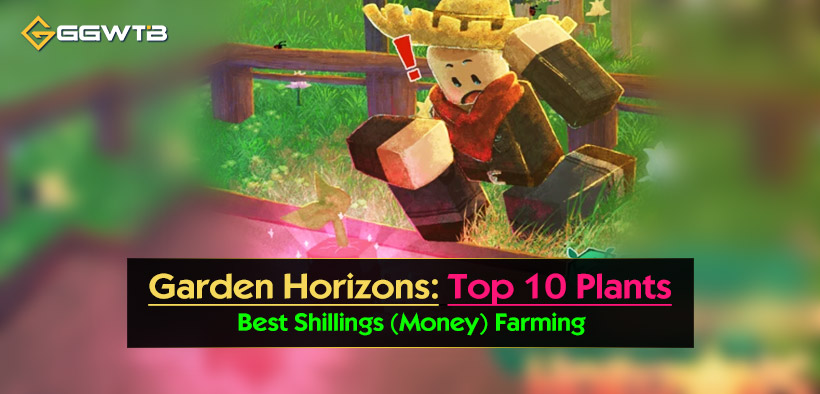
Making Shillings (Money) in Garden Horizons isn't about buying the most expensive seed once—it's about matching plant type (single vs multi-harvest) with mutation stacking timing, then repeating that loop with the shop and quests. Below is our ranked top 10 money plants, plus the exact play patterns we use to turn a small bankroll into consistent millions.
A plant's value usually comes from three levers working together, not one.
Higher base price means every mutation multiplier has a bigger number to amplify. That's why some single-harvest seeds explode in profit once you let them cook.
If you harvest too early, you're selling the unmultiplied version of the plant. If you don't need cash immediately, waiting for more mutations often beats rushing.
Example: A multi-harvest fruit that normally sells low can jump to a tree refund level once stacked with several mutations—meaning one lucky/managed harvest can cover the seed cost and everything after is upside.
This table is the fast decision layer; detailed notes follow right after.
| Rank | Plant | Harvest Type | How to Obtain | Why It Prints Money | Best Use If… |
|---|---|---|---|---|---|
| 10 | Banana | Multi-harvest | Shop | Reliable orchard income; mutation stacks well | You want steady repeat harvests early |
| 9 | Beetroot | Single-harvest | Shop | High base value for the cost; shows up often | You're early-game and want fast scaling |
| 8 | Wheat | Single-harvest | Shop (rarer than Beetroot) | Same strategy as Beetroot, bigger tickets | You can wait for shop rotations and stack lots |
| 7 | Plum | Multi-harvest | Shop | Many fruits per tree; great with mutations | You're mid-game building repeat income |
| 6 | Potato | Multi-harvest | Shop | Stronger base than Plum; consistent earner | You want Plum but better |
| 5 | Orange | Multi-harvest | Premium pack via quests/Robux | Solid base; good long-term orchard piece | You're doing daily/weekly quests anyway |
| 4 | Cabbage | Single-harvest | Shop | Massive base price; mutations turn it into a payday | You can afford it and don't need instant cash |
| 3 | Cherry | Multi-harvest | Shop / Robux direct options in some setups | Elite repeat income; scalable with many trees | You want a buyable endgame farm core |
| 2 | Olive | Multi-harvest | Premium pack (quests/Robux) | Higher base than Cherry; strong orchard king | You're F2P grinding packs long-term |
| 1 | Dawn Blossom | Multi-harvest | Dawn pack (quests/Robux) | Highest base among multi-harvest; best ceiling | You're optimizing absolute top-end income |
Banana is good, just not the best at the same job. Other multi-harvest options have higher base price.

How To Use Banana?
Banana is a strong early orchard piece, but you shouldn't stop upgrading once better trees show up.
Beetroot is beginner-friendly and shows up more reliably in shop cycles. Its base value is high enough that mutation stacking pays off quickly.
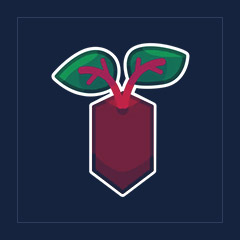
How To Use Beetroot?
If you discover you keep harvesting Beetroot immediately, then you're basically discarding the main advantage of single-harvest plants.
It's the same money concept, but scaled up—more expensive and typically rarer, so it functions like a higher-stakes version of Beetroot.

How To Use Wheat?
Trade-off: You'll wait longer for stock, but the payoff per harvest can feel noticeably bigger.
One tree can generate many fruit nodes, so each ready-to-harvest moment can be a big swing, especially with stacked mutations.

How To Use Plum?
When a single Plum fruit rolls multiple mutations, one sell can meaningfully offset the tree's purchase cost—so the tree becomes a compounding asset instead of a one-time expense.
Higher base value per harvest makes every mutation multiplier more valuable.

How To Use Potato?
If you find you're already running a few Plum trees, then swapping future buys into Potato typically raises your hourly income without changing your routine.
It's solid, but access is pack-based and doesn't beat the true endgame trees.

How To Obtain Orange?
How we use it:
Don't tunnel-vision on Orange; you're really farming the pack system for the top-tier drops.
Cabbage has a huge base price, so mutation stacking can create a single harvest payday that dwarfs earlier crops.

How To Use Cabbage?
Common Mistake: Treating Cabbage like a normal crop and cashing out instantly. With single-harvest plants, patience is often the whole strategy.
Cherry is elite income and scales insanely well when you own many trees. For many players, it's the first plant that feels endgame without relying entirely on pack luck.

How To Use Cherry?
Cabbage pays once; Cherry pays forever. If you're online often, repeat income wins.
Higher base than Cherry and incredible long-term returns.
How To Obtain Olive: Primarily via premium packs earned through quests (or Robux).
Spending Logic:
If you discover you're tempted to overspend on packs for Olive, then set a hard budget and keep your farm's backbone in Cherry so you still progress.
Highest base value among the multi-harvest group, which means it also has the best mutation ceiling while staying repeatable.

How To Get Dawn Blossom: Dawn pack system (quests/Robux), so it's luck + persistence.
How To Use Dawn Blossom?
Dawn Blossom is the top, but the smartest path to it is a stable farm that doesn't depend on it.

This is the loop that keeps money growing even when the shop RNG is annoying.
If you need cash to buy a must-have seed in the shop, harvest.
If you're stable, waiting is usually better—especially for single-harvest plants like Beetroot, Wheat, and Cabbage, where you only get one shot.
Because high base price + stacked mutations can create one-time payouts that jump you to the next tier. They're not farm forever tools; they're capital accelerators.
If you're already doing quests, Orange is a good bonus.
If your goal is pure profit with reliable access, Cherry tends to be the stronger cornerstone because it's shop-based and scales with quantity.
If you're optimizing ROI, it's often more efficient to build a large Cherry farm first, then let quests handle packs over time. Packs are high ceiling, but they're still RNG.
If you see Cabbage or Cherry and you can buy without collapsing your bankroll, buy.
If you see early staples (Beetroot/Wheat) in quantity, batch-buy and run a mutation-stacking cycle.
Build your economy in layers: single-harvest payday spikes (Beetroot/Wheat/Cabbage) + multi-harvest engines (Plum/Potato/Cherry). If you find Cabbage and you can afford it, treat it like an investment: plant, wait, stack mutations, then cash out. If you find Cherry, treat it like infrastructure: more trees = more repeat income.
Keep quests running in the background so Olive and Dawn Blossom become inevitable over time, not a desperate gamble.
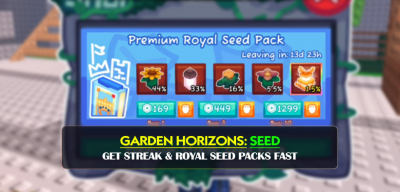
A fast, practical Garden Horizons guide on how to get Streak and Royal Seed Packs, the best free methods, seed pack drop rates, code rewards, and the smartest farming strategy for new update crops.

We tested the newest money-maker in Garden Horizons Roblox: Bamboo. Learn the full sprinkler setup, timing rules for single vs multi-harvest plants, Discord stock alerts, and an AFK loop to farm massive, high-mutation crops for millions of shillings.
Master the new Garden Horizons update. Discover the fastest AFK methods to farm IGMA seed packs from Maya, analyze all new seed prices, and unlock the secrets to maximizing the legendary Octobranch.
Discover most underrated seeds in Garden Horizons. From early-game carrots to legendary olive trees, learn our proven strategies to maximize your profits and scale your farm fast.
Discover the exact methods to unlock the rare Dawnblossom Seed in Garden Horizons without spending Robux. We break down drop rates, quest farming strategies, and the pity system to maximize your garden's profits.
Master Garden Horizons with our complete money-making guide. Learn spatial crop stacking, the active sprinkler reroll method, AFK auto-buying, and weather mutation strategies to generate billions shillings.

We use cookies to ensure website functionality and enhance your experience. Click "Accept All" to consent, or "Customize" to manage your preferences. See our Privacy Policy.