


 0
0 Created: Dec 22,2025 | Ashes of Creation
Ashes of Creation Gold Farming Guides: Pivot + Commodity Crates

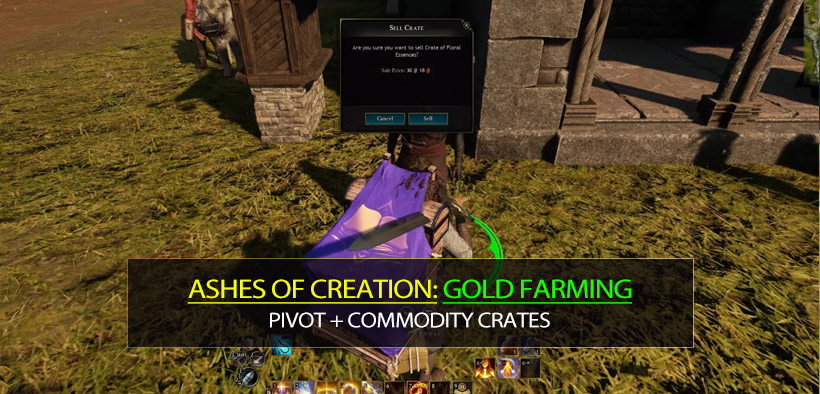
We pivoted again in Ashes of Creation—this time into farming—and it wasn't because I suddenly became a peaceful villager who loves carrots. I did it because the economy is doing that early access thing where one system (commodity crates) prints consistent AoC gold, and everything else becomes fuel for it.
If you've felt the whiplash—wood chips randomly expensive, boards spiking, copper selling in one town but not another, cooking materials missing from markets—that's not you being lost. That's the game teaching you its real loop: produce what other players need for orders/crates, move it to where they actually buy, and don't marry a single craft too early.
- The Loop That Pays
- The Medieval EVE Reality: You're Paid for Logistics, Not Vibes
- What Commodity Crates Actually Are (And When They Start Matter)
- Crate Types (What They Cost, What They Pay)
- The Rule Everyone Messes Up (Quality Ceiling vs Quality Guarantee)
- The Standard Material Recipe (And Why Bottlenecks Decide Your Profit)
- Sanctus Script: The Backbone (How I Got to 300+ Without Feeling Miserable)
- The Mule Isn't Optional (It's Your Profit Multiplier)
- Route + PvP Reality: Not Flagged Doesn't Mean Safe
- The Farming Pivot (Why It Makes Sense with Crates)
- Why I Pivoted into Farming: Cooking is a Money Sink Until It Isn't
- What to Farm (Early) That Actually Sells
- Market Behavior: Arbitrage Is a Skill, Not a Personality Trait
- Why Your Copper Sells in One Town and Not Another
- My Don't Get Greedy Pricing Rule (Because Early Markets Are Chaotic)
- Quick Action Checklist (Copy This and You'll Be Fine)
- My 45-Minute Daily Gold Loop
- FAQ
- Q1) Do certificates automatically make my crate higher rarity?
- Q2) What's the fastest way to get Sanctus Script?
- Q3) Is a mule really worth it early?
- Q4) Can I get robbed if I'm not PvP flagged?
- Q5) Why are wood chips always a problem?
- Q6) Should I flip cooked vendor items for profit?
- Summary
The Loop That Pays
The Medieval EVE Reality: You're Paid for Logistics, Not Vibes
Here's the uncomfortable truth: the safest gold isn't coming from best DPS grind right now. It's coming from systems that convert time + materials into guaranteed payouts.
- Combat grinding can spike (radiant drops, lucky sales), but it's variable.
- Processing/crafting can be great, but it's sensitive to bottlenecks (hello, wood chips).
- Commodity crates sit in the sweet spot: predictable, scalable, solo-friendly, and the market demand stays high because everybody runs them.
Why does this matter?
Because if you want stable gold, you need a stable buyer. Crates are effectively a buyer with rules.
What Commodity Crates Actually Are (And When They Start Matter)
Crates don't truly turn on until your settlement is Tier 3. Before that, you'll see construction-style crates that help node growth but don't pay well.
If you're not in a Tier 3 settlement yet, then:
- Do commissions and requisitions for reputation/scripts.
- Stockpile crate ingredients (wood/stone/fish/carcasses).
- Don't over-invest in long crafting chains.
If you are in Tier 3, then: crates become a core money loop.
Crate Types (What They Cost, What They Pay)
You'll typically see four crate categories. They look similar, but the inputs and outputs are different.
| Crate Type | Main Cost | Main Reward | When I Use It |
|---|---|---|---|
| Settlement Commodity Crate | Materials + glint | Sanctus Script | When I need script to fund higher tiers |
| Citizen Commodity Crate | Script + gold | Gold | When I want consistent cashflow |
| Guild Commodity Crate | Silver | Guild XP | Only if guild leveling is priority |
| Market Commodity Crate | Glint | Gold | When I'm glint-rich and want fast runs |
Practical takeaway:
If your goal is personal gold, you're usually living on Citizen + Market crates and using Settlement crates to keep your script supply healthy.
The Rule Everyone Messes Up (Quality Ceiling vs Quality Guarantee)
Every crate needs a certificate. No certificate, no crate.
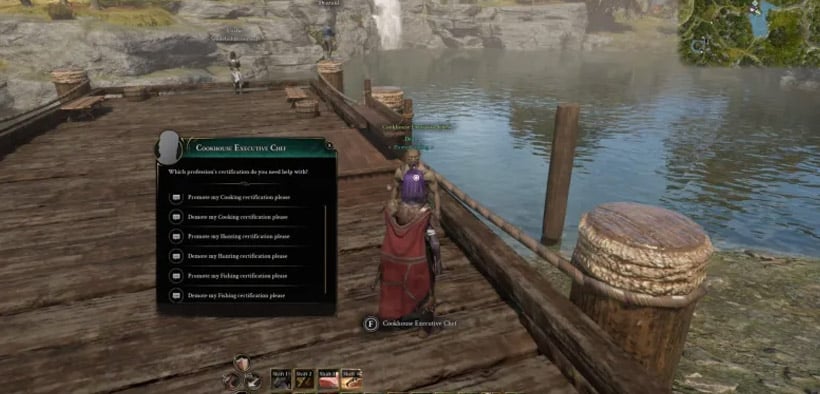
But the key rule is this:
- A certificate sets the maximum possible crate quality.
- The actual crate quality is determined by the lowest-quality ingredient you put in.
So:
- Green (uncommon) certificate + one white ingredient = white crate
- Blue (rare) certificate + all green ingredients = green crate, capped below blue
| Certificate Tier | What It Does | Common Mistake | Fix |
|---|---|---|---|
| Uncommon (Green) | Caps crate at green | Mixing in 1 white item | Batch-sort your mats before crafting |
| Rare (Blue) | Caps crate at blue | Buying blue certs without blue mats | Don't buy certs before you verify supply |
| Higher tiers | Better ceiling | Overpaying for certs early | Only scale tiers when your mats are stable |
If you find yourself constantly accidentally making white crates, then your process is the issue, not your luck: you're mixing qualities in the same batch.
The Standard Material Recipe (And Why Bottlenecks Decide Your Profit)
Most crate recipes follow the same structure (varies by station type, but the pattern holds):
- 12 stone
- 12 wood
- 5 fish or carcasses
- 1 certificate
This is why bottlenecks matter. If wood chips spike, then boards spike, then your cheap crate run becomes a tax.
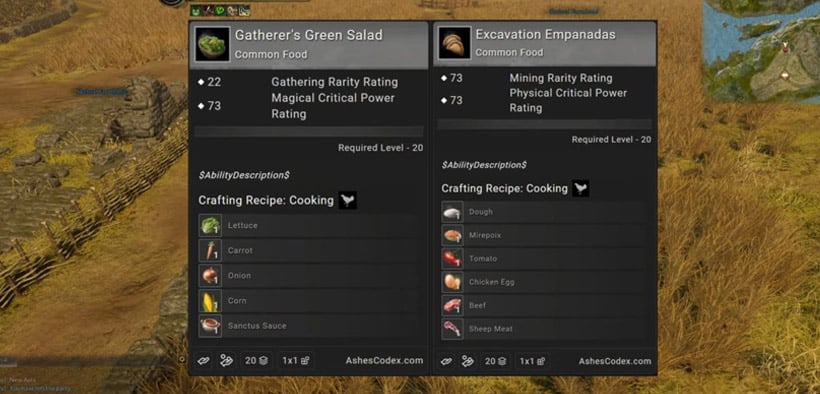
My real-world mistake: I vendored wood chips early because I thought I'm not farming.
Two days later I'm farming, and wood chips are the choke point.
If you see wood chips listed too high, then:
- Stop buying at the top.
- Produce them yourself (or buy during off-hours).
- Switch your crate ingredient mix (fish/carcasses) so you're not also paying peak prices on every line item.
Sanctus Script: The Backbone (How I Got to 300+ Without Feeling Miserable)
Script is the gating currency because certificates are bought with Sanctus Script, not gold.
Two main sources:
1. Commission Boards
- Great if you're already doing gathering/combat loops.
- Script is often RNG via caches.
2. Requisition Agent (My Go-To)
- Donate wood/stone/refined mats.
- You get script + citizen reputation.
Why reputation matters: It unlocks higher certificate tiers.
What that means: you're not just earning currency, you're unlocking bigger margins.
| Activity | Gives Script? | Gives Reputation? | Reliability | Best For |
|---|---|---|---|---|
| Commissions | Sometimes | Sometimes | Medium | Variety + passive progress |
| Requisitions (donations) | Yes | Yes | High | Scaling certificates and crate volume |
The Mule Isn't Optional (It's Your Profit Multiplier)
If you're serious about crate runs, you need a mule.
- T1 mule is cheap and usually carries 1 crate
- Upgrade path typically increases capacity (often 2 crates at the next tier)
What this means in practice:
If one run pays X gold, then carrying an extra crate is basically doubling your hourly rate—without doubling travel time.
If you're running crates without a mule, then you're choosing the slow lane.
Route + PvP Reality: Not Flagged Doesn't Mean Safe
Carrying a crate doesn't automatically flag you for PvP, but people can still create bad situations.
Rules I follow:
- I do not accept random hey flag up for speed/bonus suggestions.
- I avoid chokepoints if the server is busy.
- I pick routes based on reward per minute, not just max reward.
If you get baited into flagging, then you become the content.
Mule death scenario (what to do)
If your mule dies:
- The crate can drop.
- Mule cooldown hits.
- You can often defend the drop, wait the cooldown, and continue.
This is why I prefer routes with:
- fewer ambush spots,
- cleaner lines of sight,
- shorter no-guards stretches.
The Farming Pivot (Why It Makes Sense with Crates)
Why I Pivoted into Farming: Cooking is a Money Sink Until It Isn't
Cooking looks expensive because it's a chain:
farming → animals → milk → butter → cooked fish/steaks → market
It feels bad early because you're missing one piece (apprentice tier, adult cow, station access).
But once you have the chain, you're producing high-demand consumables that people keep buying.
I tested a simple power-level moment:
40 uncommon mulch → ~6,000 farming XP (not insane, but it pushed levels quickly at low tiers)
If you're leveling farming, then: plan your missing ingredient list before batch-crafting, or you'll get stuck waiting on wood chips/mats mid-session.
What to Farm (Early) That Actually Sells
The easiest farming sales aren't best food buffs. They're the boring items that complete buy orders and commissions.
My reliable sellers:
- Blackberry
- Celery
- (and anything that shows up repeatedly in requisitions / buy orders)
If you notice the market has plenty of finished goods but missing raw produce, then farming is under-supplied and your margins are safer.
Market Behavior: Arbitrage Is a Skill, Not a Personality Trait
Why Your Copper Sells in One Town and Not Another
Markets are local enough that you can't assume demand is evenly distributed.
- Cooking-heavy towns buy different inputs than processing-heavy towns.
- A new station (like journeyman tools) can flip demand overnight.
If you see everything sold instantly, then:
- you may have underpriced,
- or you listed in the right place at the right time,
- or a station upgrade just created a temporary shortage.
That's not luck—it's timing + location.
My Don't Get Greedy Pricing Rule (Because Early Markets Are Chaotic)
Early access markets are full of players who:
- vendor things that later become bottlenecks,
- post absurd prices because they saw one sale,
- set price anchors that mislead everyone else.
My rule:
I price to sell, not to win a screenshot.
If inflation starts creeping in, then I adjust by moving goods to where demand is real, not by copying the highest listing.
Quick Action Checklist (Copy This and You'll Be Fine)
My 45-Minute Daily Gold Loop
1. Do requisitions for script + reputation (10–15 min)
2. Craft/buy the missing crate mats (10 min)
3. Build Citizen or Market crates (5 min)
4. Do 1–2 delivery runs with a mule (15–20 min)
5. Post any farming extras (produce, fish, common mats) in the town where buy orders are active (5 min)
If the server is lagging hard, then I switch to low-risk tasks: donations, crafting batches, market listings—anything that doesn't punish stutters mid-route.
FAQ
Q1) Do certificates automatically make my crate higher rarity?
No. Certificates only set the maximum. Your lowest-quality ingredient sets the final crate quality.
Q2) What's the fastest way to get Sanctus Script?
Requisition donations are the most consistent. Commissions are good, but more variable.
Q3) Is a mule really worth it early?
Yes. It's the cleanest profit multiplier you can buy because it increases crates-per-run without doubling travel time.
Q4) Can I get robbed if I'm not PvP flagged?
You can still get baited, blocked, or pressured into flagging. Don't take the bait. Choose safer routes.
Q5) Why are wood chips always a problem?
Because they're a universal bottleneck across multiple professions. When more players pivot into processing/crafting, wood chips become the tax everyone pays.
Q6) Should I flip cooked vendor items for profit?
Sometimes, but treat it like a high-risk trade.
If taxes + travel + undercut risk erase your margin, then it's not a flip—it's a donation.
Summary
My gold improved the moment I stopped treating Ashes of Creation like a single-track level, gear, repeat MMO and started treating it like a living economy.
Crates are the stable paycheck, scripts/certificates are your scaling lever, and farming is a smart pivot when it supplies buy orders, cooking chains, and crate inputs. If you build a loop that survives lag, price swings, and station upgrades, you don't need perfect luck—you just need consistency.
Most Popular Posts
- Ashes of Creation Leveling Guide (1–25): Fast Core Route + Best Alternate Spots
- Ashes of Creation Gold Farming With Crates, Commissions & Crafting
- Ashes of Creation Phase 2 Mage Gearing Best in Slot, Stat Priorities, and Farming Strategegies
- Ashes of Creation Level 10–19 Gearing Guide: Cheap Adept Set Damage and Healing Fast
- Ashes of Creation Gold Farming Guides: Freshwater Sport Fishing and Selling Routes
- Ashes of Creation Gold Farming Guides: Pivot + Commodity Crates
Popular Category Lists
- ARC Raiders / (354)
- Grow a Garden / (294)
- CoD: Black Ops 7 / (167)
- Star Citizen / (163)
- MLB 26 / (159)
- Monopoly Go / (153)
- ARK Survival Ascended / (128)
- Steal a Brainrot / (99)
- Blox Fruits / (74)
- Adopt Me / (74)
- Forza Horizon 6 / (72)
- Sailor Piece / (68)
- Grow a Garden 2 / (68)
- Diablo IV / (62)
- CoD: BLACK OPS 6 / (55)
- Aion 2 / (52)
- Path of Exile 2 / (48)
- Monster Hunter Wilds / (46)
- Windrose / (44)
- Maplestory Classic / (42)