


 0
0 Created: Jan 12,2026 | ARC Raiders
ARC Raiders Stash Management Guide: Early, Mid, and Endgame

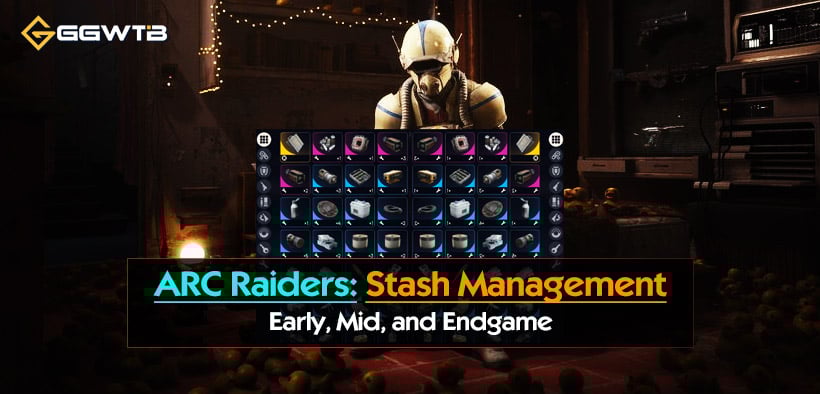
A full inventory isn't a loot problem—it's a decision problem in Arc Raiders. We've all extracted with great items and zero space, then spent 20 minutes staring at piles of ammo, duplicate guns, and maybe useful later parts. The fix isn't memorizing a giant keep-list; it's understanding why an item deserves a slot.
- 1) The Core Rule: Stash Space Is a Resource, Not a Warehouse
- What this means in practice?
- 2) The 60-Second Post-Raid Routine
- A quick decision table
- 3) Category-by-Category Stash Rules
- 3.1 Augments: Don't Hoard, Craft on Demand
- 3.2 Shields: Buy/Craft, Don't Store
- 3.3 Weapons: Cap Your Collection
- 3.4 Ammunition: Treat It as Disposable Inventory
- 3.5 Weapon Mods / Attachments: Never Let Them Sit Loose
- 3.6 Quick Use Items: Keep What You Actually Deploy
- 3.7 Keys: Use Them Before They Use Your Stash
- 4) Crafting Materials: What Actually Deserves Long-Term Space
- 4.1 Always Valuable Materials
- 4.2 Cap These Basics
- 4.3 Convert or Sell Materials
- 5) A Clean Stash Blueprint
- The layout we maintain
- FAQ
- 1) If our stash is full after a raid, what's the fastest thing to sell first?
- 2) Should we keep ammo at all?
- 3) Why recycle extra blue weapons instead of selling them?
- 4) Attachments are clogging our stash. What's the simplest fix?
- 5) How many weapons should we keep?
- 6) Keys keep piling up—what's the rule?
- Closing: The System That Keeps Working
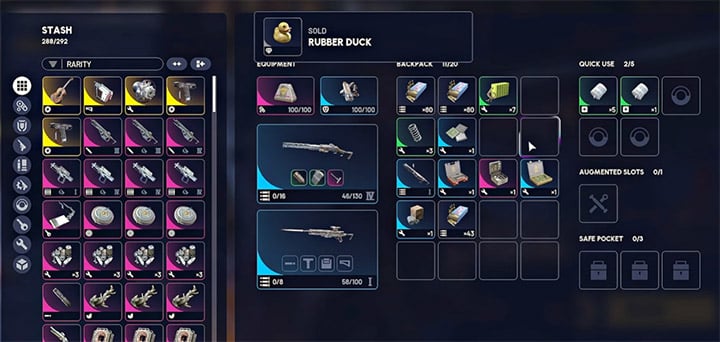
Below is the system we use to keep 10–15 free slots almost all the time, whether you're early game looting everything, midgame upgrading benches, or endgame drowning in blue weapons and keys.
1) The Core Rule: Stash Space Is a Resource, Not a Warehouse
When stash pressure hits, we make every slot earn its rent. This means we judge items by four questions:
- Can we craft or buy it on demand? If yes, it usually doesn't deserve long-term storage.
- Is it a bottleneck material for repairs/upgrades/attachments? If yes, it's premium.
- Does it stack efficiently? A stackable material often beats a single-use item that doesn't stack.
- Does it convert into something we always need (via recycling)? If yes, it can be stored as a compressed resource.
What this means in practice?
- If you can replace it quickly (cheap trader or easy craft), we don't store much of it.
- If it keeps our good guns healthy and upgraded, we protect it.
- If it doesn't stack and isn't urgently needed, it gets used, equipped, recycled, or sold.
2) The 60-Second Post-Raid Routine
We use the same routine every extraction. It prevents stash paralysis.
Step 1. Sell obvious fluff first
- If you find duplicate blueprints you don't need, then sell them.
- If you find low-impact trinkets/novelties and you're space-starved, then sell them immediately.
Step 2. Keep bottlenecks before toys
- If you find batteries, springs, processors (topside-limited items), then keep them first.
- If you find mod components, then keep them—attachments are power.
Step 3. Ammo is the first sacrifice
- If your stash is tight and you're holding partial stacks (like 40 bullets), then sell them.
This means you're trading one stash slot for something you can craft quickly later.
Step 4. Recycle extra guns into future repairs
- If you already have more than your target number of a weapon, then recycle extras.
This converts bulky items into the parts you'll spend constantly repairing and upgrading your real loadouts.
A quick decision table
| Item type you just looted | If stash is nearly full… | Action | Why |
|---|---|---|---|
| Duplicate blueprint | Always | Sell | No future value if already learned |
| Trinkets/novelties | Often | Sell | Space-negative, low utility |
| Partial ammo stacks | Usually | Sell | Craft later; ammo is space-inefficient |
| Extra blue weapon (beyond target count) | Often | Recycle | Turns into repair parts you actually consume |
| Mod components | Usually | Keep | Enables best attachments; hard value |
| Topside-only materials | Usually | Keep | Supply is constrained; future bottlenecks |
3) Category-by-Category Stash Rules
3.1 Augments: Don't Hoard, Craft on Demand
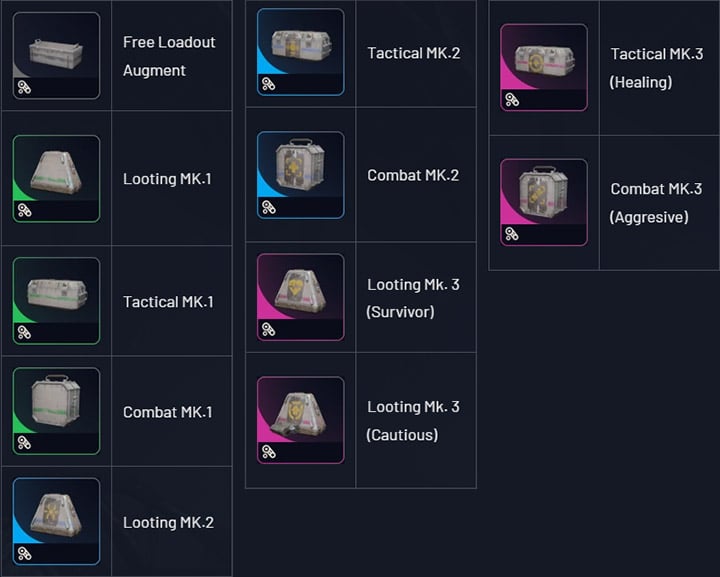
If you craft augments reliably, then storing lots of finished augments is pure bloat.
- We typically store components, not finished augments.
- If you find yourself keeping many augments just in case, then you're paying stash slots to avoid a 10-second craft later.
Target stock (practical baseline)
| Item | Keep target | If above target | Why |
|---|---|---|---|
| Processors | ~30 | Stop looting unless needed | Flexible: supports multiple crafts including high-value augments |
| Advanced electrical components | ~20 | Sell/slow down intake | Core augment ingredient; also used elsewhere |
| Finished augments | 0–1 equipped / spare | Don't store stacks | Slots are better spent on shared ingredients |
3.2 Shields: Buy/Craft, Don't Store
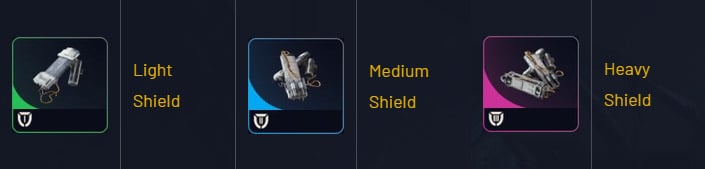
If a trader sells a shield cheaply (or you can craft it with easy mats), then stockpiling shields is usually inefficient.
- Light shields are often cheaper to replace than to store.
- Medium shields can be crafted when needed.
Rule we live by
If you're storing multiple shields for later, then convert that stash space into batteries + circuitry instead.
| Shield-related item | Keep target | Action when broken/low | Why |
|---|---|---|---|
| Medium shields (finished) | 0–3 | Recycle + craft fresh | Finished shields don't stack; materials do |
| Batteries | 2–3 stacks | Prioritize looting topside | Batteries are a common gating ingredient |
| Arc circuitry | Small cushion | Keep modest | Useful but usually not worth overstocking |
3.3 Weapons: Cap Your Collection
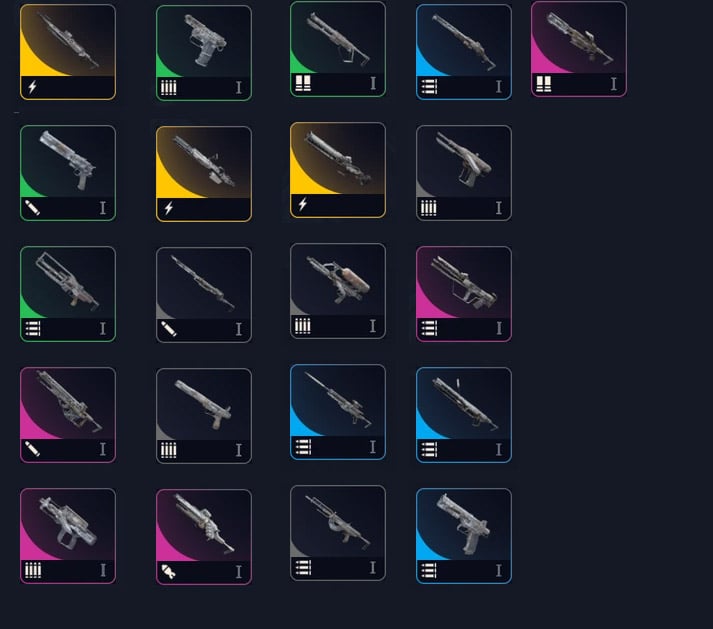
Weapons are the biggest stash hog because they don't stack and encourage collector behavior.
Our practical caps
- If you're PvE-focused, then 3–4 of each weapon is enough.
- If you're PvP-heavy and extracting enemy guns often, then raise caps selectively—but keep caps.
The real reason
Extra weapons are not security; they are future repair parts. Recycling duplicates keeps your main guns healthy without clogging your stash.
| Player style | Target per weapon | When to recycle | Why |
|---|---|---|---|
| PvE looting focus | 3–4 | Above cap | More space for materials, keys, consumables |
| PvP frequent fights | 4–6 (select guns) | Above cap or low desirability | Still need space discipline; avoid stash spiral |
3.4 Ammunition: Treat It as Disposable Inventory
Ammo stacks look harmless until you realize they eat slots faster than almost anything.
- If you can craft ammo cheaply, then stash-storing lots of it is paying rent for something replaceable.
- If you're heading into a boss/large ARC run, then bring a controlled amount—but don't warehouse it.
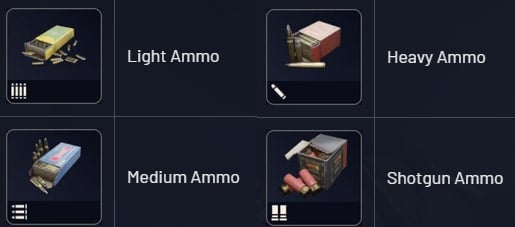
What we keep
| Ammo type | Keep target | Why |
|---|---|---|
| Regular light/medium/heavy ammo | 0–2 stacks max (per type) | Easy to craft; easy to find |
| Expensive/special ammo (launcher, energy clips if relevant) | 1–2 stacks | Higher replacement cost; situational |
3.5 Weapon Mods / Attachments: Never Let Them Sit Loose
Attachments are a sneaky stash killer because they:
- don't stack,
- feel valuable,
- and quietly occupy multiple slots.
Space-saving trick that always works
If you have loose attachments, then mount them onto any compatible gun immediately—even a gun you're not currently using.
This means you convert two stash slots into zero by parking attachments on stored weapons.
| Situation | Action | Why |
|---|---|---|
| Loose muzzle/underbarrel/sight in stash | Equip it onto any stored weapon | Frees slots instantly |
| You're saving attachments for a specific gun | Still equip them temporarily | You can reassign later; stash space now matters more |
3.6 Quick Use Items: Keep What You Actually Deploy
Quick use tabs become junk drawers. Our approach: keep enough for your playstyle, not your anxiety.
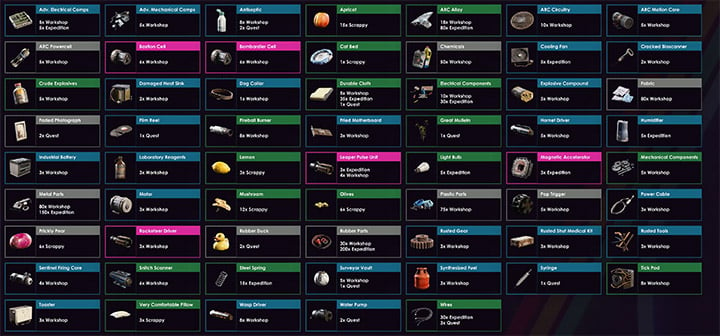
Practical keep rules (PvE-first, adjustable for PvP)
| Quick use item | Keep target | If you find more… | Why |
|---|---|---|---|
| Smoke grenades | 1–2 stacks | Stop hoarding | Escape tool; also strong in PvP |
| Tagging grenades | 1 stack | Cap it | Combos well with smoke; diminishing returns |
| Strong meta grenades (your preferred) | 2–5 stacks | Convert excess | You'll actually throw these |
| Mines (PvP-leaning) | 1–2 stacks | Sell/recycle extras | Great for fights; dead weight if you rarely PvP |
| Heals that don't stack well | Small number (e.g., 2–4) | Don't let them flood | Non-stack items cause bloat fast |
| Bandages that stack efficiently | Several stacks | Craft as needed | Best slot efficiency for routine healing |
| Niche toys (guitar, rare cloak, etc.) | 0–1 | Sell if tight | Fun, but space-negative |
Combo note we use often
If you're running smoke, then pairing it with a reveal/mark tool changes fights because it removes uncertainty. This means one stack of each can outperform three stacks of random grenades you never throw.
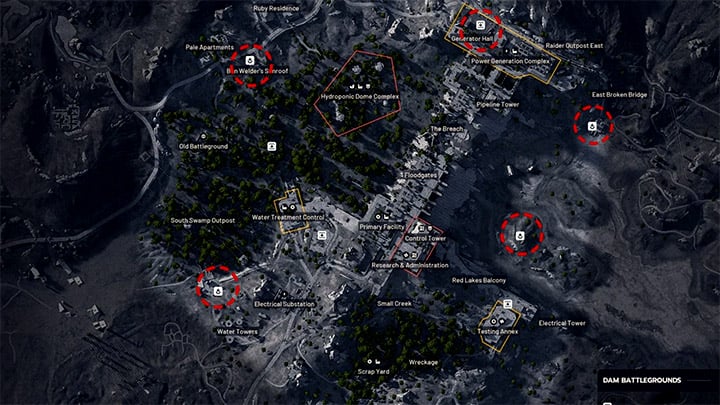
3.7 Keys: Use Them Before They Use Your Stash
Keys don't stack, so they become guaranteed bloat.
- If you hit ~9–11 keys, then we start queueing raids where the goal is simply: bring keys, spend keys, free slots.
- This keeps key value flowing back into materials and consumables you can stack.
| Key count | What we do | Why |
|---|---|---|
| 0–5 | Keep | Comfortable buffer |
| 6–10 | Plan usage | Prevents sudden stash lock |
| 11+ | Spend aggressively | Keys are value only when converted into loot |
4) Crafting Materials: What Actually Deserves Long-Term Space
This is where most stashes win or lose. Our principle: stock bottlenecks, cap basics, avoid dead-end parts.
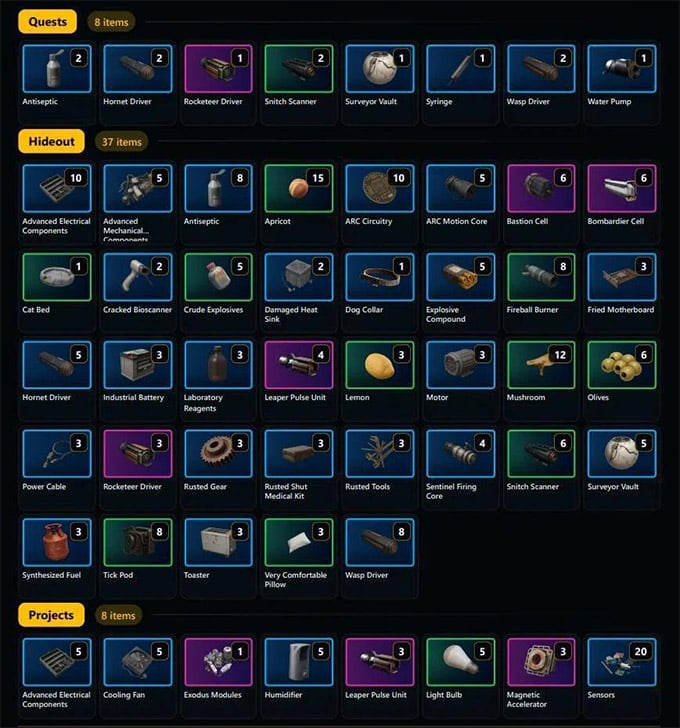
4.1 Always Valuable Materials (We rarely sell these)
These are the materials that keep your best gear operational.
| Material | Keep target (mid/endgame) | Why it's premium | How we replenish |
|---|---|---|---|
| Advanced mechanical components | Healthy buffer (varies) | Repairs/upgrades on top weapons | Recycle excess blue weapons |
| Light/Medium/Heavy gun parts | ~30–60 each (tune to your usage) | Upgrade + repair costs scale fast | Recycle weapons; buy selectively |
| Mod components | ~20 | Best attachments | Loot + protect |
| Processors | ~30 | High-tier augments + crafting flexibility | Topside farming |
| Springs (topside) | Keep whenever found | Often gating for attachments/crafts | Topside priority loot |
| Batteries (topside) | 2–3 stacks | Shields + general crafting | Topside priority loot |
Why the targets are ranges, not one magic number
If you're repairing two blue guns per night, then your advanced mechanical buffer evaporates. If you mainly loot and avoid fights, then you can run leaner. The target is a control knob, not a rule carved into stone.
4.2 Cap These Basics
Basic resources feel safe to stockpile… until they occupy half your stash.
| Basic material | Keep cap (rule of thumb) | Why |
|---|---|---|
| Metal / Plastic / Rubber | ~2 rows each (or your stash equivalent) | Common inputs; easy to refill via vendors/sources |
| Fabric-tier basics | Moderate | Craft heals, but don't let it explode |
If you see a third row forming, then you're not prepared—you're under-using crafting or over-looting low-value items.
4.3 Convert or Sell Materials (High emotion, low payoff)
Some items feel rare, but their practical value is low unless you're crafting a specific end product.
- If an item only matters for a legendary you don't actually run, then it's a luxury slot.
- If it breaks down into parts you always use, then treat it as convertible storage; otherwise sell.
| Item type | Keep only if… | Otherwise | Why |
|---|---|---|---|
| Boss/rare crafting drops | You're actively crafting that line | Sell | No reason to pay stash rent indefinitely |
| Complex/low-demand parts | You have a concrete plan | Sell/recycle | Space is better used on repair economy |
| High-value convertible modules | You need the breakdown parts | Recycle | Compressed materials for augments/repairs |
5) A Clean Stash Blueprint
If you want an end state that stays stable, here's the structure we aim for.
The layout we maintain
| Stash slice | What goes here | Goal |
|---|---|---|
| Combat-ready | A few good weapons (capped), essential heals, essential grenades | Always ready to drop in |
| Repair economy | Gun parts + advanced mechanical components | Never stuck with broken meta guns |
| Attachment economy | Mod components + a few key crafted attachments (mounted on guns) | Power without clutter |
| Topside bottlenecks | Batteries, springs, processors | Protect the hard-to-replace items |
| Keys | Keep under control | Convert to loot before bloat |
| Flex space | 10–15 empty slots | Stress-free extracting and sorting |
The hidden win
That flex space means you stop making bad decisions during extraction (I guess I'll drop the batteries?) and you stop panic-selling items you'll regret later.
FAQ
1) If our stash is full after a raid, what's the fastest thing to sell first?
Sell duplicate blueprints, trinkets/novelties, and partial ammo stacks. If you still need space, recycle extra weapons beyond your cap.
2) Should we keep ammo at all?
If you can craft it easily, then ammo is mostly a just-in-time resource. We keep 0–2 stacks per relevant type, and only stock more for planned big ARC/boss runs.
3) Why recycle extra blue weapons instead of selling them?
Because recycling converts a bulky, non-stacking item into the exact repair/upgrading parts you repeatedly consume. Selling gives coins; recycling protects your long-term ability to keep top weapons healthy.
4) Attachments are clogging our stash. What's the simplest fix?
If you have loose attachments, then mount them onto stored weapons immediately. Even if it's not the perfect match, it's a stash-space win and you can swap later.
5) How many weapons should we keep?
If you're PvE-focused, then 3–4 per weapon is a strong cap. If you're PvP-heavy, then raise caps only for the guns you truly run—and recycle the rest.
6) Keys keep piling up—what's the rule?
If you reach ~9–11 keys, then schedule raids to spend keys until you drop back to a comfortable buffer. Keys are valuable only when converted into loot.
Closing: The System That Keeps Working
A stash stays clean when every item has a job, a cap, and an exit plan. If you adopt the routine—sell fluff, protect bottlenecks, treat ammo as disposable, cap weapons, mount attachments, and burn keys on schedule—your stash stops being a second job.
The best part is the mental shift: if you find yourself hesitating over an item, then you already have the answer. Ask, Can we replace this faster than we can earn this slot back? If the answer is yes, it's not a keeper—it's a transaction.
Most Popular Posts
- ARC Raiders Update 1.42: Phantom Targets Farming Guide (Glitched Wasps, Rewards, Regional Conditions)
- ARC Raiders Hullcracker Blueprints: Fastest Way to Complete The Major's Footlocker
- ARC Raiders Best Pop Trigger Strategy: Fast Phantom Targets Damage Guide
- ARC Raiders Subway Skin Guide: Unlock the Subterranean Outfit
- ARC Raiders Spaceport Open Containers Guide: 19K+ Solo Trial Route
- ARC Raiders Looting Mk. 3 Survivor Blueprint Guide: Best Blue Gate Route and Drop Locations
Popular Category Lists
- ARC Raiders / (343)
- Grow a Garden / (292)
- CoD: Black Ops 7 / (167)
- Star Citizen / (160)
- MLB 26 / (159)
- Monopoly Go / (152)
- ARK Survival Ascended / (126)
- Steal a Brainrot / (98)
- Blox Fruits / (74)
- Adopt Me / (73)
- Forza Horizon 6 / (72)
- Sailor Piece / (68)
- Grow a Garden 2 / (68)
- Diablo IV / (62)
- CoD: BLACK OPS 6 / (55)
- Path of Exile 2 / (48)
- Monster Hunter Wilds / (46)
- Aion 2 / (45)
- Windrose / (44)
- Donut SMP / (41)